
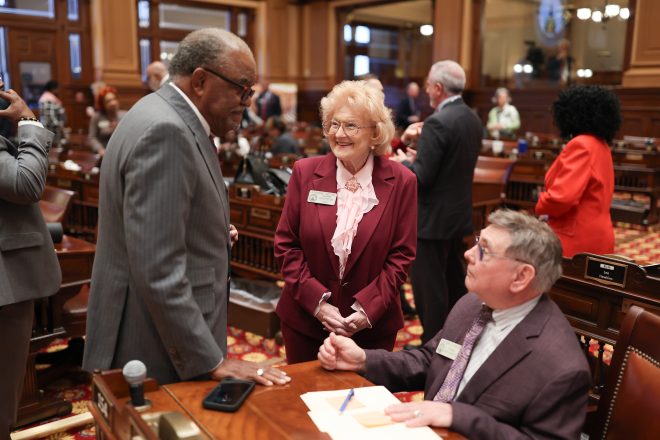
UPDATE: The Georgia General Assembly has officially launched its 2026 legislative session as of January 12, 2026, and key priorities are emerging that could significantly impact Georgians. This year’s session began with a special performance by Miss Georgia 2025, Audrey Kittila, who captivated attendees with a violin rendition of “Georgia on My Mind,” setting a hopeful tone for the deliberations ahead.
As the Assembly convenes, legislators have quickly adopted House Resolution 998, establishing the legislative calendar. Under Georgia’s Constitution, the Assembly must convene for 40 non-consecutive legislative days, culminating in the final day, or “Sine Die,” scheduled for April 2, 2026. This structured timeline aims to streamline legislative processes, ensuring both officials and constituents can effectively plan for the business of the session.
On January 14, 2026, at the annual Eggs & Issues breakfast hosted by the Georgia Chamber of Commerce, Gov. Brian Kemp unveiled ambitious proposals that could reshape state infrastructure and public welfare. Notably, he recommended a $35 million investment in natural gas infrastructure and proposed a staggering $1.8 billion for critical transportation projects, including improvements to the congested McDonough Area along I-75.
Furthermore, Gov. Kemp announced a one-time $50 million Homeless Response Grant, emphasizing his commitment to addressing urgent social issues. His State of the State address later that week underlined priorities like lowering living costs, enhancing education, and combating human trafficking—issues that resonate deeply with Georgians.
In terms of financial relief, Gov. Kemp revealed plans for a fourth one-time tax rebate of $1 billion, averaging $250 for individual filers and up to $500 for couples. This rebate could return over $7.5 billion in surplus revenue to taxpayers over four years. He also proposed a reduction in the state’s income tax rate to 4.99%, a move aimed at alleviating financial pressure on families.
The governor’s address highlighted significant investments in education, with a proposed $2,000 pay supplement for full-time state employees, including educators and public safety officers. His education initiatives include funding for the Quality Basic Education Act and an additional $368 million for workforce preparation.
Regarding higher education, the administration aims to allocate $2 billion for scholarships and medical workforce training, including a groundbreaking $326 million for the University of Georgia’s DREAMS scholarship program, the first needs-based scholarship of its kind in state history. These efforts underscore a commitment to making education more accessible and reducing student debt burdens.
As the session progresses, both the House and Senate will convene for critical discussions surrounding the budget, a key focus for lawmakers. Following the observance of the Martin Luther King Jr. holiday, sessions will continue on January 20, 2026, where legislators will hear budget requests from the governor and state agency leaders.
This year’s legislative session promises to be pivotal, as lawmakers work to support their constituents and address pressing issues that affect daily life in Georgia. The urgency of these developments calls for public engagement, with citizens encouraged to attend House meetings or watch live streams available on the House website.
As the General Assembly embarks on this crucial legislative journey, all eyes will be on the outcomes of these discussions, providing a clear glimpse into Georgia’s future. Stay tuned for further updates on the evolving legislative landscape and how these proposals will shape the lives of Georgians in the coming months.