
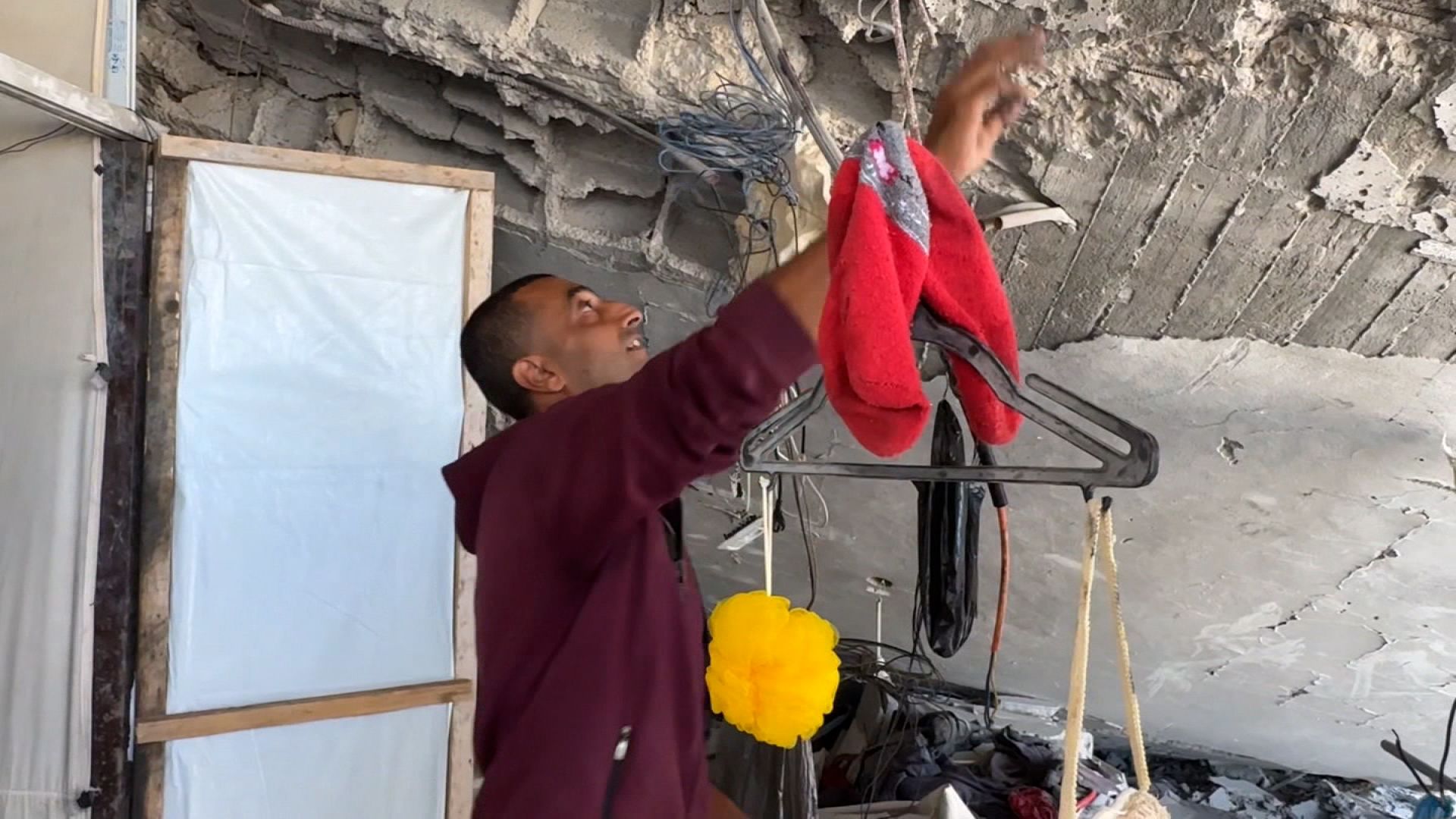
Palestinians in Gaza are confronting a harrowing dilemma this winter as the ongoing conflict has left over 400,000 homes destroyed. With the destruction rampant, residents must decide between living in makeshift tents exposed to harsh weather or risking their safety in the ruins of buildings that could collapse at any moment.
Hiyam Abu Nabah and her family reside in the remains of a building in the Hamad area of Khan Younis, southern Gaza. Without access to a tent, they have no choice but to endure life in a structure with no protective walls, as upper floors teeter precariously above them. The situation intensified last week when torrential rains and flooding led to at least 17 deaths, including children, according to Mahmoud Basal, spokesperson for the Palestinian Civil Defense. Many others lost their lives due to building collapses, with over 90 residential buildings impacted and 90% of shelters for those displaced by the conflict completely flooded.
Abu Nabah shared her fear, saying, “On the first day of the storm, we could hear the stones cracking above our heads. Sand was falling into our eyes… this is not a life.” As her five-year-old navigates through hanging electrical wires, the prospect of returning to what remains of her home in Shujaiya, Gaza City, feels distant. The area is currently inaccessible due to military occupation under the ceasefire agreement.
In a nearby building, Awn Al Haj demonstrated the dangers of his living conditions by poking at the roof with a stick, causing debris to fall at his feet. He described a recent storm as “three days of it were like the early days of the war… you did not know what would happen to you.” The fear of concrete blocks falling, combined with water leaks and cold winds, creates a precarious existence. Al Haj is aware that patching up crumbling walls with mud and tarpaulins is merely a temporary fix to a life-threatening issue.
The situation worsened further north in the al-Shati camp, where a building collapsed on March 5, 2024, killing one man and injuring two others. A neighbor noted that the building had sustained damage from an Israeli airstrike, and the winter weather was the final blow. “Houses keep collapsing. Someone do something about how we are living,” the neighbor pleaded. “Day after day a house falls, day after day people die.”
Mohammad Fathi of the Gaza Civil Defense, which operates as the emergency service, highlighted the lack of resources for rescue efforts, stating they lack heavy machinery to assist in recovering survivors from the rubble. “With every winter storm, many families and many children will die,” he warned. Although the Civil Defense advises residents to evacuate damaged buildings during heavy rain, many have no alternatives.
According to the United Nations, 1.3 million Palestinians urgently require shelter this winter. The latest figures from COGAT, the Israeli agency managing goods entering Gaza, indicate that around 310,000 tents and tarpaulins have been distributed, alongside over 1,800 trucks of warm blankets and clothing. Both the UN and various international NGOs are pressing for increased aid access to support the hundreds of thousands without homes during this winter season.
The UN highlighted the tragic losses due to adverse weather conditions, including the deaths of a two-week-old baby and an eight-month-old infant from hypothermia. With approximately 90% of shelters for displaced people inundated, more families will find themselves exposed in the remnants of what were once their homes.
Bakr Mahmoud al-Sheikh Ali noted the growing fear among residents in Khan Younis: “People are afraid, but they tell you, brother, I need shelter, I do not want a tent and water in the winter, in this cold weather… whatever happens, happens.” The overwhelming sentiment among displaced Gazans resounds clearly: this is no way to live.