
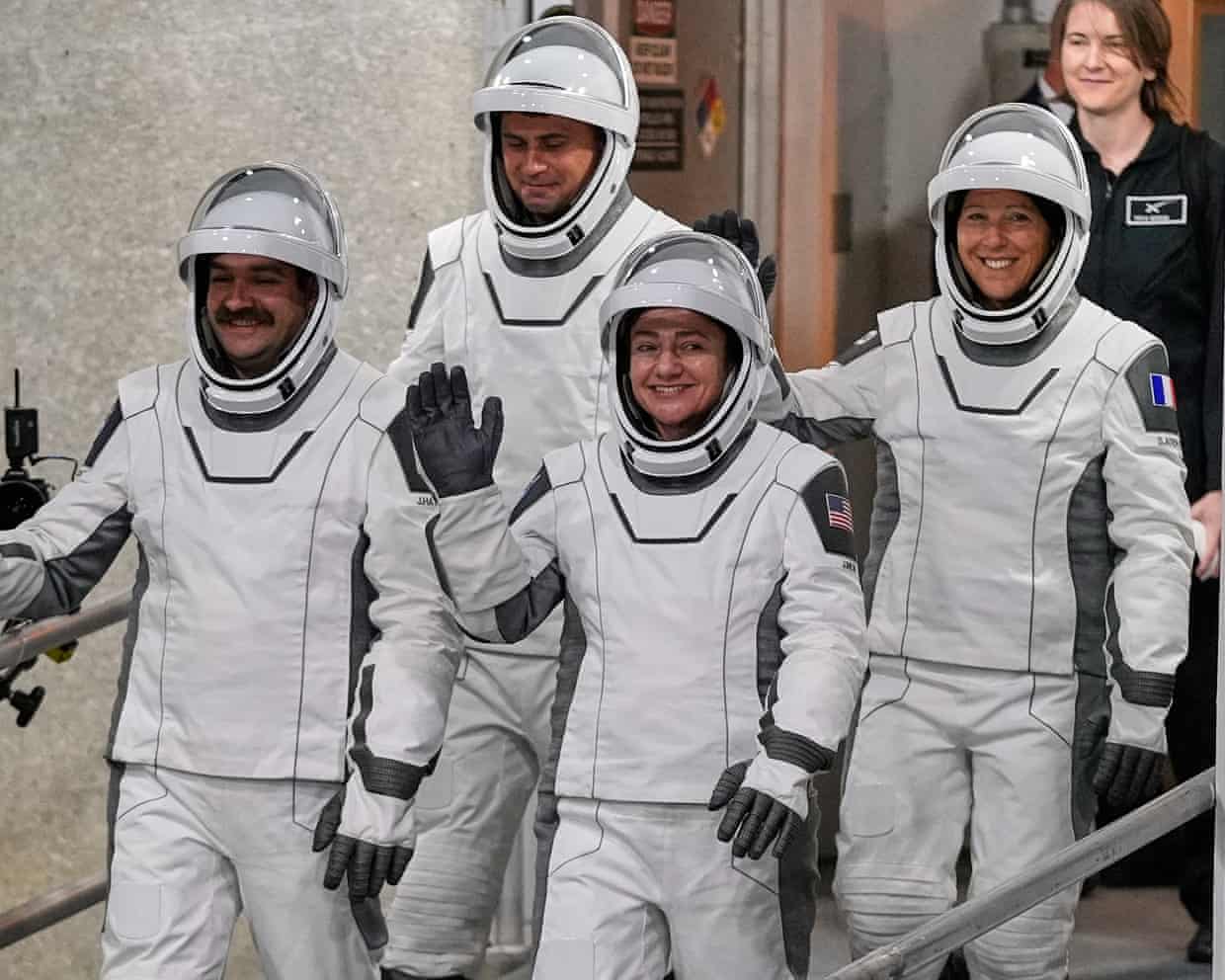
The International Space Station (ISS) welcomed four new astronauts on January 7, 2024, as part of a crew rotation following the premature departure of their colleagues due to health concerns. SpaceX successfully delivered the astronauts from the United States, France, and Russia, launching them from Cape Canaveral just a day prior. This significant event marked NASA’s first medical evacuation in its 65-year history of human spaceflight.
Last month’s evacuation was prompted by a serious health issue experienced by one of the four astronauts who had been launched by SpaceX during the previous summer. As a result, the crew size on the ISS dwindled to just three members—one American and two Russians. This reduced crew led NASA to temporarily halt spacewalks and scale back ongoing research activities aboard the station.
Joining the ISS for a mission expected to last between eight to nine months are NASA astronauts Jessica Meir and Jack Hathaway, France’s Sophie Adenot, and Russia’s Andrei Fedyaev. Both Meir and Fedyaev are returning to the ISS after previous missions, with Meir notably participating in the first all-female spacewalk during her inaugural visit in 2019. Adenot, who holds the distinction of being only the second French woman to travel to space, is a military helicopter pilot. Hathaway serves as a captain in the United States Navy.
NASA has opted not to disclose the identity of the astronaut who fell ill on January 7 or the specific nature of the medical issue, citing confidentiality regarding medical privacy. The astronaut, along with three others, returned to Earth earlier than planned, with their first night back spent at a hospital before they returned to Houston.
Despite this incident, NASA confirmed that it did not change its preflight medical checks for the new crew members. The agency remains focused on continuing its operations aboard the ISS, ensuring that research and scientific advancements continue despite the challenges faced in recent months.
The arrival of these four astronauts restores the ISS to full operational capacity, reaffirming the importance of international collaboration in space exploration and research.