
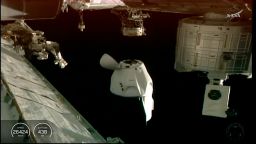
Four astronauts aboard a SpaceX Crew Dragon capsule are returning to Earth after a medical issue prompted an early exit from the International Space Station (ISS). The spacecraft departed the ISS at 22:20 UTC on Wednesday and is on track to splash down in the Pacific Ocean around 08:40 UTC on Thursday, concluding a weeklong effort focused on the health of an unnamed crew member.
NASA made the decision to expedite the crew’s return after canceling a planned spacewalk due to the medical concern. During a news conference on January 8, Dr. James Polk, chief health and medical officer at NASA headquarters, clarified that the issue was not an injury sustained during operations but rather a complication arising in the challenging environment of microgravity. He emphasized the need for advanced diagnostic tools available only on Earth, stating, “This is not an injury that occurred in the pursuit of operations.”
Among the returning astronauts are members of the Crew-11 mission: Kimiya Yui from the Japan Aerospace Exploration Agency (JAXA), Oleg Platonov from Roscosmos, and NASA astronauts Mike Fincke and Zena Cardman. NASA has not disclosed the identity of the astronaut experiencing the medical issue, but it has confirmed that they are in stable condition and do not require special arrangements for the return journey.
Challenges in Reentry
The reentry process poses significant challenges for astronauts. As the Crew Dragon capsule descends, it will experience g-forces exceeding five times that of Earth’s gravity. During this final phase, the capsule will reenter the atmosphere at speeds over 22 times the speed of sound. This intense process heats the exterior of the spacecraft to more than 3,500 degrees Fahrenheit (approximately 1,926 degrees Celsius), which can create a plasma cloud that temporarily disrupts communication with mission control.
After splashdown, recovery ships will be on standby to assist in retrieving the capsule from the ocean. The crew members will likely exit the capsule on medical stretchers, a standard procedure that allows for safe transportation as they readjust to gravity. NASA has indicated that the astronaut with the medical issue will undergo a thorough medical evaluation upon landing, although using a stretcher does not necessarily indicate a serious condition.
Impact on ISS Operations
Crew-11 was originally scheduled to depart the ISS in mid-February, following the arrival of the Crew-12 astronauts, who were set to take over station operations. The premature return of Crew-11 leaves the ISS crewed by three astronauts: Russian cosmonauts Sergey Kud-Sverchkov and Sergei Mikaev, alongside Chris Williams from NASA, who arrived at the station through a rideshare agreement with Russia.
As the situation unfolds, NASA continues to prioritize the health and safety of its astronauts while managing the complexities of space missions. The agency remains committed to ensuring that all crew members receive the necessary care and support, both in space and upon their return to Earth.