
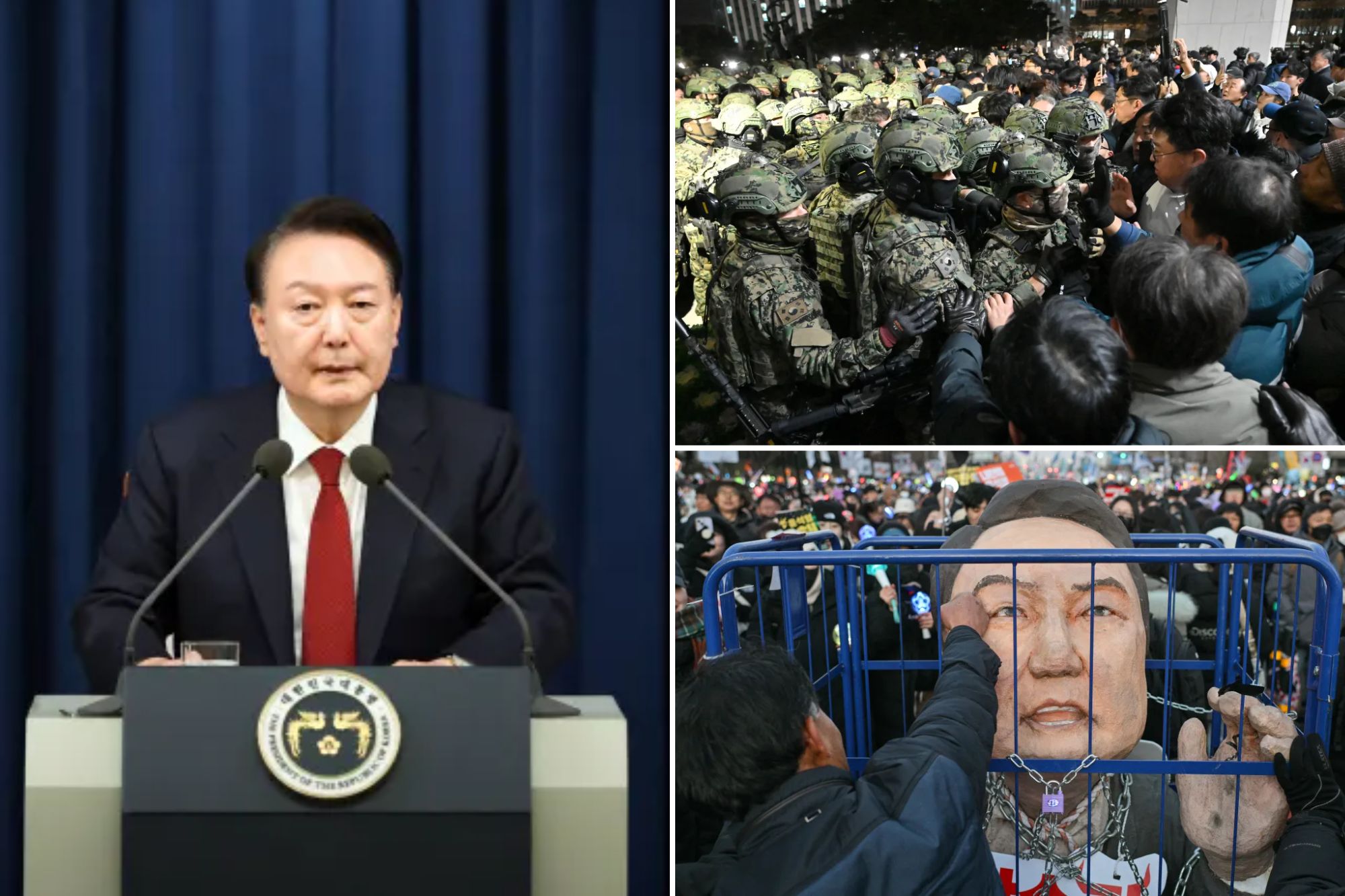
A South Korean court has sentenced former President Yoon Suk Yeol to five years in prison due to charges related to his enforcement of martial law. This verdict, delivered by the Seoul Central District Court on March 15, 2024, marks the first conviction against Yoon in a series of eight criminal trials concerning his controversial decree issued in late 2024.
The most serious charge against Yoon alleges that he led a rebellion in connection with his martial law declaration, a crime that could carry the death penalty. Other charges for which he was convicted include defiance of authorities’ attempts to detain him. Following the ruling, Yoon has not publicly commented. His defense team previously claimed that the demand for a ten-year prison term by independent counsel was politically motivated and lacked legal justification for what they described as an “excessive” sentence.
Yoon’s presidency came to a sudden halt after his martial law decree in December 2024 ignited massive public protests, which demanded his ouster. He was subsequently impeached and arrested. During his trial, Yoon defended his actions by stating that the martial law declaration was intended solely to inform the public about perceived threats from a parliament controlled by liberals, which he argued obstructed his agenda.
Investigators, however, have characterized Yoon’s actions as an attempt to consolidate power and extend his rule. They charged him with rebellion, abuse of power, and other criminal offenses. The court’s decision represents a significant moment in South Korean politics, sparking discussions about the implications of Yoon’s actions on the country’s democratic framework.
As the legal proceedings continue, the case against Yoon serves as a critical reflection on governance and accountability in South Korea, raising questions about the balance of power between elected officials and democratic institutions.