
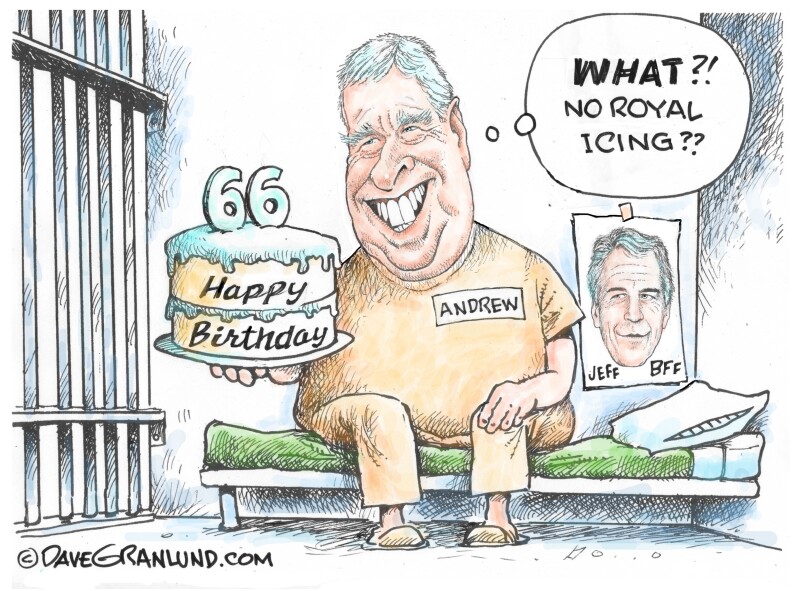
The arrest of Prince Andrew Mountbatten-Windsor has sparked widespread discussion, with editorial cartoonist Dave Granlund contributing a poignant cartoon on the matter. This incident, which occurred on February 21, 2026, has drawn attention not only for its implications regarding the royal family but also for the ongoing dialogue about accountability and public figures.
Granlund’s editorial cartoon captures the essence of public sentiment surrounding the arrest. Through his art, he addresses the complexities of royal privilege and the expectations of accountability for those in power. The cartoon serves as a reflection of the societal views on the situation, emphasizing the ongoing scrutiny faced by the monarchy.
Public Reaction and Broader Implications
The arrest of a prominent royal figure has led to a surge of opinions across various media platforms. Many commentators have expressed their views on the implications for the British monarchy and its future. Some argue that this event may be a turning point, challenging long-standing perceptions of royal immunity.
The public’s reaction has been largely critical, with many calling for greater transparency and justice. Social media has been flooded with discussions, memes, and critiques, showcasing how deeply this incident resonates with the public. Granlund’s cartoon adds a layer of humor to the ongoing debate, illustrating the complexities of navigating royal expectations against the backdrop of legal accountability.
Granlund’s work is not isolated; it reflects a broader trend among editorial artists who comment on current events. As the world watches, the intersection of art and journalism becomes particularly significant, providing a unique lens through which to view societal issues.
The Role of Editorial Cartoons in Contemporary Discourse
Editorial cartoons have historically played a vital role in shaping public opinion and driving conversations. They distill complex issues into accessible images and messages, prompting viewers to reflect on their beliefs and values. Granlund’s interpretation of Prince Andrew’s arrest is a prime example of how art can influence discourse.
As the situation unfolds, it is likely that more artists will weigh in, each offering their perspective on the implications of the arrest. The engagement of cartoonists like Granlund highlights the importance of diverse voices in the conversation surrounding accountability and public figures.
The arrest of Prince Andrew not only has legal ramifications but also carries significant cultural weight. Granlund’s cartoon serves as a reminder of the power of satire in addressing serious topics, making it clear that even those in positions of privilege are not above scrutiny. The ongoing dialogue around this event will undoubtedly continue, shaping the narrative of the monarchy’s future in the United Kingdom.