
BREAKING: Food insecurity in New Hampshire has surged to its highest level in a decade, with 52,600 households, or 9.1 percent, affected in the 2022-2024 period, according to the latest report from the U.S. Department of Agriculture (USDA). This alarming trend reflects the ongoing economic struggles faced by many Granite State residents following the erosion of pandemic-era supports like the expanded Child Tax Credit.
The USDA’s findings reveal a significant increase in food insecurity rates, rising from a low of 5.4 percent during the 2019-2021 period. The current rate marks a stark jump of 2.9 percentage points from the 2020-2022 period. This increase underscores how critical economic support mechanisms have diminished, leaving many families in New Hampshire grappling with food access challenges.
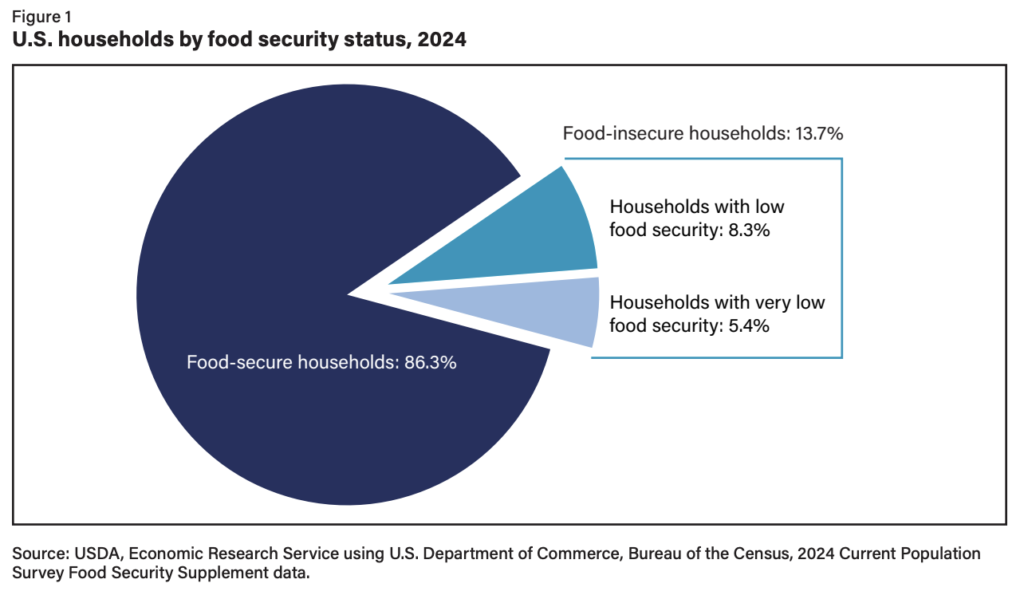
In a broader context, approximately 13.7 percent of U.S. households faced food insecurity in 2024, up from 10.2 percent in 2021. Vulnerable groups, particularly those with incomes below 185 percent of the federal poverty guidelines, are disproportionately affected. Notably, over 36.8 percent of single-female-headed households with children are experiencing food insecurity, highlighting the urgent need for targeted support.
The USDA’s data indicates that nearly 149,800 people in New Hampshire were food insecure in 2023, with estimates suggesting this equates to around 62,700 households. The rising numbers are alarming, especially as 76,000 Granite Staters are currently enrolled in the Supplemental Nutrition Assistance Program (SNAP), which plays a critical role in combating food hardship, particularly in rural areas.
As the USDA phases out future releases of the Household Food Security Report, alternative data sources, like Feeding America’s Map the Meal Gap, will become essential for tracking food insecurity trends in the state. Jessica Williams, a policy analyst at the New Hampshire Fiscal Policy Institute, emphasizes that while the state maintains food insecurity rates lower than the national average, the upward trajectory in household hardship indicates a need for renewed focus on assistance programs.
The implications of rising food insecurity are profound, affecting not just individual households but the community’s overall wellbeing. As more families struggle to put food on the table, immediate action is necessary to address these escalating challenges. Advocates urge the state to explore comprehensive solutions to ensure reliable access to food for all residents.
Stay tuned for updates on this developing situation as officials and organizations work to address the alarming rise in food insecurity in New Hampshire.