
URGENT UPDATE: Scientists have just unveiled five remarkable new species discovered in 2025, sparking excitement across the globe. These findings highlight the urgent need for biodiversity protection as climate change threatens ecosystems.
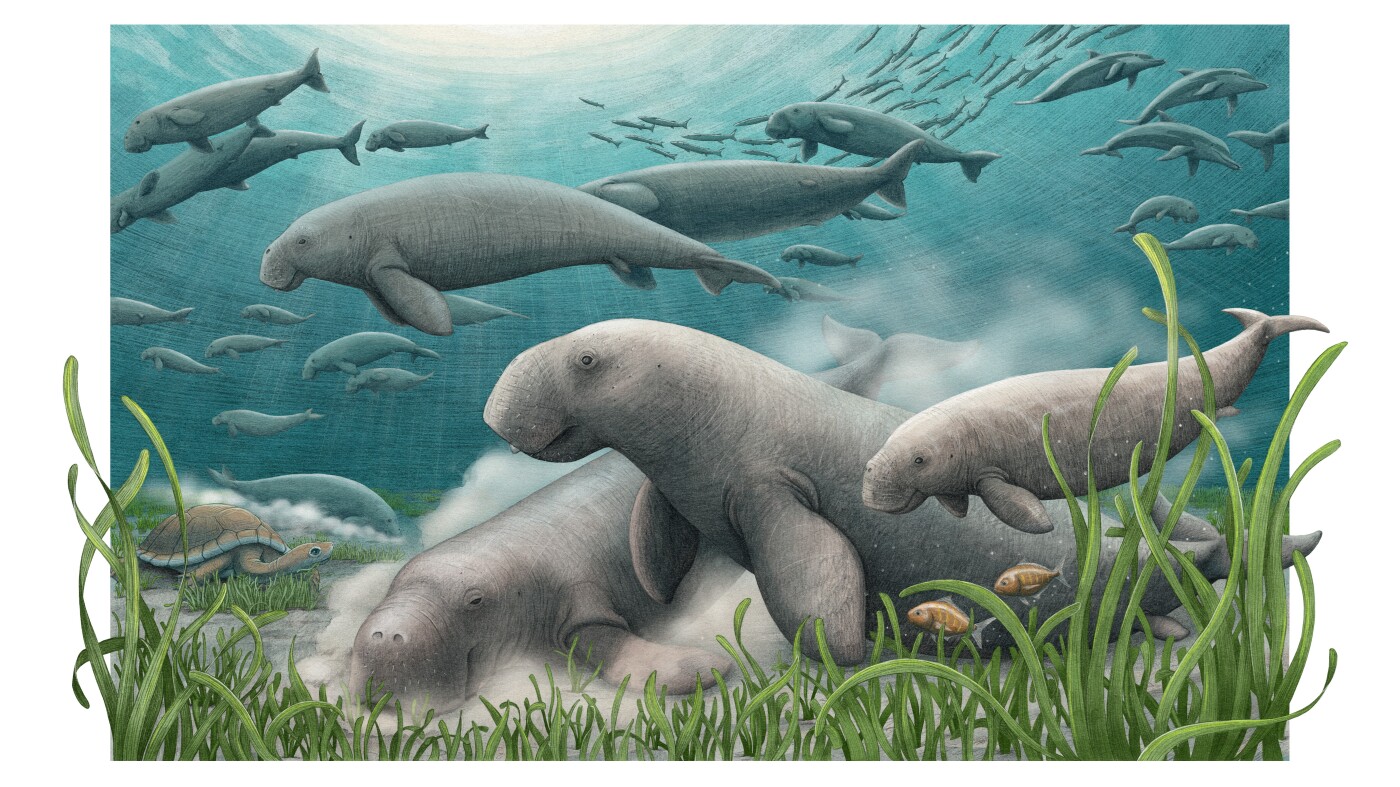
In the Persian Gulf, researchers have identified a new species of ancient sea cow, dubbed Salwasiren qatarensis. Fossils were uncovered in Al Maszhabiya, Qatar, revealing the richest sea cow deposit in the world. This species, which grazed on seagrass for 21 million years, played a crucial role as an “ecosystem engineer,” enhancing marine biodiversity and carbon storage. Nicholas Pyenson, curator at the Smithsonian, emphasizes the importance of this discovery, saying it could elevate the protection of natural heritage across geopolitical borders.
In the Peruvian Andes, a groundbreaking find has emerged: a miniature marsupial named Marmosa chachapoya. Discovered during an expedition in Río Abiseo National Park, this beady-eyed mouse opossum adds to the region’s biodiversity. Silvia Pavan, who led the research, warns that many species are being lost before they are even documented, making it vital to explore these under-researched habitats.
Meanwhile, in Northern California, a new brown spider species has been identified after a 15-year search by Marshal Hedin, a biology professor. Named Siskiyu armilla, this species highlights the hidden diversity of spiders in the region. Coauthor Rodrigo Monjaraz Ruedas states that California is home to nearly 40% of all described spider species in the U.S., and this discovery could reveal even more undocumented species.
Deep beneath the waves, researchers captured video of a new species of snailfish, enchanting viewers with its cute appearance. Found nearly 11,000 feet deep off the coast of Central California, this bumpy snailfish has been identified as part of a new group by Mackenzie Gerringer and her team. The discovery underscores the importance of deep-sea ecosystems, which play a significant role in carbon storage.
Finally, researchers have unveiled three new live-birthing toad species in Tanzania. These toads, belonging to the genus Nectophrynoides, were thought to be singular species for over a century. Academic researcher Christoph Liedtke and his team utilized advanced DNA sequencing to reveal this hidden biodiversity. With one species already extinct and others in decline, the urgency to protect these unique toads is paramount.
These discoveries not only enrich our understanding of biodiversity but also highlight the pressing need to safeguard these ecosystems. As Nicholas Pyenson puts it, this is “a great example of science diplomacy,” showcasing how collaborative efforts can lead to groundbreaking findings.
Keep an eye on these developments as researchers continue to uncover new species and advocate for their protection. The future of our planet’s biodiversity depends on it!