
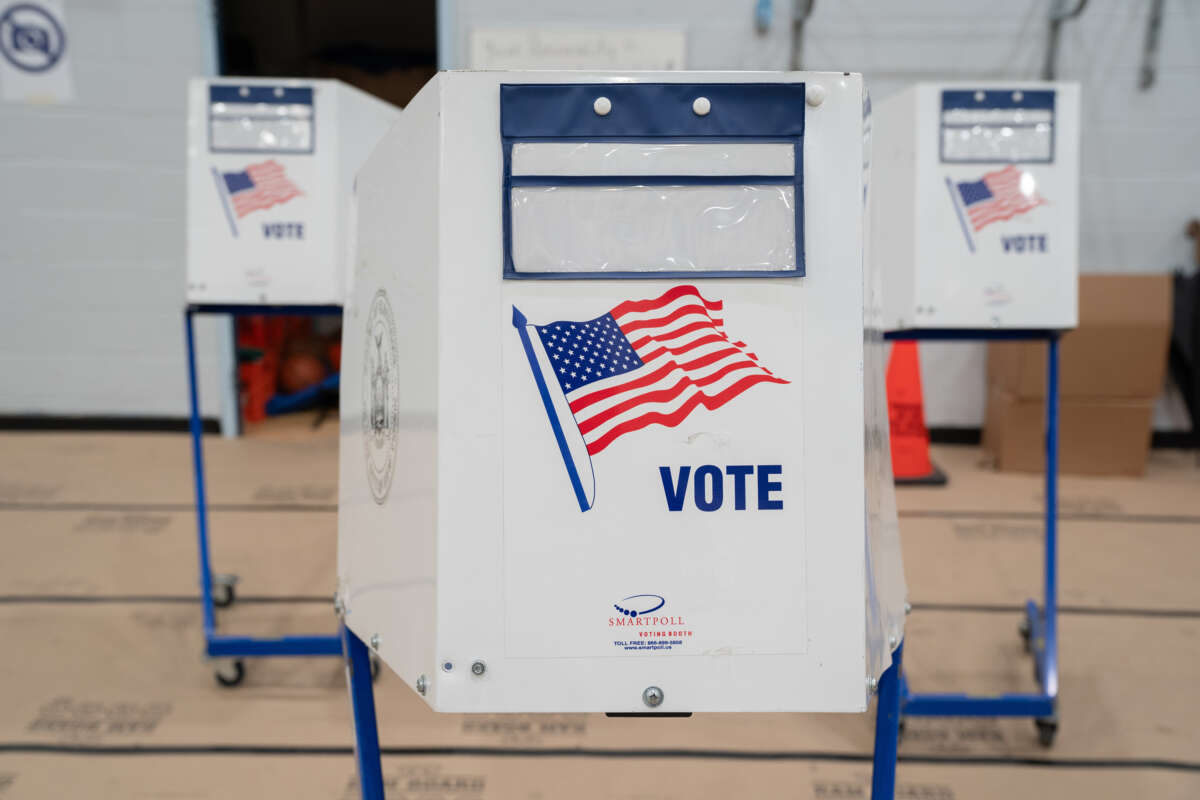
The Department of Homeland Security’s (DHS) new voter verification system has been plagued by significant inaccuracies, leading to widespread errors in identifying U.S. citizens on voter rolls. County officials in Texas and Missouri discovered that many voters flagged as potential noncitizens were, in fact, legitimate citizens. This situation raises concerns about the integrity of voter verification processes and the potential for disenfranchisement.
In November, Boone County, Missouri, clerk Brianna Lennon received an alarming notification that 74 individuals on the county’s voter roll had been flagged as potential noncitizens through the Systematic Alien Verification for Entitlements (SAVE) tool. Lennon, who has managed elections in the county for over seven years, was skeptical of the system’s accuracy. Her suspicions were confirmed when she discovered that more than half of those identified were actually citizens, including one individual whose registration paperwork had been processed by her staff during a naturalization ceremony.
The SAVE system, originally designed to verify immigrants’ eligibility for public benefits, has seen significant expansion under directives from former President Donald Trump. Trump has long claimed that noncitizens infiltrate state voter rolls, a narrative that prompted the DHS to collect confidential data from various federal sources to verify voter citizenship status.
Many Republican secretaries of state have embraced the use of SAVE, uploading their voter rolls for verification. However, an investigation by ProPublica and The Texas Tribune indicates that the tool was rushed into use without adequate data verification, resulting in persistent errors, particularly among individuals born outside the United States. This is compounded by the fact that some flagged individuals may have since become U.S. citizens—a change that the system does not always recognize.
According to correspondence between state and federal officials, the DHS has had to amend its data provided to at least five states after SAVE misidentified voters. Texas and Missouri were among the first states to implement the system. Missouri officials began acting on SAVE’s findings without confirming their accuracy, temporarily removing flagged voters’ ability to cast ballots. This led to numerous incorrect determinations that left many clerks, including Lennon, questioning the reliability of the data being used for critical electoral decisions.
In Texas, reports surfaced shortly after the state’s voter roll was run through SAVE in October, indicating that at least 87 voters across 29 counties had been incorrectly flagged as noncitizens. Election administrators expressed concerns over a lack of clear guidelines from the Texas Secretary of State’s office on how to handle these flagged individuals. This confusion intensified when clerks were instructed to demand proof of citizenship from those flagged, with some officials voicing doubts about the merit of the process.
The initial findings from SAVE did not corroborate Trump’s assertions regarding widespread noncitizen voting. An analysis across seven states with approximately 35 million registered voters revealed around 4,200 individuals—roughly 0.01%—were identified as noncitizens. This aligns with previous research indicating that noncitizens rarely register to vote.
While Brian Broderick, who oversees the verification division at U.S. Citizenship and Immigration Services (USCIS), acknowledged the challenges of obtaining accurate citizenship data, he emphasized that the responsibility for utilizing SAVE data rests with individual states. In Texas, Secretary of State Jane Nelson declined to comment in detail but stated that using SAVE was part of their duty to ensure eligible citizens participate in elections.
The situation has caused distress for those flagged in error. Sofia Minotti, a U.S. citizen originally from Argentina, was among 84 voters in Denton County incorrectly identified by SAVE. Despite providing proof of her citizenship, she found the process burdensome and questioned why she needed to prove her status when she had done everything legally.
Election officials across the U.S. have long sought better access to federal information regarding citizenship status, as many states do not require proof of citizenship when individuals register to vote. Previous attempts to identify noncitizens on voter rolls have failed due to inaccuracies in methodology.
The SAVE system was not equipped to provide accurate citizenship information until recently, following an executive order from Trump that mandated free access to federal citizenship data. This order expedited the development of SAVE, resulting in the inclusion of Social Security Administration data, allowing states to conduct bulk searches. However, the rushed implementation raised legal concerns regarding the handling of this data and its accuracy, particularly for individuals not born in the U.S.
As of September, Texas had uploaded its entire list of over 18 million registered voters into SAVE. The results were immediate, with Texas announcing the identification of over 2,700 potential noncitizens. Yet, confusion reigned as local election officials struggled to navigate the directive to investigate flagged voters. Some clerks took a cautious approach, opting not to act immediately while others sought clarification from the state.
Despite some successes in identifying ineligible voters, many clerks reported that SAVE’s inaccuracies left them uncomfortable with the process. In counties like Travis, officials quickly discovered that many flagged voters were indeed citizens, further highlighting the system’s flaws.
Missouri initially adopted a more selective approach with SAVE, targeting a smaller subset of voters. However, as errors were identified, officials had to revise their lists of flagged individuals, reflecting the system’s ongoing challenges. The Missouri Secretary of State’s office acknowledged the need for careful review and validation before any actions were taken based on SAVE’s findings.
The ongoing issues with SAVE underscore the critical need for accurate voter verification processes that protect the rights of citizens while ensuring election integrity. As officials in both Texas and Missouri navigate the complexities of this verification system, the implications for voters remain significant. County clerks like Lennon emphasize the importance of reliable data, stating, “This is not ready for prime time, and I’m not going to risk the security and the constitutional rights of my voters for bad data.”