
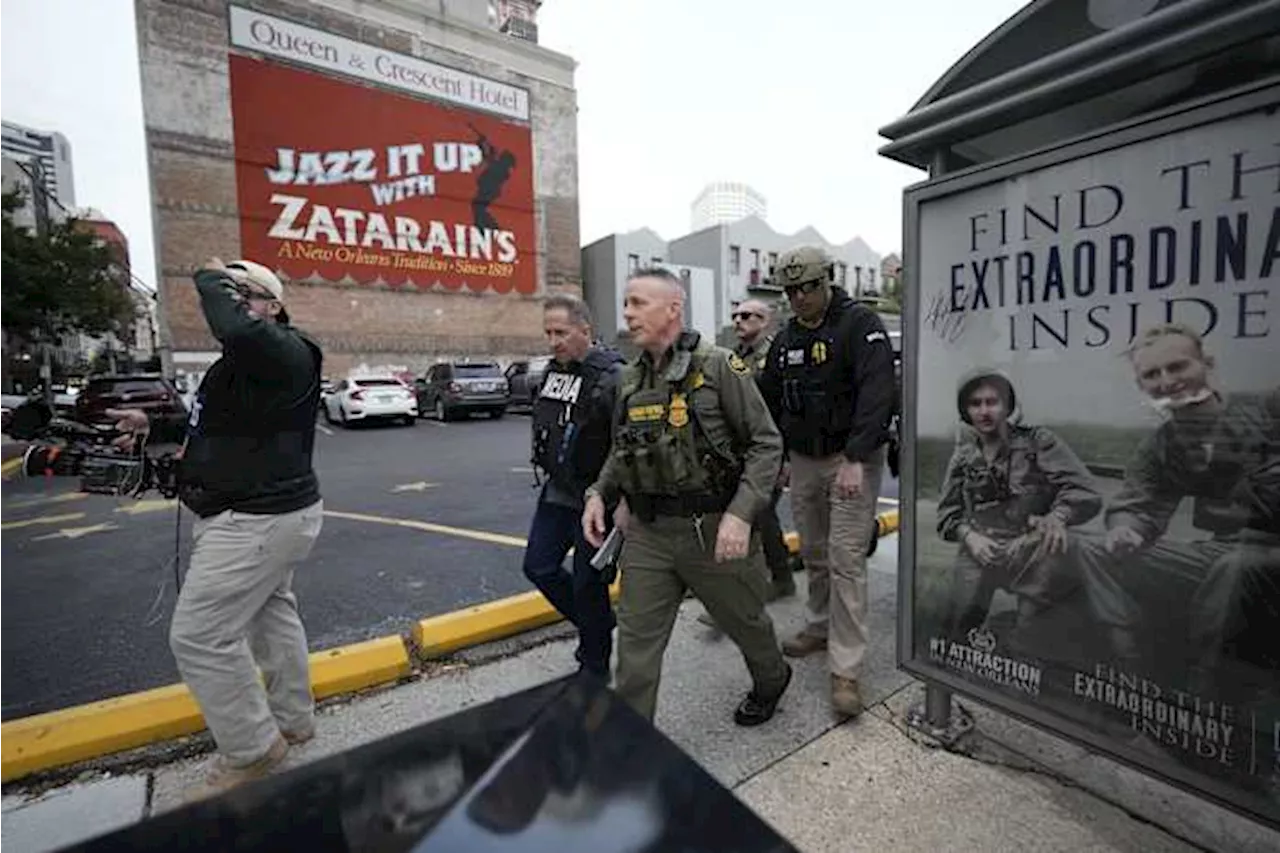
Federal agents initiated a significant immigration operation in New Orleans on September 27, 2023, named the ‘Catahoula Crunch.’ This two-month crackdown aims to target immigrants who have been released after arrests for violent crimes. However, the operation has raised concerns among local officials and immigrant rights groups about its broader implications and the potential destabilization of families.
The operation is reminiscent of a similar initiative in Chicago, where over 4,000 individuals were arrested, many of whom did not have prior criminal records. In New Orleans, local leaders fear that federal agents will cast a wide net, affecting innocent residents and economically vulnerable communities. New Orleans City Council President J. P. Morrell expressed skepticism regarding the operation’s focus, stating, “There is no rational basis that a sweep of New Orleans… would yield anywhere near 5,000 criminals, let alone ones that are considered ‘violent’ by any definition.”
According to Census Bureau data, the New Orleans metropolitan area housed nearly 100,000 foreign-born residents in 2022, with approximately 60% not being U.S. citizens. Morrell further highlighted the low correlation between violent crime and illegal immigration in the area, noting that crime rates in New Orleans are currently at historic lows.
Federal agents from the Customs and Border Protection and U.S. Immigration and Customs Enforcement (ICE) have been observed making arrests in various locations, including home improvement store parking lots and neighborhoods with substantial immigrant populations. Local activist Alejandra Vasquez reported receiving numerous messages and images since the operation began, emphasizing the distress felt by community members. “My heart is so broken,” Vasquez remarked. “They came here to take criminals and they are taking our working people. They are not here doing what they are supposed to do. They are taking families.”
Support for the crackdown has emerged from certain political figures, including U.S. House Speaker Mike Johnson, who represents Louisiana. Johnson took to social media, asserting that “Democrats’ sanctuary city policies have failed — making our American communities dangerous.” He expressed his belief that the ongoing operation was necessary for public safety.
Tensions escalated during a recent New Orleans City Council meeting, where approximately two dozen protesters were forcibly removed after chanting “Shame” in response to the immigration enforcement. The operation’s breadth extends beyond New Orleans, encompassing areas in southeast Louisiana and even into Mississippi.
Tricia McLaughlin, a spokesperson for the Department of Homeland Security, stated that the focus of the operation is on immigrants released after being arrested for serious offenses, including homicide and robbery. “In just 24 hours on the ground, our law enforcement officers have arrested violent criminals with rap sheets that include homicide, kidnapping, child abuse, robbery, theft, and assault,” she declared in a statement.
Despite these assertions, immigrant rights advocates remain apprehensive about the operation’s reach. New Orleans City Councilmember Lesli Harris criticized the approach, asserting, “What we’re seeing instead are mothers, teenagers, and workers being detained during routine check-ins, from their homes and places of work.” She emphasized that immigration violations are civil matters, not criminal offenses, and expressed concern over the destabilizing effects on families and local economies.
The recent crackdown in Chicago has further fueled anxieties. Data analyzed by the University of California Berkeley Deportation Data Project revealed that, from early September to mid-October, less than 15% of those arrested had criminal convictions, with most offenses categorized as minor traffic violations or nonviolent felonies.
Louisiana’s history as a melting pot of cultures has seen a new influx of immigrants from Central and South America and Asia. The state is home to over 145,000 foreign-born noncitizens, according to Census Bureau statistics. While precise numbers on those residing illegally remain unclear, estimates from the Pew Research Center suggest that around 110,000 individuals may be undocumented.
As the ‘Catahoula Crunch’ operation unfolds, the balance between immigration enforcement and community stability continues to be a pressing concern for residents and officials alike. The coming weeks will reveal the operation’s impact on the New Orleans community and its long-term implications for immigrant populations across the United States.