
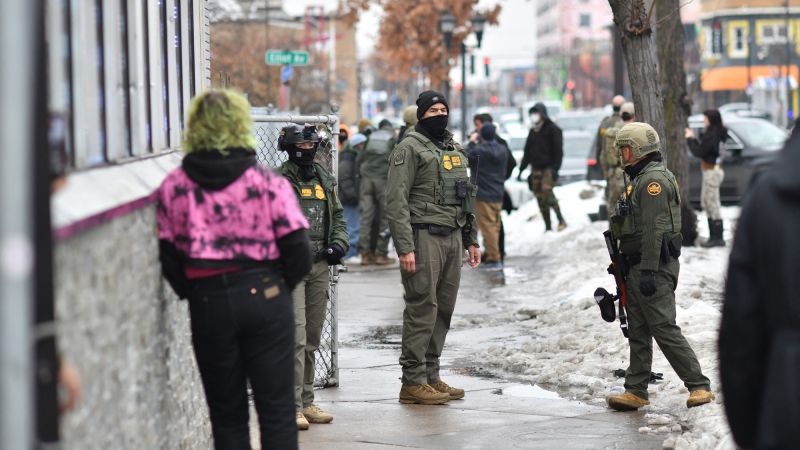
Federal immigration enforcement actions have significantly impacted businesses in Minneapolis and St. Paul, Minnesota. Since the beginning of an intensified operation by U.S. Immigration and Customs Enforcement (ICE), local establishments like El Burrito Mercado have faced declining sales and reduced customer traffic. CEO Melissa Silvia-Diaz reported that the presence of unmarked vans and masked agents has created an atmosphere of fear, causing customers and staff to stay away.
El Burrito Mercado, a well-known Mexican supermarket and restaurant, has been a staple in the community for 47 years. On a recent Wednesday, the establishment operated for only four hours, a stark contrast to its usual busy schedule. “It makes you wonder — how do we survive this?” Silvia-Diaz remarked, highlighting the unsustainable nature of the current situation. The Trump administration’s actions have reportedly led to over 2,000 arrests across the area, according to the Department of Homeland Security.
Economic Fallout and Community Response
The economic repercussions have been severe, with many businesses reporting sales declines of between 50% and 80%. Local leaders and business owners have likened the current climate to the economic downturn experienced during the COVID-19 pandemic. Some businesses have temporarily closed, while others, like Homi, a Mexican restaurant in St. Paul, have shifted to take-out only to ensure the safety of employees and customers. Owner Miguel Lopez expressed deep concerns about safety in both his home and workplace, stating, “I don’t feel safe either in my house or my business.”
The situation has escalated since the death of Renee Good, a U.S. citizen who was killed by an ICE agent, prompting dozens of businesses to temporarily close their doors. Major events, including a comedy performance by John Mulaney and an arts festival, have been canceled due to the heightened tensions.
In response to these developments, the Twin Cities and the state of Minnesota have filed a lawsuit against the Trump administration to halt the immigration operations, citing the adverse economic impact on local businesses. The complaint emphasizes that immigrant-owned businesses are vital to the local economy and community vitality.
Impact on Immigrant Communities
El Burrito Mercado thrives in the District del Sol, a vibrant Mexican-American neighborhood with a rich history rooted in immigration. Silvia-Diaz, whose parents emigrated from Mexico, has seen a marked shift in her clientele as the immigrant community hesitates to engage in public life. She now carries her passport with her, a precaution against potential encounters with immigration agents. “This country is built on immigrant businesses,” she said, underscoring the critical role such establishments play in local economies.
Target Corporation, headquartered in Minneapolis, has also become a focal point for immigration enforcement, with reports of arrests occurring in its stores. This has prompted calls from local leaders for the corporation to take measures to protect its employees and customers. In an email to employees, Target’s chief human resources officer described the ICE actions as “events in our hometown,” signaling a recognition of the turmoil affecting the local community.
The economic landscape of Minnesota is at risk as businesses grapple with the fallout from these immigration operations. The Minnesota Chamber of Commerce has warned that the state’s long-term economic growth could be jeopardized, particularly as the population growth slows. With nearly two job openings for every job seeker, the state relies heavily on immigrant labor to fill workforce gaps.
As Mike Logan, CEO of the Minneapolis Regional Chamber of Commerce, noted, the broader implications of these actions could affect the state’s ability to attract and retain talent. “For the sake of the economy, businesses, and the community, the sooner this can come to a civil conclusion the better,” he stated.
The situation remains fluid, with business owners and community leaders urging for a resolution that prioritizes safety and economic stability. As local establishments continue to navigate this unprecedented challenge, the resilience of immigrant communities and their businesses will be crucial in shaping the future of Minneapolis and St. Paul.