
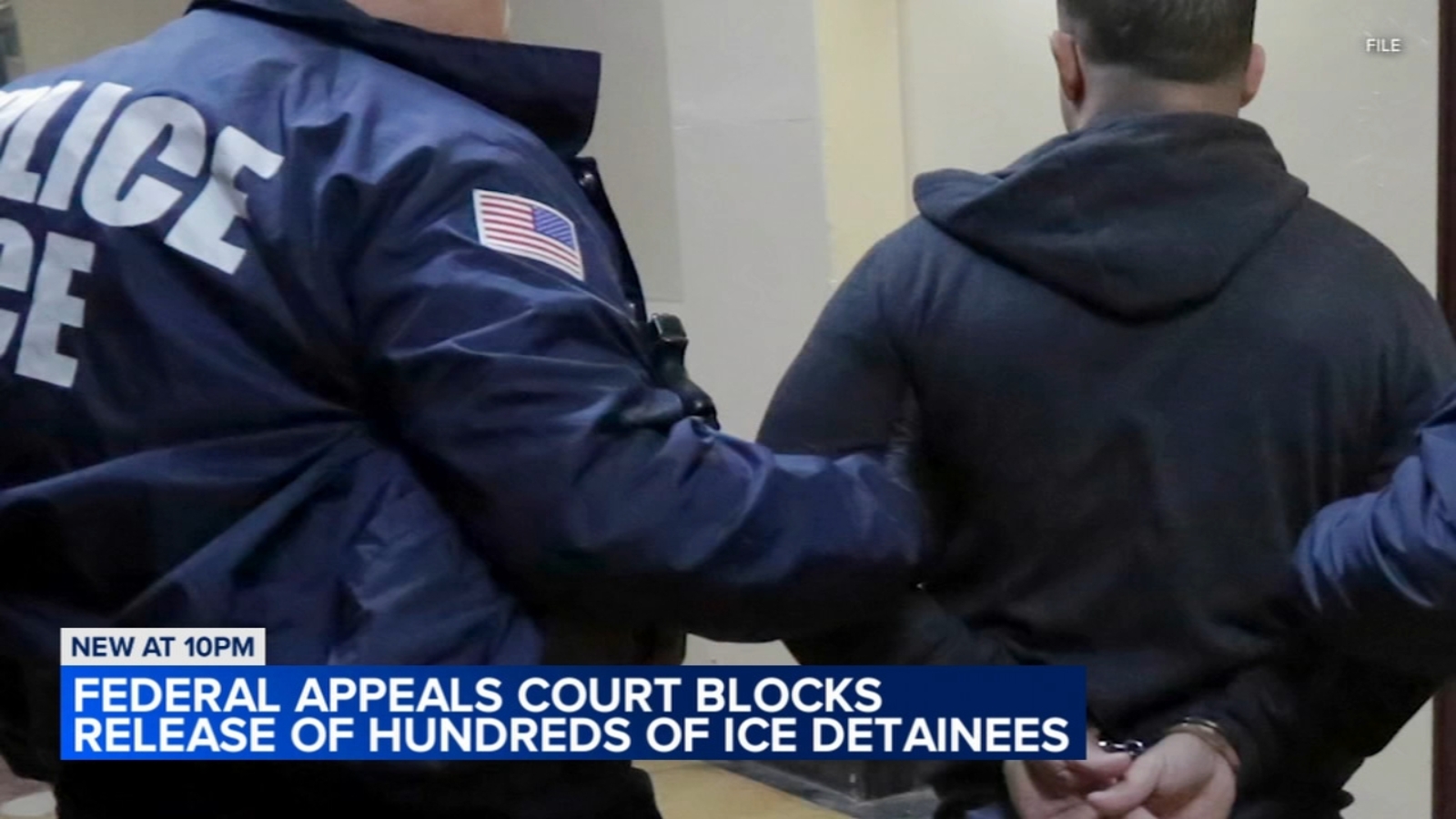
A federal appeals court has intervened to prevent the release of hundreds of individuals detained by immigration agents during “Operation Midway Blitz” in the Chicago area. The case is significant as it examines whether the government violated a consent decree that restricts warrantless arrests under certain conditions. The court has determined that each detainee’s situation must be assessed individually, delaying their release for the time being.
U.S. District Judge Jeffrey Cummings had previously ordered that hundreds of migrants arrested during the operation, including those taken into custody under the Department of Homeland Security’s (DHS) initiative, be released by November 21, 2025. His ruling stems from findings that these arrests may have breached a 2022 consent decree that limits the authority of federal agents to conduct warrantless detentions.
Judge Cummings ruled in favor of attorneys from the American Civil Liberties Union (ACLU) and the National Immigrant Justice Center (NIJC), who represented the detainees. They argued that the DHS’s actions violated the consent decree, which prohibits warrantless arrests unless there is a belief that an individual is in the country illegally and poses a flight risk. Under the judge’s order, thirteen individuals must be released by noon on Friday, while another 615 are set to be placed in “alternatives-to-detention,” which may include electronic monitoring.
The NIJC reported that the 615 individuals were arrested by Immigration and Customs Enforcement (ICE)June 11 and October 7, 2025. Individuals placed in alternatives-to-detention will remain outside of a detention facility but will be monitored while legal proceedings determine the validity of their arrests. “This will allow a lot of people to return to their communities because they never should have been arrested in the first place,” said Michelle Garcia, an attorney with the ACLU.
In addition to the release order, Judge Cummings has mandated the Trump administration to provide more information on all arrests made since October 7. This review aims to identify any other individuals who may have been unlawfully detained and to pause deportation proceedings for those awaiting release.
Those who have prior removal orders or are deemed a significant risk to public safety will not qualify for release, legal representatives indicated. Garcia emphasized that if ICE and Customs and Border Patrol had adhered to federal law and the consent decree, the current situation would not have arisen. “His view of our agreement is that folks who do not have criminal histories or risk of danger to the community, who were unlawfully arrested without probable cause, should be released,” she added.
The Castañon Nava consent decree remains in effect until February 2026 and covers Illinois and several neighboring states. Judge Cummings had previously ruled that recent immigration operations violated this agreement. The consent decree specifically limits warrantless arrests unless there is credible evidence suggesting a person is unlawfully present in the United States and likely to evade capture.
In response to the ruling, a spokesperson for DHS expressed concerns, stating that the judge’s order jeopardizes public safety. “At every turn, activist judges, sanctuary politicians, and violent rioters have actively tried to prevent our law enforcement officers from arresting and removing the worst of the worst,” said Assistant Secretary Tricia McLaughlin. She criticized the decision to release individuals deemed “illegal aliens,” asserting it places American lives at risk.
The Department of Justice has also been directed to evaluate all remaining arrests from the past month that may fall under similar potential violations of the consent decree. As the case progresses, more detainees could be eligible for release.
Over the past month, legal teams from both sides have been working to ascertain the total number of individuals arrested in violation of the consent decree. Mark Fleming from the NIJC believes these unlawful detentions are widespread. “I think our review will show that this whole operation, the terrorizing of our neighborhoods, the brutalizing of people here has all been unlawful,” he stated.
Fleming previously indicated that the number of arrests potentially violating the consent decree exceeds 3,000. He noted that ICE has produced a list of approximately 3,800 individuals, while U.S. Customs and Border Protection has provided a separate list of 1,200. However, he cautioned that there may be duplicate entries among these lists, complicating the total count.
Attorneys representing the DHS argue that Congress has stripped federal courts of their authority to grant parole to large groups of immigrants detained by ICE. Their legal filings assert that the Secretary of Homeland Security alone holds the discretion to approve such releases, and federal courts lack the power to mandate them.
As investigations continue, Fleming highlighted that more than 1,000 individuals who were arrested are no longer in the United States, possibly having been deported after signing voluntary removal orders. “A lot of these folks have never had any interaction with law enforcement before, nor been subject to detention, and so it’s horrifying,” he explained.
Fleming raised concerns that without providing immediate relief, many individuals who may have been unlawfully detained could be lost to the deportation process. As the case unfolds, the implications for the affected communities remain significant, with ongoing discussions about the legality and ethics of the actions taken by immigration enforcement agencies.