
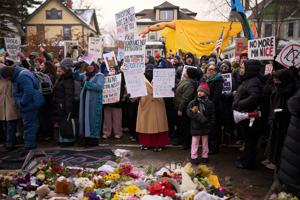
UPDATE: In a dramatic escalation of immigration enforcement, federal agents raided homes in Minneapolis on January 7, 2024, just days after the tragic shooting of local resident Renee Good. This operation, described by the Department of Homeland Security as the largest in history, has heightened tensions throughout the city, already on edge after Good’s death.
Agents forcefully breached the door of a home, arresting a man inside while pepper spraying protesters who confronted them outside. Video footage captures the chaos as local residents attempted to disrupt the operation by banging drums and honking horns, highlighting the community’s unrest. The arrest followed a controversial practice; agents presented a document signed by an immigration officer, which lacks the authority of a judge-sanctioned warrant, leading to significant pushback from immigrant advocacy groups.
Since the operation began in early December, over 2,000 immigration arrests have been reported across Minnesota, intensifying fears among immigrant communities. Minneapolis City Councilmember Jason Chavez expressed concern over the aggressive federal presence, stating, “They’ve definitely been out here,” while monitoring reports from local residents about agent sightings.
Protests have unfolded in freezing temperatures, with over 20,000 individuals receiving training to become observers of enforcement activities, according to Luis Argueta from the advocacy group Unidos MN. “It’s a role that people choose to take on voluntarily,” he noted, emphasizing community solidarity amidst fear.
As tensions rise, Minneapolis public schools are shifting to remote learning for the next month, citing safety concerns for children. Many schools closed last week following Good’s shooting, which has prompted widespread anxiety in the area.
Amid ongoing enforcement actions, local leaders are demanding that the investigation into Good’s death include state authorities. Minneapolis Mayor Jacob Frey and U.S. Senator Tina Smith called for transparency in the investigation, questioning the federal government’s objectivity. Smith stated, “How can we trust the federal government to do an objective, unbiased investigation?”
The Trump administration has defended the actions of the officer who shot Good, asserting that he acted in self-defense. Todd Lyons, acting director of ICE, reiterated this stance during an interview, claiming that local jurisdictions must cooperate with federal efforts to ensure public safety.
The fallout from Good’s shooting has sparked nationwide protests, with thousands rallying in Minneapolis and across the country. The situation continues to develop as the community grapples with the ramifications of federal immigration policies and local safety concerns.
As Minneapolis braces for what comes next, residents remain vigilant, hoping for a resolution that addresses both their safety and their rights. Stay tuned for further updates on this urgent and evolving story.