
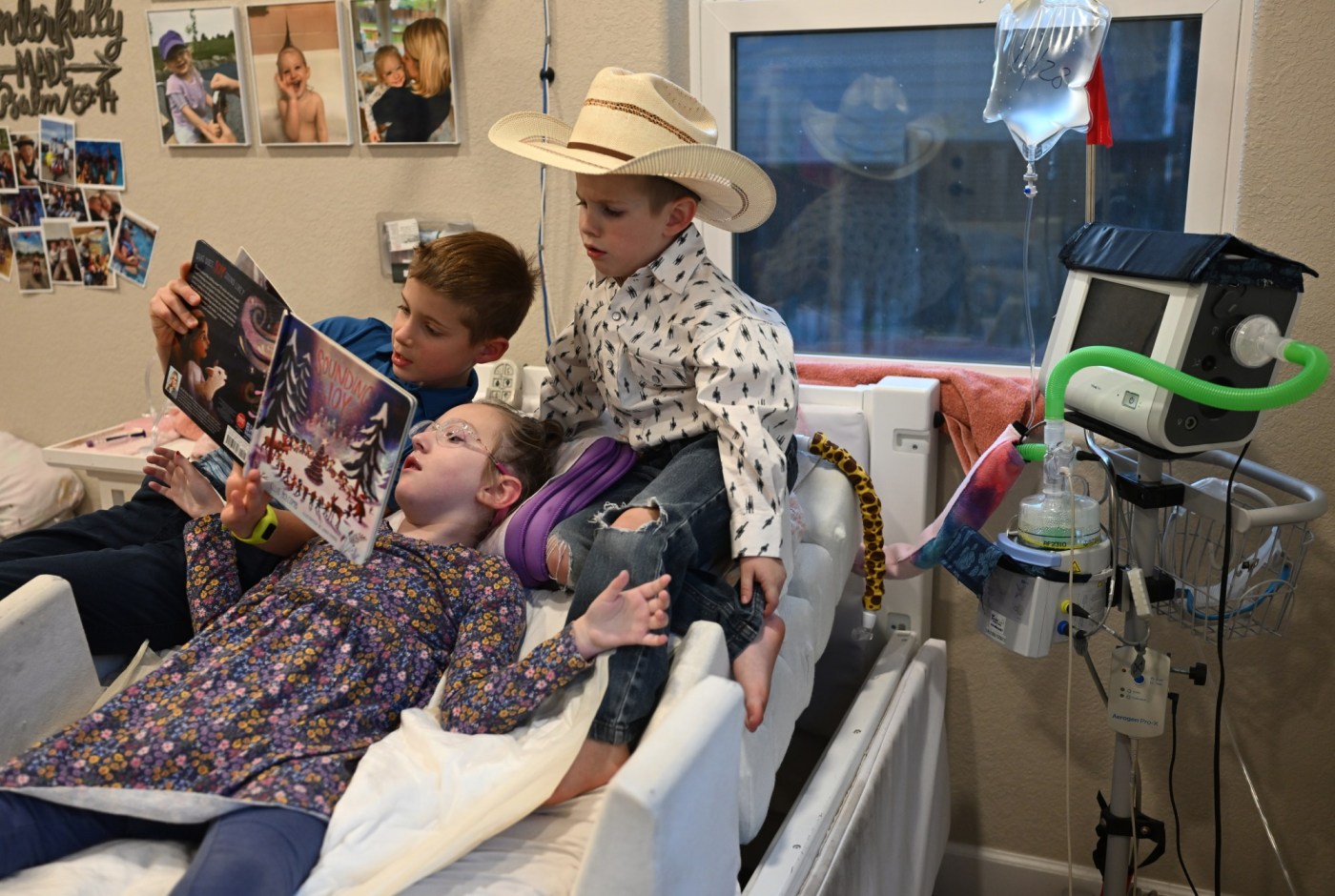
URGENT UPDATE: A family from Fort Collins, Colorado, is racing against time to raise $4 million for groundbreaking gene therapy that could transform the lives of children like Everly Green, who are trapped in bodies they cannot move. At just 8 years old, Everly is unable to move anything except her eyes, yet remains fully aware and eager to engage with the world around her.
Everly’s journey began with developmental delays and progressive health issues that started when she was just 18 months old. Following a series of seizures, her condition worsened—by age 2, she required a feeding tube. Now, she communicates through a screen, but her family believes a revolutionary treatment could bring back her independence.
“The children are in there, they want to play like other kids; they just can’t move,” said Chrissy Green, Everly’s mother and co-president of the foundation Finding Hope for FRRS1L. The foundation is actively seeking funds to support the next stage of drug development aimed at addressing a rare mutation in the FRRS1L gene.
This mutation affects how neurons communicate in the brain, leaving these children cognitively intact but physically compromised. Currently, fewer than 40 children worldwide are diagnosed with this condition, making it difficult to attract pharmaceutical interest and funding for research.
The urgency is palpable as the family collaborates with researchers at the University of Texas Southwestern Medical Center to develop a gene therapy that has shown promise in animal tests. If they can secure funding, clinical trials could begin as early as September 2026. However, the road ahead is fraught with challenges; even if the therapy is proven effective, they’ll face hurdles with the FDA and potentially reluctant insurance companies.
Neil Hackett, a researcher who has worked closely with families on similar therapies, emphasizes the uphill battle these families face. “They need massive amounts of money and specific expertise, which is not easy to find,” he stated.
The foundation’s dedicated efforts have already raised significant funds, but the $4 million target is essential for progressing to clinical trials. The community’s support has been crucial, and the Greens are hopeful that their fundraising efforts will not only aid Everly but also pave the way for future treatments for other children with the same condition.
As they persist in their mission, the Greens remain optimistic. “All the diseases can kind of help each other move forward,” Chrissy Green said, reflecting on the wider impact of their work.
For families like the Greens, time is of the essence, and they are determined to bring this innovative gene therapy to fruition, restoring mobility and independence to children who deserve a chance at a fuller life.
As they continue their efforts, the community is urged to contribute and spread the word about this life-changing opportunity. Every dollar counts in the fight to help children like Everly regain control over their lives.