
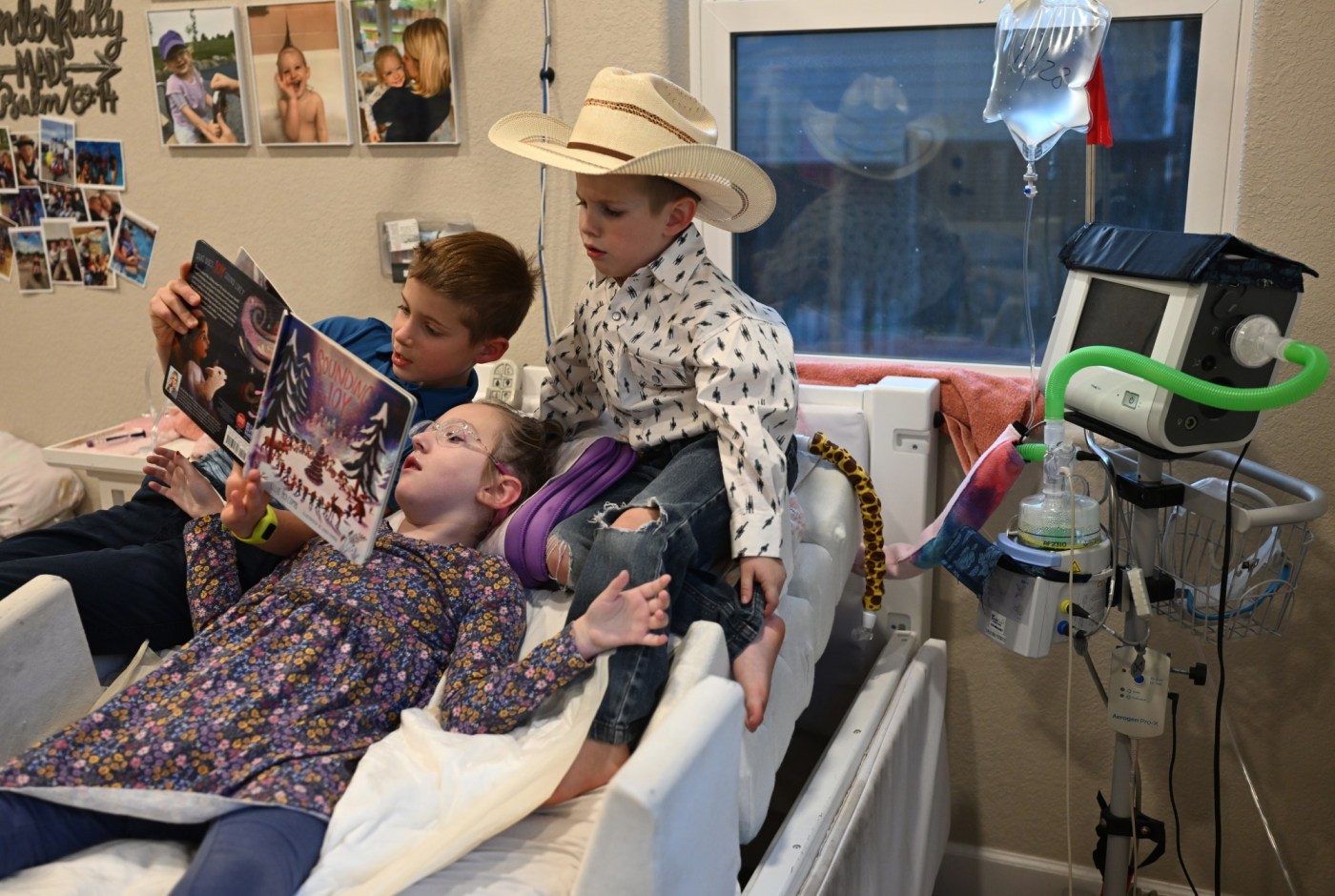
A family in Fort Collins, Colorado, is on a mission to raise $4 million to fund a groundbreaking gene therapy trial that could significantly improve the lives of children with a rare genetic mutation. Eight-year-old Everly Green, diagnosed with a mutation in the FRRS1L gene, currently experiences severe mobility limitations, communicating only through eye movement due to her condition.
Initially, Everly’s parents were puzzled by their doctors’ recommendation for genetic testing. At 18 months, Everly was behind on her developmental milestones but seemed to be making progress. However, when she turned 2, her condition deteriorated. Following the onset of seizures, she lost essential skills and required a feeding tube within just a few months. Now, at age eight, she remains aware and engaged but is unable to perform basic tasks like holding toys or participating in family outings.
Chrissy Green, Everly’s mother, described her daughter as an intelligent and sociable child who cherishes her time at school. “These kids are in there, they want to play like other kids, they just can’t move,” Green stated. She co-presides over the foundation Finding Hope for FRRS1L, which is dedicated to raising funds for further drug development aimed at helping children like Everly.
The FRRS1L gene disorder affects only a handful of children worldwide, leading to limited interest from pharmaceutical companies. With only a few dozen diagnosed cases globally, families are left to spearhead their own research initiatives. The goal is to convince regulatory bodies, such as the U.S. Food and Drug Administration, that the proposed treatment is both safe and effective.
Gene therapy involves replacing a malfunctioning gene with a healthy one, typically delivered through an engineered virus. This innovative method has shown promise in treating various conditions, including severe immune deficiencies and certain inherited disorders. However, the technology is not without risks, as adverse effects have been reported in previous trials.
Funding gene therapy initiatives often poses a significant challenge, particularly for rare conditions like Everly’s. According to researcher Neil Hackett, families typically lack the resources and expertise necessary to navigate the complex landscape of drug development. “They need specific expertise, which is not easy to find, and they need massive amounts of money,” Hackett explained.
After receiving Everly’s diagnosis, her family was initially advised to make the most of their time together, as medical options appeared limited. Instead of accepting this grim outlook, Chrissy Green sought out connections with other families facing similar challenges. She met Viviana Rodriguez, a mother from London, whose child shared Everly’s condition. Together, they explored potential avenues for treatment, eventually forming a foundation aimed at funding research.
Through a series of fortunate events, Green and Rodriguez connected with researchers at the University of Texas Southwestern Medical Center. These researchers had previously experimented with gene therapies in animal models, specifically mice with the same mutation as Everly. Initial results showed that mice receiving gene therapy exhibited near-normal movement, raising hopes for human applications.
The next phase involves testing for potential toxic side effects and securing a manufacturer capable of producing the gene therapy. If successful, they could initiate human trials in September 2026. Green remains optimistic, stating, “We saw major recovery in the animals, so we’re really hopeful for our kids.”
Despite the promising results in animal studies, translating these findings to human patients often presents hurdles. Foundations must navigate the lengthy FDA approval process while also convincing insurance providers to cover the costs of treatments that may not be profitable due to the small patient population.
In conclusion, while the journey to bring the FRRS1L gene therapy to fruition is fraught with challenges, Green believes that not only will the treatment benefit children like Everly, but it could also pave the way for future advancements in gene therapy for other conditions. “All the diseases can kind of help each other move forward,” she stated, embodying the hope that drives her family’s mission.