
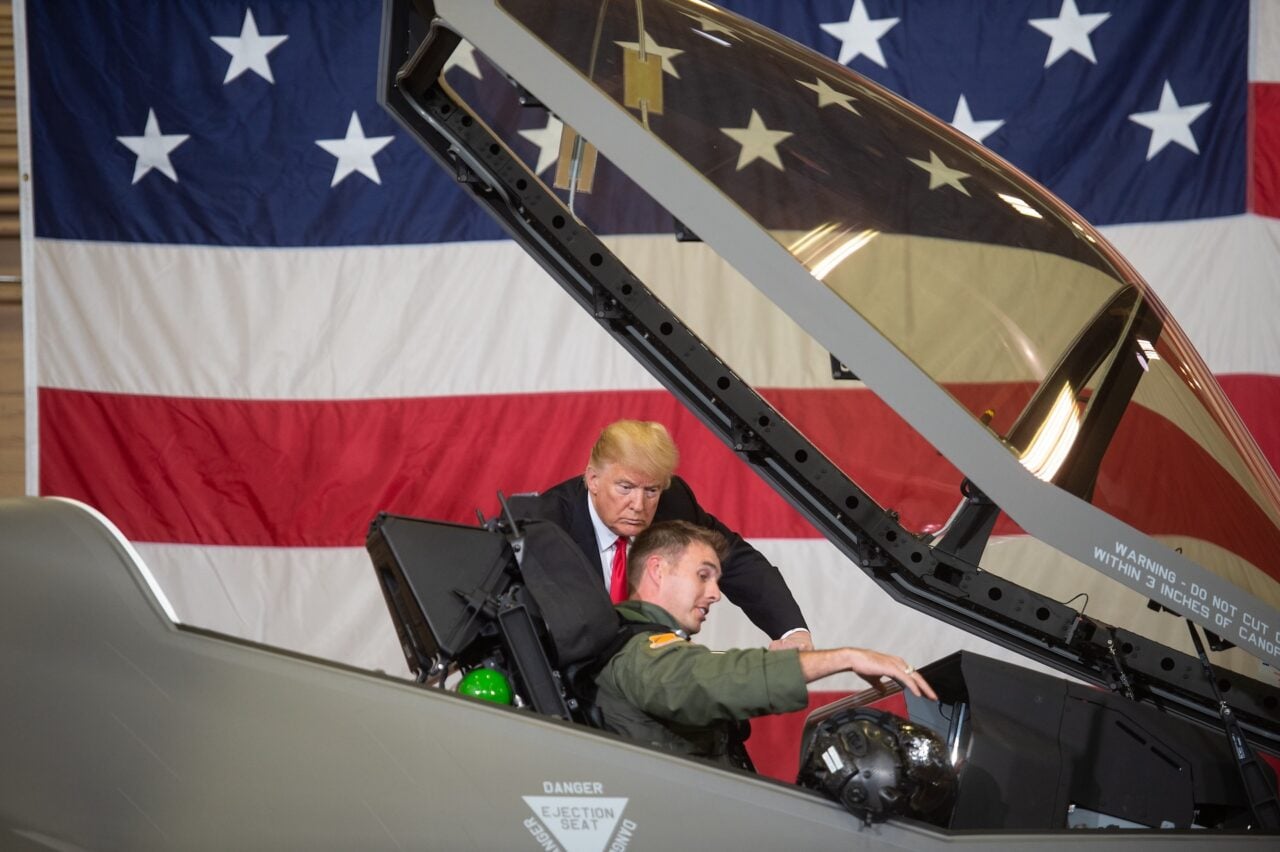
URGENT UPDATE: The F-35 fighter jet program is grappling with critical software issues that jeopardize its operational capabilities, even as tensions escalate in the Middle East. New reports from the Pentagon reveal that the highly anticipated software update to the F-35, known as Technology Refresh 3 (TR-3), has not been successfully deployed, leaving the jets struggling with performance deficiencies.
The Pentagon’s unpublished report, reviewed by Bloomberg, indicates that the F-35s, which cost approximately $80 million each, are still reliant on the older Technology Refresh 2 (TR-2) system. Despite promises of a major upgrade providing 20 to 25 times more computing power, the TR-3 update has been rendered “predominantly unusable” due to ongoing stability problems and untested features.
The urgency of this situation is amplified by the F-35s’ active deployment near Iran, where U.S. and Israeli forces have reportedly engaged in combat operations. A recent report from the Jerusalem Post confirms that U.S. forces utilized F-35s to intercept a drone over the region within the past week, highlighting the immediate relevance of these software failures.
Pentagon officials have confirmed that delivery of F-35s was halted unless they met operational software standards. “TR-3 must at least match TR-2 equivalency before it can be accepted for use,” stated Russ Goemaere, the Pentagon’s F-35 program spokesperson. This ongoing software crisis raises concerns about the safety and effectiveness of the F-35s in current military operations.
Lockheed Martin announced the beginning of TR-3 deliveries in July 2024, touting enhancements aligned with the Block 4 system, which includes improved missile capacity and advanced electronic warfare capabilities. However, the latest Pentagon findings indicate that no additional combat capabilities were delivered in 2025, raising alarms about the overall effectiveness of the F-35 program.
The F-35 program, notorious for its significant cost overruns, has seen a tumultuous history. In 2016, former President Donald Trump criticized the program, claiming expenses were “out of control.” Although costs were subsequently reduced by 25%, the total spending on the program has remained exorbitantly high.
As the F-35s continue to engage in real-world operations, the lack of a reliable software update poses serious risks. The Pentagon’s recent revelations highlight a critical gap in the F-35 program’s readiness, which could have dire implications for U.S. and allied forces operating in high-stakes environments.
With the situation developing rapidly, officials and military analysts will be watching closely to see how the F-35 program responds to this urgent crisis. As combat operations persist, the need for a stable and capable fighter jet has never been more pressing.
Stay tuned for further updates on this unfolding situation as the implications for military readiness grow.