
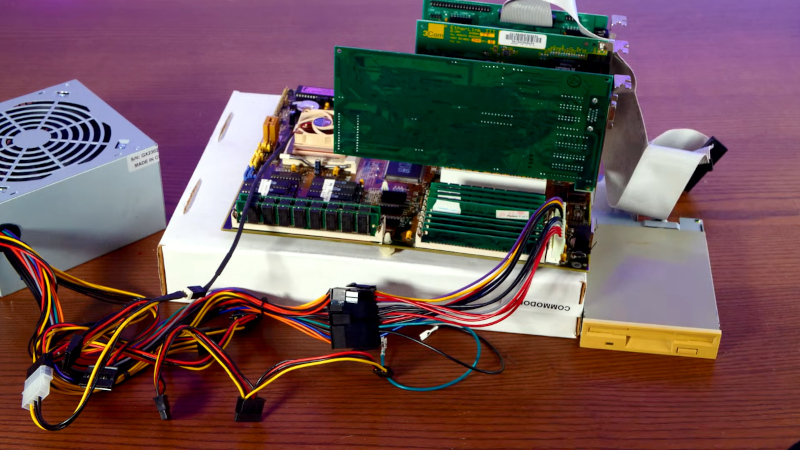
The concept of running Linux from a floppy disk has surfaced once again, as technology enthusiast Action Retro explores the viability of this retro computing method in 2025. In a recent video, he demonstrates the process of compiling a modern version 6.14 kernel with minimal options, alongside a compact version of BusyBox, which provides essential tools for the operating system.
With a nostalgic nod to the early days of Linux, when floppy disk distributions served as handy rescue environments, Action Retro attempts to boot the system on a basic 486 setup. His journey, documented in a guide sourced from GitHub, reveals the challenges faced when working with such limited storage capacity. Despite the simplicity of the kernel by today’s standards, managing dependencies within the constraints of a floppy disk proves to be a formidable task.
Challenges of Floppy Linux in a Modern Context
The floppy disk, once a staple of computing, presents its own set of complications. Action Retro encounters difficulties finding a functional drive and media, as both components have aged significantly. This endeavor highlights not only the nostalgia associated with floppy disks but also the dwindling support for such technology. As he refines his setup, it becomes apparent that the pursuit is less about creating a functional distribution and more about pushing the boundaries of what is technically feasible.
While floppy Linux provided excitement and utility in the late 1990s, the current exploration feels more like a curiosity than a practical solution. The video series promises further insights into the capabilities of Linux on floppy disks, yet it is clear that this venture is largely an exercise in retro computing rather than a serious alternative for modern users.
A Nod to the Past and Future Implications
Over the years, discussions about Linux on floppy disks have appeared sporadically in technology circles, but the reality is that the floppy drivers in Linux are now classified as orphaned legacy components. As computing continues to evolve, the significance of these older technologies diminishes, prompting a reflection on the balance between innovation and nostalgia.
This exploration serves as a reminder of how far technology has come since the early days of Linux. While the floppy disk may hold a special place in the hearts of many tech enthusiasts, its practical applications in today’s world are limited. As Action Retro continues his journey, he not only revives interest in vintage computing but also highlights the inevitable march of progress in the tech industry.