
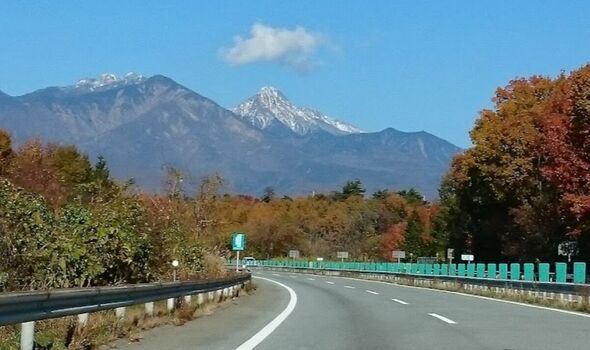
The Chūō Expressway, a remarkable infrastructure project in Japan, links Tokyo with Nagoya across a distance of 367 kilometres. Stretching through several picturesque prefectures, this expressway is not just a vital transportation route but also a gateway to some of Japan’s most breathtaking landscapes. Estimated to have cost around ¥11 trillion (approximately £52 billion), the expressway features four lanes for almost its entire length, culminating at an altitude of 1,015 metres above sea level.
For those considering a road trip, the Chūō Expressway offers an inland journey that traverses the mountainous regions of Kanagawa, Yamanashi, Nagano, and Gifu Prefectures. This scenic route provides striking views of majestic mountains and serene lakes, including Lake Sagami and Lake Suwa. Notably, the expressway runs in close proximity to Mount Fuji, allowing for a convenient detour to visit Japan’s most iconic peak.
Engineering Marvels and Safety Concerns
Among the expressway’s notable engineering features is the Sasago Tunnel, located approximately 80 kilometres west of Tokyo. This twin-bore tunnel, extending about three miles, has a significant place in recent history due to a tragic accident that occurred in December 2021. During this incident, nine individuals lost their lives, and two others sustained injuries when parts of the tunnel’s roof collapsed onto vehicles passing through. The aftermath was devastating, with the victims discovered in three cars crushed by falling concrete panels, and a fire breaking out shortly thereafter.
In December 2021, a memorial service was held at the tunnel, attended by around 50 people, including bereaved family members and officials from Nexco Central, the expressway’s managing company. During the ceremony, Tadashi Nawata, President of Nexco Central, expressed his condolences to the families affected by the tragedy. “We pledge to address the constant challenge of improving expressway safety,” Nawata stated, reflecting the company’s commitment to enhancing safety measures in the wake of the incident.
Access and Pricing
Travelers on the Chūō Expressway are required to pay tolls, which consist of a ¥150 (approximately 71 pence) entry fee, along with an additional ¥25 (about 12 pence) for each kilometre driven. This system is designed to manage the expressway’s maintenance and operational costs while facilitating a smooth driving experience.
While Japan is renowned for its efficient public transportation, including the famous bullet trains capable of reaching speeds up to 320 km/h, the Chūō Expressway provides an alternative for those who wish to explore the nation by car. The combination of stunning vistas and the accessibility of major cities makes it a compelling choice for both domestic and international travelers seeking to experience the diverse beauty of Japan.
As road trips gain popularity, the Chūō Expressway stands out not only for its engineering prowess but also for the opportunities it presents for exploration and adventure. Whether one seeks the thrill of driving through Japan’s mountainous terrain or the chance to witness the grandeur of Mount Fuji, this expressway is a significant part of the country’s transportation landscape.