
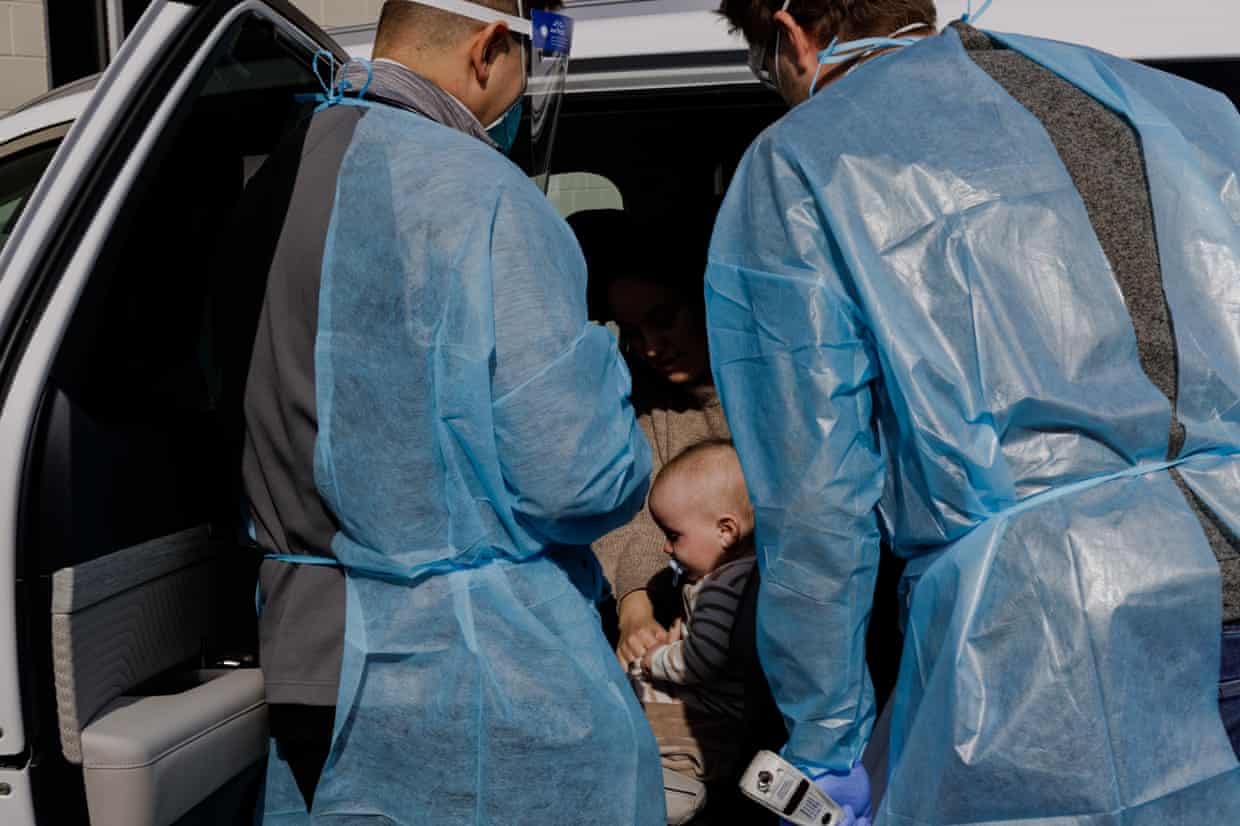
The Trump administration is facing criticism for its handling of the ongoing measles outbreak in the United States, where cases have surpassed 1,000. Experts assert that the administration’s response has been inadequate, characterized by a lack of urgency in messaging and insufficient funding aimed at controlling the disease.
Alonzo Plough, chief of science at the Robert Wood Johnson Foundation and a veteran in public health, highlighted a concerning attitude from the Centers for Disease Control and Prevention (CDC). He referenced comments made by Dr. Ralph Abraham, who resigned as CDC principal deputy director in late February 2025, suggesting that the alarming rise in measles cases, including fatalities in some states, was merely a “cost of doing business.” Such remarks, according to Plough, reflect a troubling belief among CDC leadership that the outbreak is not a significant concern.
In response, Andrew G Nixon, a spokesperson for the Department of Health and Human Services (HHS), dismissed claims that the CDC has deprioritized measles management. “The CDC’s focus remains on measles prevention, treatment education, and targeted public health interventions to protect communities,” Nixon stated.
Dr. Scott Rivkees, a former surgeon general of Florida and current professor at Brown University, expressed that public health messaging from senior officials has caused “tremendous confusion.” He pointed out that some are promoting alternatives to the measles vaccine, which is both safe and effective. Despite the national messaging issues, Rivkees commended local health departments, particularly in Spartanburg County, South Carolina, where efforts to boost vaccination clinics and public awareness campaigns are being made amid the state’s severe outbreak.
The CDC has traditionally provided regular reports and alerts during outbreaks, yet communications regarding the current measles situation have been notably sparse. In the past year, the CDC’s presence on social media concerning measles has diminished significantly, with one of the few posts defending the administration’s approach to the outbreak and linking to a letter by Abraham that questioned the reliance on vaccination alone to prevent the disease.
Statistics indicate that an overwhelming 94 percent of measles cases are among unvaccinated individuals or those with unknown vaccination status. This alarming trend underscores the need for more proactive public health strategies.
Experts attribute the lack of effective communication and response to significant funding cuts to the CDC. Jennifer Nuzzo, director of the pandemic center at Brown University, explained that disease surveillance operates like a pyramid, with hospitals at the base tracking cases. Cuts to funding have hampered the flow of critical information from local departments to national levels, compromising the CDC’s ability to provide timely data.
Plough echoed Nuzzo’s concerns, noting that the cuts have coincided with delays in reporting morbidity and mortality rates. “The reporting on health data from the CDC has been severely compromised,” he stated. The lack of timely information means the public may not fully grasp the severity of the current measles outbreak, which has already resulted in three fatalities this year.
Nuzzo suggested that enhancing wastewater surveillance could help fill gaps in tracking cases, as this method allows for the estimation of cases before clinical detection. Although funding specifically allocated for COVID-19 expanded wastewater surveillance capabilities, those funds expired last year, and the Trump administration has proposed reducing related funding from $125 million to $25 million annually.
Nuzzo emphasized that if the administration were genuinely committed to combating measles, it would increase funding for surveillance rather than cut it. Rivkees expressed optimism that U.S. public health systems could regain their former effectiveness, as Congress has recently restored much of the CDC’s funding. Yet Plough remains cautious. “Restoring funds and directing them to the right areas are two different things,” he remarked.
The ongoing debate about funding and vaccine uptake highlights the critical need for a comprehensive response to the measles outbreak. Nuzzo argued that widespread vaccination would eliminate the need for extensive surveillance funding, stating, “No amount of surveillance will end this unless people get vaccinated, because the only thing that ends this is immunity.”