
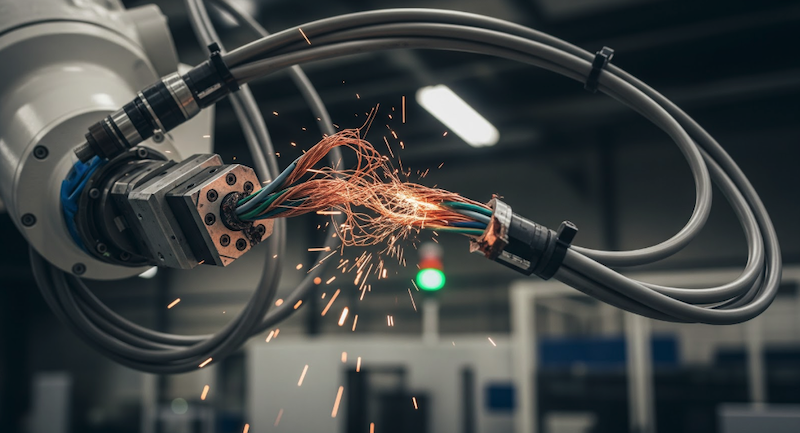
Cable failures pose a significant challenge in robotic systems, impacting efficiency and operational costs. Whether in robotic arms on assembly lines, autonomous guided vehicles (AGVs) navigating warehouses, or humanoid robot joints, cables serve as critical lifelines. Yet, the wear and tear they endure during constant movement can lead to breakdowns that halt operations, resulting in lost time and financial strain.
Understanding the reasons behind cable failures is essential for developing effective solutions. Cables used in moving robots experience dynamic flexing, which differs from the static conditions in regular electrical installations. Each movement cycle places stress on both conductors and insulation, leading to potential failures over time. Even the highest-quality cables can succumb to this strain if not specifically designed for high-flex applications.
Choosing the Right Cables
To mitigate cable failures, selecting the appropriate cables is crucial. Not all cables are created equal; those intended for dynamic use must be chosen carefully. Cables featuring fine-stranded conductors are preferable, as their flexibility allows for repeated bending without damage. Many specialized cables offer stranding classes of five or higher, accommodating the demands of high-flex applications.
The type of insulation also plays a significant role in durability. Materials such as polyurethane (PUR) and thermal plastics elastomers (TPE) are more resilient compared to conventional PVC. They resist abrasion, maintain integrity across a broad temperature range, and withstand continuous motion without cracking or degrading. Collaborating with reputable cable assembly manufacturers familiar with robotics can help ensure the right cables are selected or designed to meet specific movement and environmental needs.
Installation and Maintenance Practices
Effective cable installation is just as important as selecting the right materials. Incorrect routing can drastically reduce cable lifespan. To minimize stress and strain, cables should be guided to maintain a consistent bend radius, preventing tangling or abrasion against sharp surfaces. Adhering to the manufacturer’s minimum bend radius specifications is essential; sharp bends during installation can compromise internal structures, leading to early failures.
Proper cable management involves securing cables without creating stress points, such as using overly tight clamps or zip ties. Think of cables as vital components that need adequate space to function properly.
In addition to thoughtful installation, ongoing maintenance is vital. Regular inspections of cables in high-cycle areas can identify issues before they lead to complete failures. Many facilities do not realize there is a problem until a breakdown occurs, which can be costly. Implementing proactive maintenance schedules allows for cable replacements during routine checks, minimizing unexpected downtimes.
In critical applications, incorporating cables with built-in monitoring capabilities or employing thermal imaging inspections can detect early signs of electrical resistance, indicating potential damage. Some advanced robots now come equipped with predictive maintenance software that tracks electrical properties, alerting operators to any degradation before a failure occurs.
Partnering with experienced suppliers can also enhance cable management strategies. Qualified providers, like WellPCB Spain, offer engineering expertise to assess movement patterns and environmental factors, ensuring the most effective solutions are implemented. They can assist with testing and verification to ensure selected cables meet operational longevity requirements.
In conclusion, there is no single solution to eliminate cable failures in moving robotic systems. A comprehensive approach that combines selecting the right cables, implementing intelligent routing and installation practices, ensuring quality manufacturing, and maintaining equipment can significantly reduce failures. By focusing on these strategies, businesses can enhance cable life, minimize downtime, and maintain the efficiency of their robotic systems.