
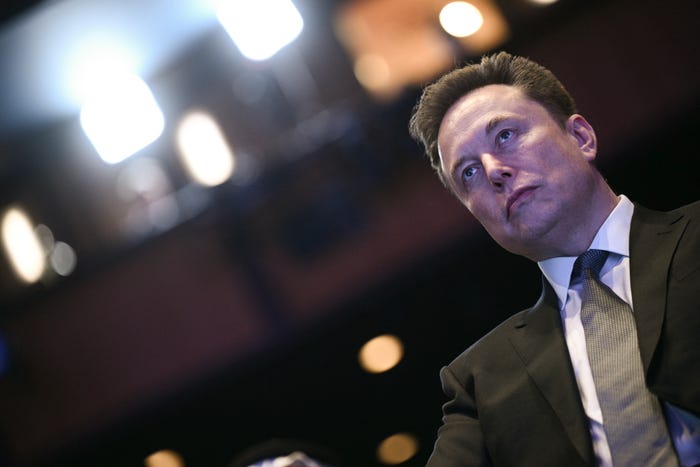
BREAKING: Elon Musk has just announced that artificial intelligence (AI) and robotics are the key solutions to America’s escalating debt crisis, projecting that these technologies will lead to a significant economic turnaround within the next three years. In a conversation with investor and podcaster Nikhil Kamath, published on November 26, 2023, Musk stated, “That’s pretty much the only thing that’s going to solve for the US debt crisis.”
The current US national debt stands at a staggering $38.34 trillion, more than double its value from a decade ago. Musk emphasized that a surge in productivity driven by AI is essential to overcome the fiscal challenges facing the nation. He predicted that “goods and services output will exceed the rate of inflation” by 2026, potentially leading to significant deflation.
Musk’s vision includes the revolutionary impact of his Optimus robot, which he claims could eliminate poverty and reduce the necessity for human labor. “People often talk about eliminating poverty, giving everyone amazing medical care,” Musk said at a recent Tesla shareholder event. “There’s actually only one way to do that, and that’s with the Optimus robot.”
As AI technologies evolve, Musk envisions a future where “working is optional.” He referred to this scenario as “universal high income,” a state where productivity is so high that basic needs can be met without traditional employment. The implications of this transformation could be profound, suggesting a shift in societal norms and economic structures.
Musk’s comments align with broader discussions in the tech industry about AI’s potential to reshape the economy. Sundar Pichai, CEO of Google, recently highlighted the “potential for extraordinary benefits” that AI brings, while also cautioning about the societal disruptions it may cause. Investor Vinod Khosla stated that AI could eventually perform “80% of the work in 80% of jobs,” prompting calls for measures like universal basic income to prevent rising inequalities.
However, not everyone shares Musk’s optimistic outlook. Geoffrey Hinton, known as the “godfather of AI,” warned that while AI might generate significant profits, the wealth could become concentrated among a select few, exacerbating economic disparities. He cautioned that the technology could lead to “massive unemployment.”
As these developments unfold, the world watches closely. The intersection of AI and economics is not just a technological advancement but also a potential catalyst for dramatic social change. What happens next remains to be seen, but the urgency of Musk’s assertions cannot be understated.
Stay tuned for further updates as the implications of AI on the economy and society continue to develop.