
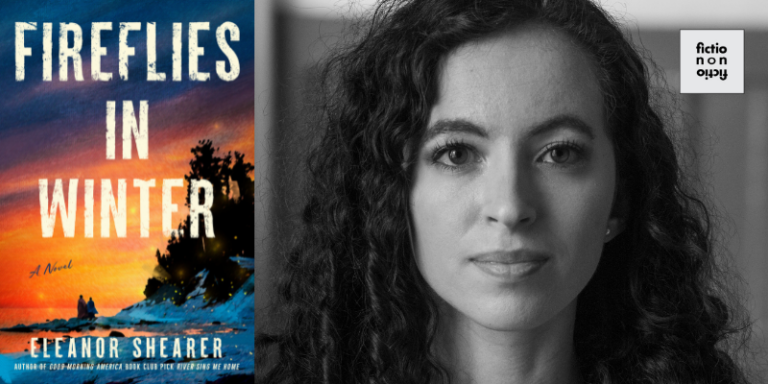
British novelist Eleanor Shearer recently discussed her latest work, Fireflies in Winter, on the podcast hosted by V.V. Ganeshananthan and Whitney Terrell. The novel sheds light on the often-overlooked history of the Leeward Maroons of Jamaica—an autonomous community of Black individuals descended from formerly enslaved Africans and Indigenous people who arrived in Nova Scotia at the end of the 18th century.
Shearer, who has Caribbean ancestry, described her fascination with the Maroons as a representation of both resistance and complex dynamics surrounding slavery. While they fought against British colonial rule in Jamaica, they also participated in the recapture of runaway enslaved individuals, highlighting a nuanced relationship with slavery. She noted that these historical connections resonate with the current experiences of marginalized communities, particularly immigrants navigating precarious situations today.
In her conversation, Shearer emphasized the importance of historical accuracy in depicting aspects of queer life, underscoring the challenges of representing such experiences in earlier periods. She explained her choice to write in the present tense, bringing immediacy to the historical narrative and making it more relatable to contemporary readers.
Examining Characters and Themes
During the podcast, Shearer shared insights into her characters, including Cora, who grapples with the loss of her Jamaican home and a close friend. The novel’s structure reflects a profound sense of grief alongside themes of freedom and identity. Cora’s interactions with Silas, a captain in the Maroons, and his son Benjamin, illustrate the complexities of relationships within a community shaped by historical trauma.
Cora’s position as an orphan enhances her vulnerability, as Silas sometimes exploits her ambiguous status for power. The novel also tackles the issues faced by children like Benjamin, who represents the long-lasting effects of displacement and loss.
Shearer noted the significance of including children in her narrative, drawing parallels between historical experiences and contemporary issues faced by young ones today. She reflected on the historical context of family fractures stemming from the legacy of slavery, relating it to modern instances of familial separation, particularly among immigrant communities in the United States.
Connections to Contemporary Issues
The discussion highlighted the ongoing relevance of Shearer’s themes in a world where immigration and displacement continue to shape lives. She referenced the experiences of children affected by immigration policies, drawing comparisons to Benjamin’s journey of navigating grief and loss.
Shearer stated that while children often display resilience, there remains an underlying trauma that influences their development. She emphasized the need for understanding and support for children in precarious situations, echoing a wider societal responsibility to address these issues.
As the conversation concluded, Shearer read an excerpt from Fireflies in Winter, inviting listeners to immerse themselves in the rich tapestry of history and human experience that she has crafted. The podcast episode is available for streaming on various platforms, including iTunes and Spotify.
Through her exploration of the Maroons’ history and its connections to contemporary themes, Shearer’s work invites readers to reflect on the complexities of identity, community, and the enduring impact of history on present lives.