
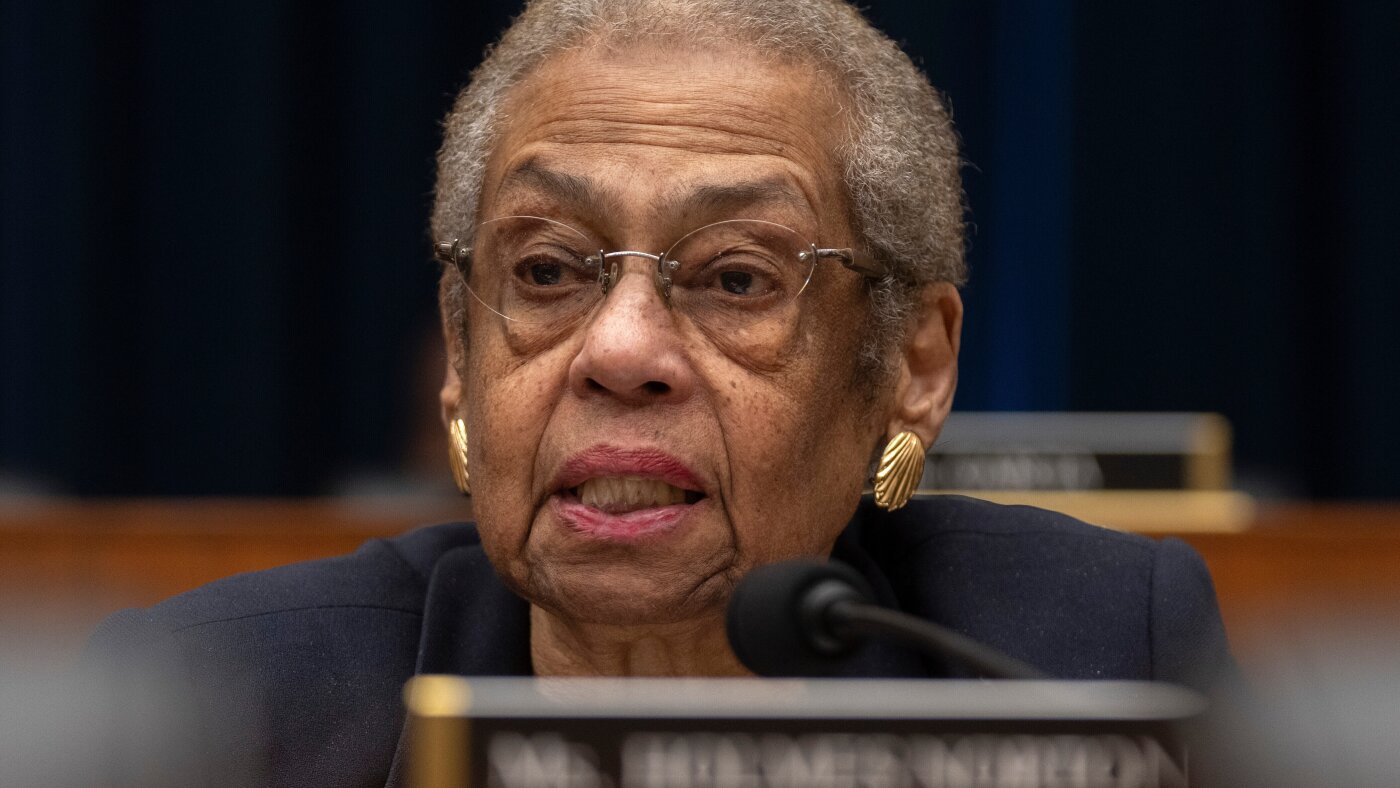
Eleanor Holmes Norton, the long-serving delegate for the District of Columbia, has officially concluded her campaign for reelection to Congress, marking a significant milestone in her extensive public service career. Norton, who has represented the interests of D.C. residents since 1991, filed the necessary paperwork to terminate her campaign on March 15, 2024. This announcement signals the end of an era for a political figure deeply rooted in the Civil Rights Movement.
At 88 years old, Norton has been a prominent voice in Congress, often referred to as the “Warrior on the Hill.” Throughout her tenure, she has advocated for D.C. statehood and labor rights for federal workers. Recently, however, questions about her effectiveness emerged in light of the Trump administration’s significant federal interventions in the city.
Washington D.C. Mayor Muriel Bowser praised Norton on social media, stating, “For 35 years, Congresswoman Norton has been our Warrior on the Hill. Her work embodies the unwavering resolve of a city that refuses to yield in its fight for equal representation.” Bowser’s tribute highlights Norton’s commitment to advocating for her constituents.
Although Norton does not possess a formal vote in the House, she has made meaningful contributions. Her campaign’s termination report was first reported by NOTUS. In the wake of her retirement, several local lawmakers have already expressed their intentions to compete for her position in a Democratic primary, reflecting the city’s overwhelmingly Democratic electorate.
Norton, as the oldest member in the House, has a well-documented history of civil rights activism. She was a contemporary of notable figures such as Medgar Evers and has often shared her experiences from the Civil Rights Movement. In her 2003 biography, she noted the advantages of growing up in a community that was “very race conscious, very civil rights conscious.”
The political climate in Washington has changed dramatically in recent years, with the federal government taking unprecedented actions in response to local governance. The White House’s decision to federalize the Washington police force and deploy National Guard troops has sparked protests and legal challenges. These developments have fueled calls for Norton to step aside, as many residents questioned her ability to advocate effectively.
During her time in office, Norton successfully championed legislation that enabled D.C. residents to attend public colleges and universities across the country at in-state tuition rates and secured grants for private university attendance. Her work helped alleviate a financial crisis in the 1990s by negotiating a transfer of billions of dollars in unfunded pension liabilities to the federal government, showcasing her ability to navigate complex legislative landscapes.
Norton has also played a pivotal role in advancing the cause of D.C. statehood, leading efforts to pass related bills in the House on two separate occasions. Despite her lack of formal voting power, her advocacy has drawn national attention to the unique challenges facing the district.
As Norton steps away from the political arena, her departure coincides with a broader trend in Congress. With more than 1 in 10 members of the House choosing not to seek reelection this year, her retirement adds to a significant reshaping of the legislative body.
In a recent interview with The Associated Press, Norton reflected on her life’s journey, emphasizing her commitment to civil rights and her efforts to empower her community. Her legacy in Washington, marked by resilience and advocacy for representation, will undoubtedly influence the next generation of leaders in D.C. politics.