
Recent discussions surrounding the U.S. education system have highlighted a pressing need for educators to actively defend and integrate Black history into curricula. This call to action comes in response to ongoing efforts by the current administration to undermine educational equity and historical truth.
In her influential work, Teaching to Transgress: Education as the Practice of Freedom, renowned scholar bell hooks emphasized the importance of educators who challenge biases and strive to dismantle systems of oppression. Today, this sentiment resonates deeply as educators face increasing pressure to conform to an anti-intellectual agenda that threatens the very foundations of knowledge and freedom.
In an exclusive interview, historian Elizabeth Todd-Breland, an associate professor at the University of Illinois Chicago, discussed the implications of these challenges on students, particularly those from marginalized backgrounds. She noted, “Controlling knowledge is very important to the fascist, authoritarian regime that is running our country.”
Todd-Breland highlighted the historical roots of education as a site of struggle, tracing back to enslaved Africans who clandestinely taught each other to read and write. She emphasized that education has always been intertwined with political movements and that the current administration’s approach seeks to restrict critical thinking and community connections.
Integrating Black History into Education
Todd-Breland is currently involved in a Black Studies curriculum project aimed at middle and high school students. This initiative, led by her colleague Dr. Asif Wilson in collaboration with the Chicago Public Library, aims to create an inquiry-based curriculum that utilizes archival materials related to Black history and culture.
The project includes resources such as photographs and documents from significant historical events, encouraging students to engage with the past and connect with previous generations. Todd-Breland expressed her excitement about collaborating with educators to ensure that Black history is not only acknowledged but celebrated in the classroom.
“We hope to facilitate students’ engagement with a usable past and foster a vision of education that promotes social justice,” she stated. This project comes at a crucial moment when efforts to erase or misrepresent Black history are prevalent, making the work of educators more vital than ever.
As Todd-Breland explained, the systemic barriers faced by Black students are exacerbated by current political actions aimed at dismantling decades of progress made through civil rights legislation. The 1964 and 1965 Civil Rights Acts, along with various educational initiatives, have been under attack, threatening to limit access to quality education for marginalized communities.
Historical Context and Future Directions
Reflecting on the broader implications, Todd-Breland pointed out that the current administration is not only targeting educational access but also attempting to erase historical narratives that challenge dominant power structures. She noted that the attacks on education and knowledge production serve to consolidate power among a privileged elite.
Moreover, she emphasized the need for solidarity across racial lines to combat these challenges. Drawing from historical examples of multiracial organizing, such as the Original Rainbow Coalition in the 1960s, Todd-Breland highlighted the importance of community action in advocating for educational justice.
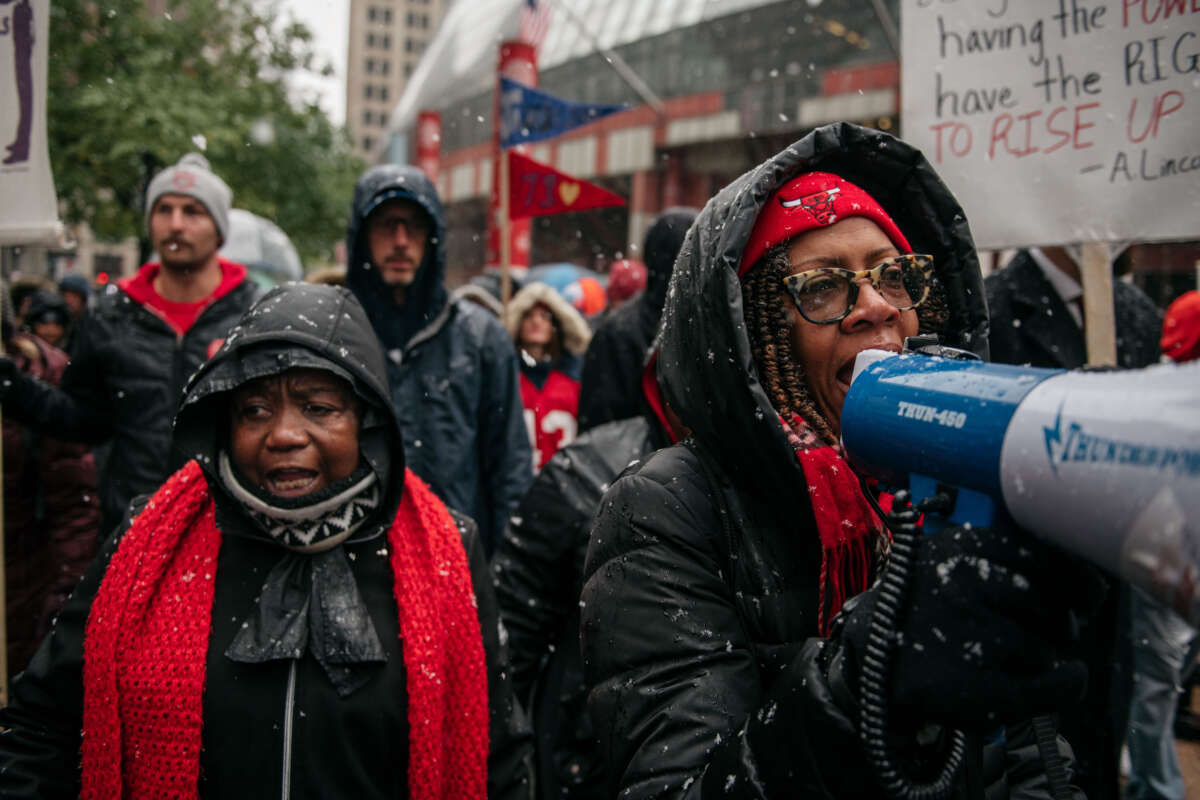
The Chicago Teachers Union has played a significant role in this movement, advocating for social justice and resisting privatization efforts that disproportionately affect Black and Latinx students. Todd-Breland’s experiences as a former member of the Chicago Board of Education further illuminate the critical necessity for fully funded public schools that serve as community hubs.
In conclusion, Todd-Breland’s ongoing work, including her recent memoir co-authorship with the late Karen Lewis, underscores the importance of education as a tool for liberation and community empowerment. As society grapples with the challenges posed by authoritarianism, the integration of Black history into education remains a fundamental aspect of fostering an equitable and just future.
Through these collective efforts, educators and historians like Todd-Breland continue to advocate for a curriculum that not only reflects the richness of Black history but also inspires future generations to dream of a better world.