
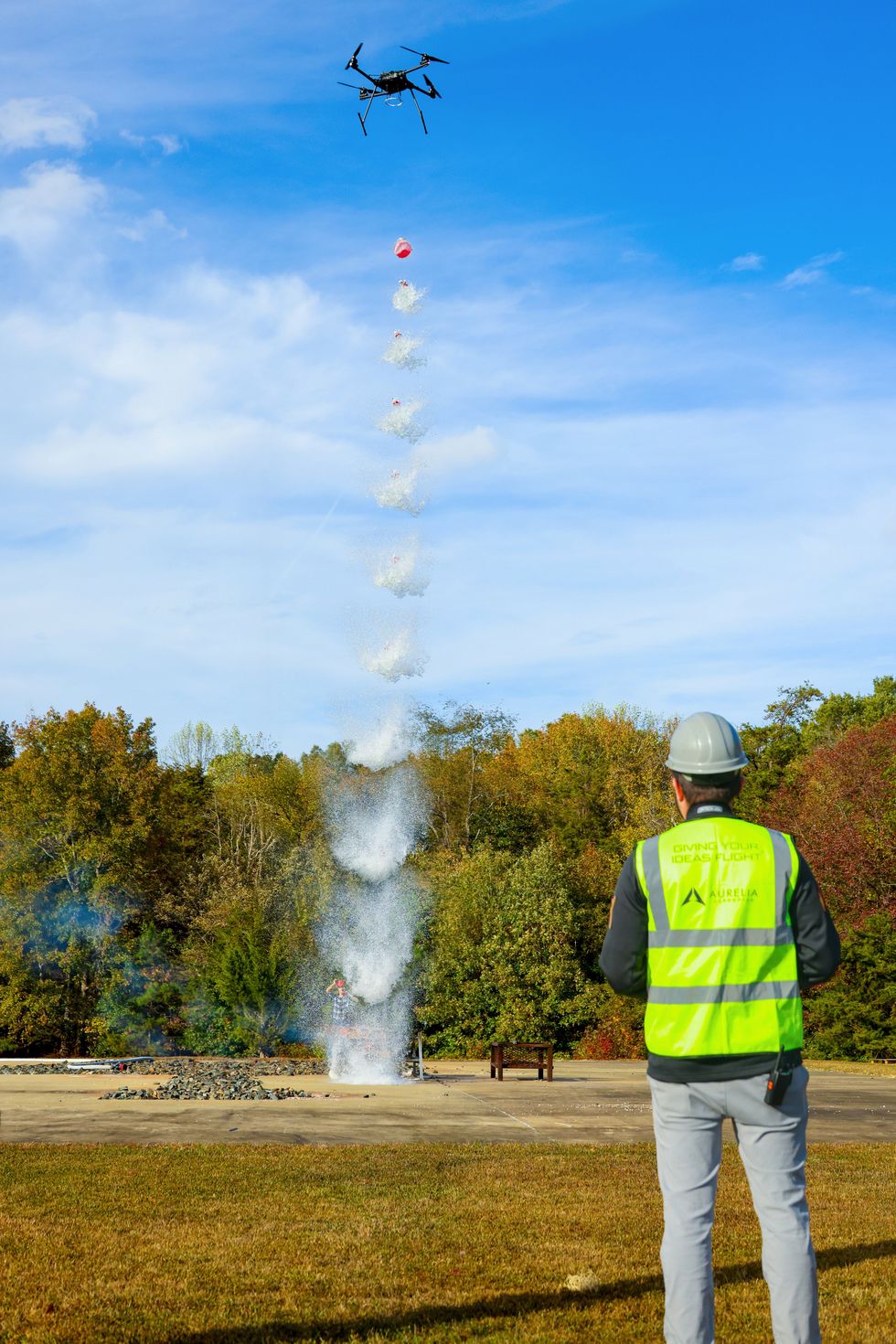
At a fire and rescue training center in La Plata, Maryland, a new approach to wildfire detection and suppression was showcased as teams competed in the XPrize competition. The event featured the University of Maryland (UMD) team, named Crossfire, as they demonstrated their innovative use of drones to identify and extinguish brushfires. The challenge emphasizes the urgent need for rapid response in the face of increasingly severe wildfires.
During the demonstration, a large black quadcopter drone, known as the Alta X, was equipped with a water-filled balloon intended to extinguish flames from a distance. The team, comprising approximately 20 students and faculty members, faced the complexities of navigating the drone to drop the balloon accurately over a burning pile of pallets. The goal was to differentiate between real fire hazards and benign campfires, a critical requirement of the competition.
Elevating Wildfire Response with Technology
The intricacies of the mission became apparent as Andrés Felipe Rivas Bolivar, a doctoral student in aerospace engineering, piloted the Alta X over the fire site. The drone needed to hover at around 13.5 meters while the water balloon was programmed to detonate at a precise altitude for optimal dispersal. This method reflects the ongoing advancements in technology aimed at improving wildfire response times, which can currently range from one hour to over a day.
The XPrize competition, which began in 2019, has attracted 12 teams competing in the semifinals for a chance to win a prize of $3.5 million. The final round, set for June 2026, will challenge five teams to locate and extinguish a fire within a 1,000 square kilometer area of environmentally challenging terrain in less than ten minutes. This ambitious goal aims to equip firefighting agencies with effective new tools in their battle against wildfires.
The urgency of the project stems from the alarming increase in wildfire severity worldwide. Notably, the November 2018 Camp Fire in California, which devastated over 620 square kilometers and led to significant loss of life and property, highlighted the dire consequences of delayed firefighting efforts. The XPrize Foundation’s program director, Andrea Santy, remarked that the competition was deeply personal for many involved, given its proximity to such catastrophic events.
Innovative Solutions in Wildfire Management
Crossfire’s trials included multiple attempts to deploy their water-dispensing technology. On one occasion, the drone dropped a water balloon that burst upon impact, but the fire remained. Subsequent adjustments were made, focusing on the timing for detonation and the drone’s flight path. Finally, on a later attempt, the balloon successfully detonated above the flames, extinguishing the fire and eliciting cheers from the team.
Despite the challenges, the team is looking beyond the competition. They have engaged with around 40 potential clients, primarily fire departments and governmental bodies, to assess the commercial viability of their technology. Derek Paley, an aerospace engineering professor involved with Crossfire, expressed optimism that increased visibility from the XPrize could help establish a compelling business model.
While the competition has sparked innovative ideas, many teams are still relying on traditional water-based suppression methods. The challenge lies in effectively deploying these methods in challenging conditions, such as high winds and varying terrain. As noted by Arnaud Trouvé, chair of the UMD’s Fire Protection Engineering department, even the proposed ten-minute response time may not be sufficient under extreme conditions.
The future of drone technology in wildfire management is promising, yet complex regulatory environments pose challenges. Current regulations limit the weight and capabilities of drones, necessitating innovative approaches to meet safety and operational standards. The XPrize competition aims to foster advancements that could lead to significant improvements in wildfire response across various landscapes.
As the competition progresses, the potential impact of these technological innovations on global wildfire strategies remains significant. With a focus on rapid detection and suppression, teams like Crossfire are not just competitors but pioneers in transforming how wildfires are managed in the future.