
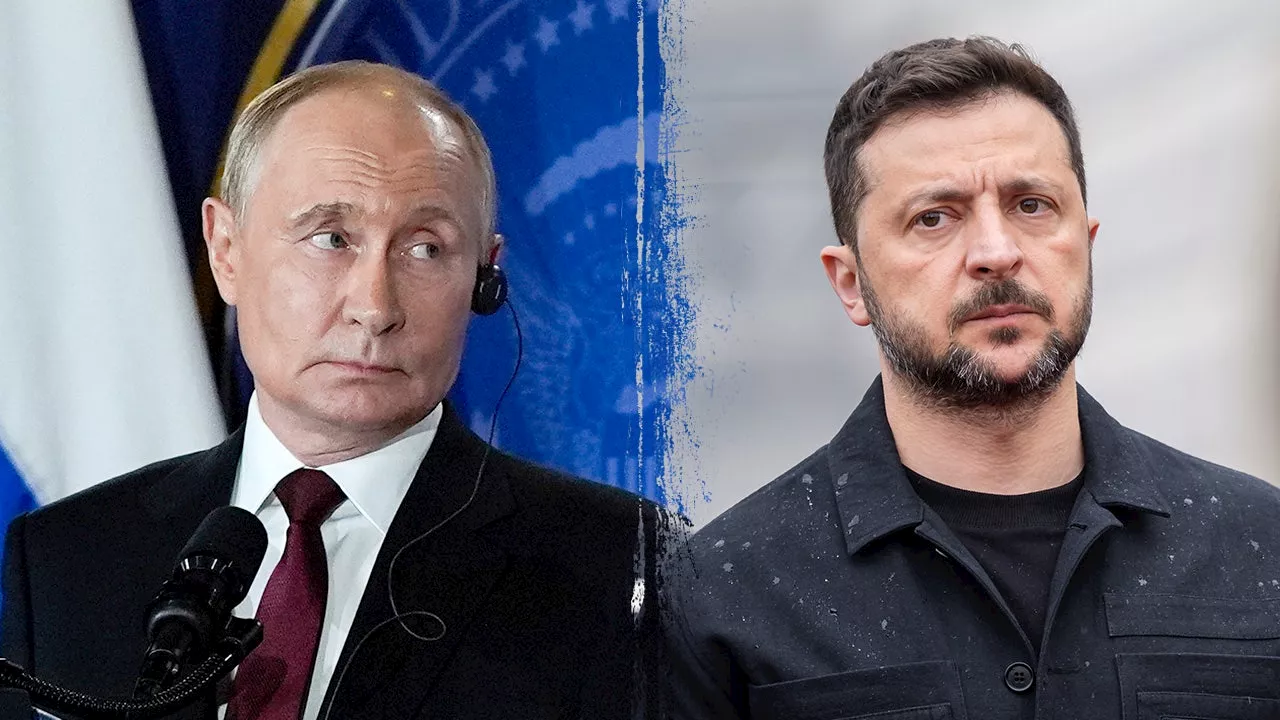
Accusations from Moscow that Ukraine attempted to launch a drone attack on President Vladimir Putin‘s residence have been publicly challenged by a prominent drone expert, who deemed the claims “tactically implausible.” The remarks from Cameron Chell, CEO and co-founder of Draganfly, come as tensions escalate between the two nations, with both sides engaged in a heated exchange of allegations.
Chell’s skepticism arises following a statement from Russian Foreign Minister Sergey Lavrov, who claimed that 91 drones were intercepted while supposedly targeting Putin’s residence near Lake Valdai. Ukraine has firmly denied these allegations, asserting that Russia’s narrative lacks credibility and is intended to undermine ongoing peace discussions.
Expert Analysis on Drone Usage
Chell emphasized that Ukraine’s drone strategies have consistently demonstrated a level of tactical sophistication that contradicts the claims made by the Kremlin. “What really makes things usually very signature about Ukraine is that they’re always incredibly clever about how they use drones,” he stated in an interview. He pointed out that any such attack would require drones to be launched from a relatively close range—within approximately 10 to 30 kilometers of the target—making it unlikely that Ukraine would execute such an operation without a significant operational advantage.
He further elaborated that the alleged nighttime operation would pose additional challenges due to factors like GPS jamming. “Apparently the thing was at night, so that’s very difficult for machine vision or AI mapping software,” Chell noted, questioning the feasibility of conducting such an attack under those conditions.
Political Context and Ramifications
The timing of the Russian accusations has raised eyebrows, particularly given the recent positive tone surrounding peace talks between the United States and Ukraine. Just days before the allegations surfaced, U.S. President Donald Trump met with Ukrainian President Volodymyr Zelenskyy in Florida, where both leaders expressed optimism about advancing diplomatic efforts aimed at resolving the conflict.
Zelenskyy has dismissed the Russian claims as “a complete fabrication,” asserting that they serve as a pretext for further Russian aggression. His administration’s focus remains on negotiating a sustainable peace, making the alleged attack counterproductive from Ukraine’s perspective.
The Kremlin’s response to the allegations has been to maintain a firm diplomatic stance, with officials threatening retaliation while simultaneously indicating a willingness to continue discussions with Washington. Dmitry Peskov, spokesman for the Kremlin, described Zelenskyy’s denial as “completely insane,” highlighting the escalating rhetoric surrounding the incident.
Chell concluded that Ukraine has little to gain from such an attack, especially during a period of fragile negotiations. “They’re bold, but right in the middle of peace talks — when they need Trump on side — it makes no sense,” he asserted.
As the situation develops, the international community continues to monitor the dynamics between Russia and Ukraine, particularly in light of the ongoing conflict and the critical importance of diplomacy in achieving a lasting resolution.