
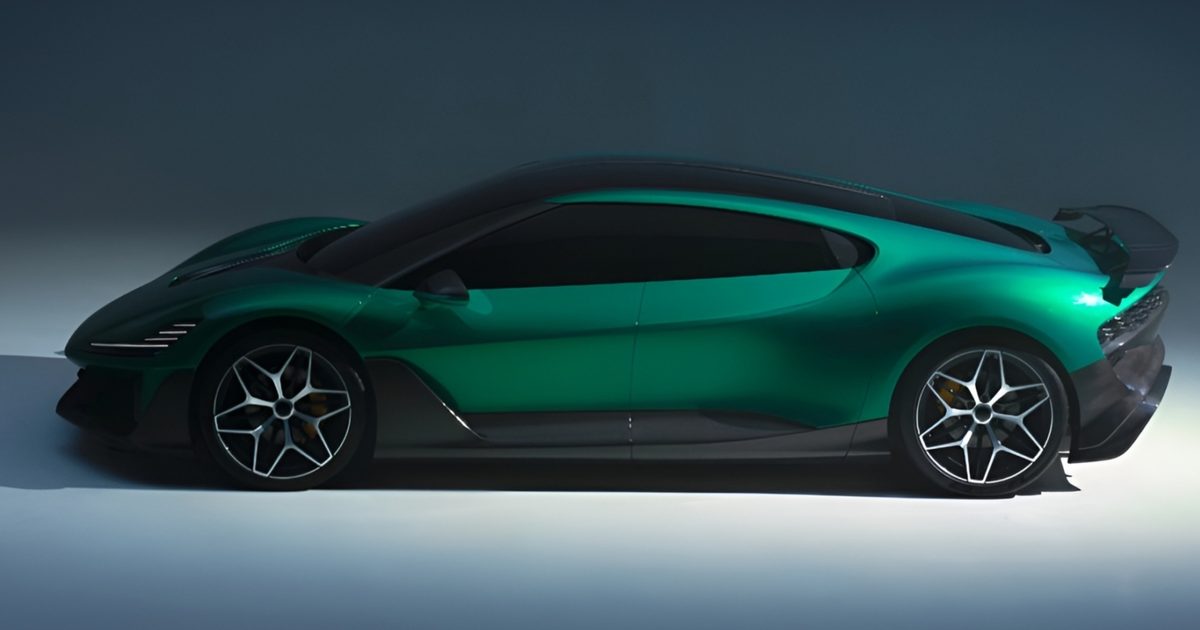
Chinese brand Dreame Technology, primarily recognized for its home cleaning solutions, has announced plans to enter the electric vehicle market with a teaser for its first all-electric hypercar. The vehicle boasts an impressive output of 1,000 horsepower and aims to compete directly with established players like BYD and Tesla. The official announcement was made ahead of the upcoming CES 2026, generating significant interest in the automotive community.
The hypercar, still unnamed, showcases a sleek four-door coupe design reminiscent of the Bugatti Brouillard. Its low-profile silhouette features four horizontal daytime running light (DRL) strips, prominent air intakes, and wide fenders that enhance its aggressive stance on the road. The car’s side profile mirrors that of contemporary hypercars, combining a bold aesthetic with familiar lines. Notably, the A-pillar blends seamlessly into the roofline, potentially incorporating rimless windows, which adds to its modern appeal.
Dreame has released a limited number of images of the hypercar, but reports suggest that it will be capable of accelerating from 0 to 62 mph in approximately 1.8 seconds. This performance places it in elite company, competing with the Xiaomi SU7 Ultra, which achieves the same speed in about 1.98 seconds, making it one of the fastest production electric vehicles in the world. In comparison, the Tesla Model S Plaid reaches 0 to 60 mph in around 2.0-2.1 seconds.
Dreame’s foray into high-performance EVs signifies a remarkable shift for a company traditionally focused on household technology. The move aligns with a broader trend of tech companies branching into the automotive sector, with Xiaomi being a prominent example. The introduction of a 1,000-horsepower hypercar positions Dreame among established automotive competitors, suggesting that benchmarks previously reserved for legacy manufacturers are now within reach for emerging brands.
As anticipation builds for further details, Dreame is expected to share more insights about its hypercar concept during CES 2026. This strategic move not only highlights the company’s innovative spirit but also reflects a growing competitive landscape in the electric vehicle market, where new entrants are increasingly challenging traditional automotive giants.