
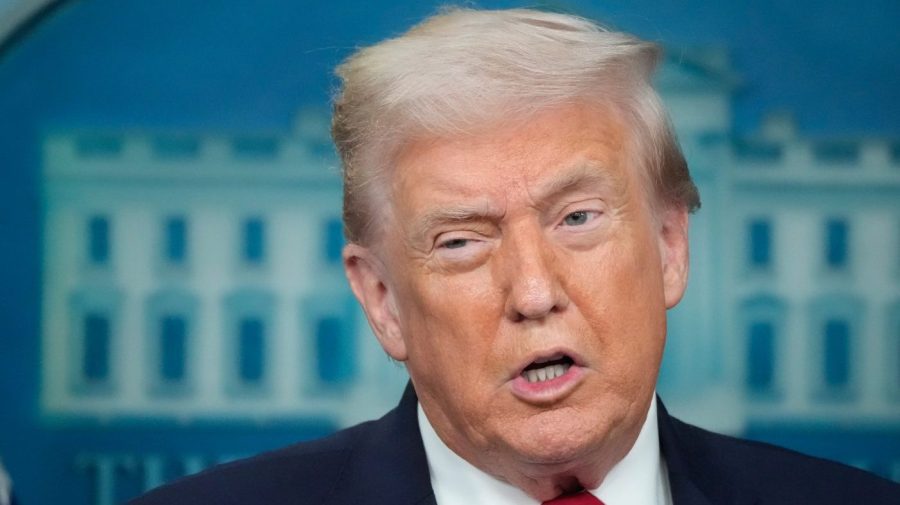
In a landscape where political rhetoric often blurs the line between substance and spectacle, former President Donald Trump has emerged as a figure who actively seeks to capitalize on the zeitgeist of the moment. His recent remarks and actions reflect a strategy of immediate engagement, often summarized by the phrase “meet the moment.” This approach appears to resonate with some segments of the American electorate as the country gears up for the 2024 Presidential Election.
The term “meet the moment” has gained traction in various contexts, though its overuse has prompted calls for a reassessment of its value. Critics argue that the phrase has become a catch-all for vague assertions and empty promises. In the political arena, where the stakes are high, the efficacy of such phrases can be questioned. Alyssa, a fictional character mentioned in discussions about the term, is cited humorously as an example of its misuse in everyday corporate communication, as if responding to the call of the moment is a trivial exercise rather than a serious political strategy.
In Trump’s case, “meeting the moment” manifests through his ability to swiftly adapt to current events and audience sentiments. His recent appearances suggest a keen awareness of pressing issues, including economic concerns and social movements. By aligning himself with popular sentiment, Trump positions himself as a leader who responds directly to the needs and desires of his supporters.
The effectiveness of this approach is evident in Trump’s rallies and social media presence. He leverages platforms to address topics that dominate public discourse, presenting himself as both a commentator and an actor in the political theater. This dual role allows him to maintain relevance and attract attention, particularly as he prepares for what many anticipate will be a fiercely contested race against the Democratic nominee in the upcoming election.
While some observers laud Trump’s ability to connect with the public, others caution against equating his rhetoric with genuine leadership. The phrase “meet the moment” may serve as a superficial guideline, masking the complexities of governance and policy-making. Critics argue that true leadership involves comprehensive planning and foresight, rather than merely reacting to the latest headlines or social media trends.
In a political environment characterized by rapid change and unpredictability, Trump’s approach underscores a broader trend among politicians who seek to resonate with their constituents. As the 2024 election unfolds, the implications of this strategy will continue to be scrutinized by analysts and voters alike.
The future of Trump’s political aspirations may hinge on his ability to balance this immediate responsiveness with a coherent vision for the country. As the political landscape evolves, it remains to be seen how effectively he can harness the momentum generated by “meeting the moment” while addressing the underlying challenges that face the nation.