
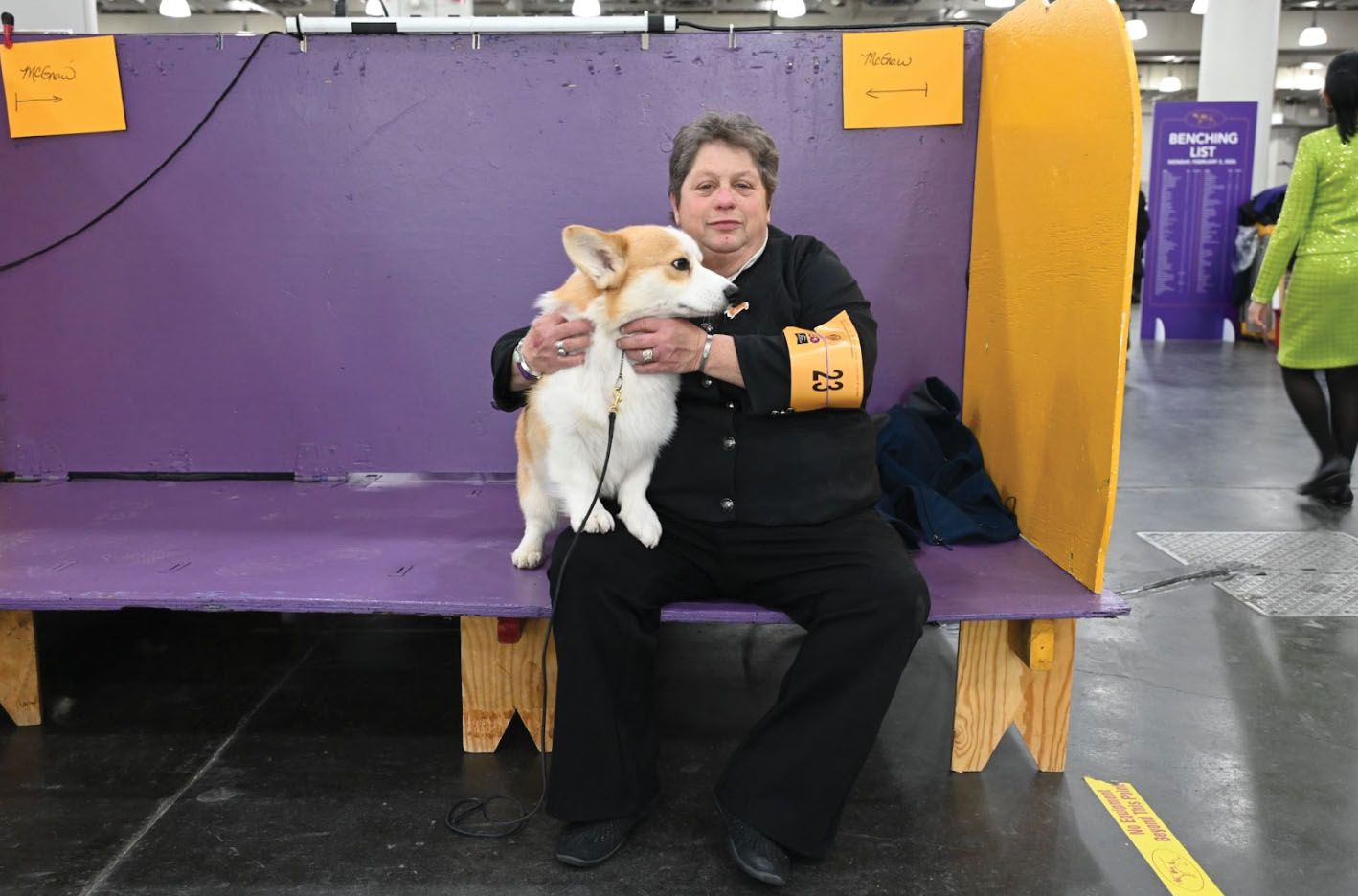
The 150th Westminster Kennel Club dog show recently took place at the Javits Center in New York City, drawing dog enthusiasts and trainers from across the country. Amid the excitement of competition, many trainers emphasized that the values learned through dog training often overshadow the pursuit of victory.
Inside the venue, the atmosphere transformed from the biting cold of the Hudson River to one of warmth and camaraderie. Friendly dogs, eager for attention, accompanied breeders, groomers, and trainers, who were passionate about sharing their experiences. Conversations flowed, revealing insights that extended beyond the competition itself.
One prominent voice was that of Ellen Burleson, a dog trainer from Cotati, Sonoma County. Presenting her corgi, River, Burleson explained the complexities of dog shows. “A championship is very involved,” she stated, noting that dogs earn 25 points through a series of eliminations based on specific breed standards. These standards, she revealed, can be exhaustive, with the corgi’s head shape defined by geometrical criteria.
Yet, Burleson highlighted the subjective nature of the sport, likening the dog-show experience to a “giant slot machine.” She acknowledged the unpredictable mix of effort and luck involved in competition. As the conversation shifted towards values, she reflected on how her upbringing shaped her ethics, although she did not see a direct link between her Jewish background and her work.
“Dogs are dogs. We don’t talk religion. We talk dogs,” Burleson said. She articulated a philosophy rooted in kindness and responsibility, emphasizing that dogs do not judge based on human standards. “A good dog is a good dog,” she asserted, underscoring the unconditional nature of canine companionship.
Similarly, Eric Steel, a longtime saluki owner from Amagansett, framed his dog training experience as an exercise in attentiveness. With over half a century of involvement with the breed, he articulated a profound connection to the lineage of salukis. For Steel, training involves fostering empathy and understanding, rather than simply modifying behavior.
He viewed his role as part of a broader tradition, saying, “Thousands of years ago, somebody cared about them enough to make sure that they survived.” His ambition extends beyond winning titles; it encompasses a commitment to safeguarding the breed for future generations through diligent care and understanding.
In contrast, Ashley Waters, a handler from Indiana, spoke of her work with dogs as a spiritual practice. She described obedience and agility training as opportunities for connection, viewing each interaction as a chance to engage with both dogs and their owners. “Every time we’re working with dogs is an opportunity God gives us,” Waters remarked, suggesting that her approach to training is infused with a sense of purpose.
Her perspective highlighted a responsibility to care for dogs as part of a larger divine creation, reinforcing the notion that training is as much about fostering relationships as it is about performance.
These conversations reflected a broader theme: the intertwining of ethics, identity, and the profound bond between humans and dogs. For Burleson, her Jewish identity shaped her understanding of community, while for Steel, it was about continuity and stewardship. Waters emphasized a moral obligation, viewing her role as a handler through a lens of faith and purpose.
Even Tammy Tomlinson, who brought her golden retriever Daniel, the winner of the Sporting Group at Westminster in 2020, echoed similar sentiments. She stressed that animal care is foundational to her values, illustrating how these ethics permeate all aspects of life.
In summary, the 150th Westminster Kennel Club dog show served as a backdrop for a deeper exploration of values among dog trainers. The conversations revealed that care for dogs is not merely a hobby or competitive endeavor; it is a testament to a shared commitment to ethical stewardship.
As trainers discussed their love for dogs, they demonstrated that the essence of this bond transcends competition. It is about nurturing, understanding, and celebrating the unique connection that exists between humans and their canine companions.