
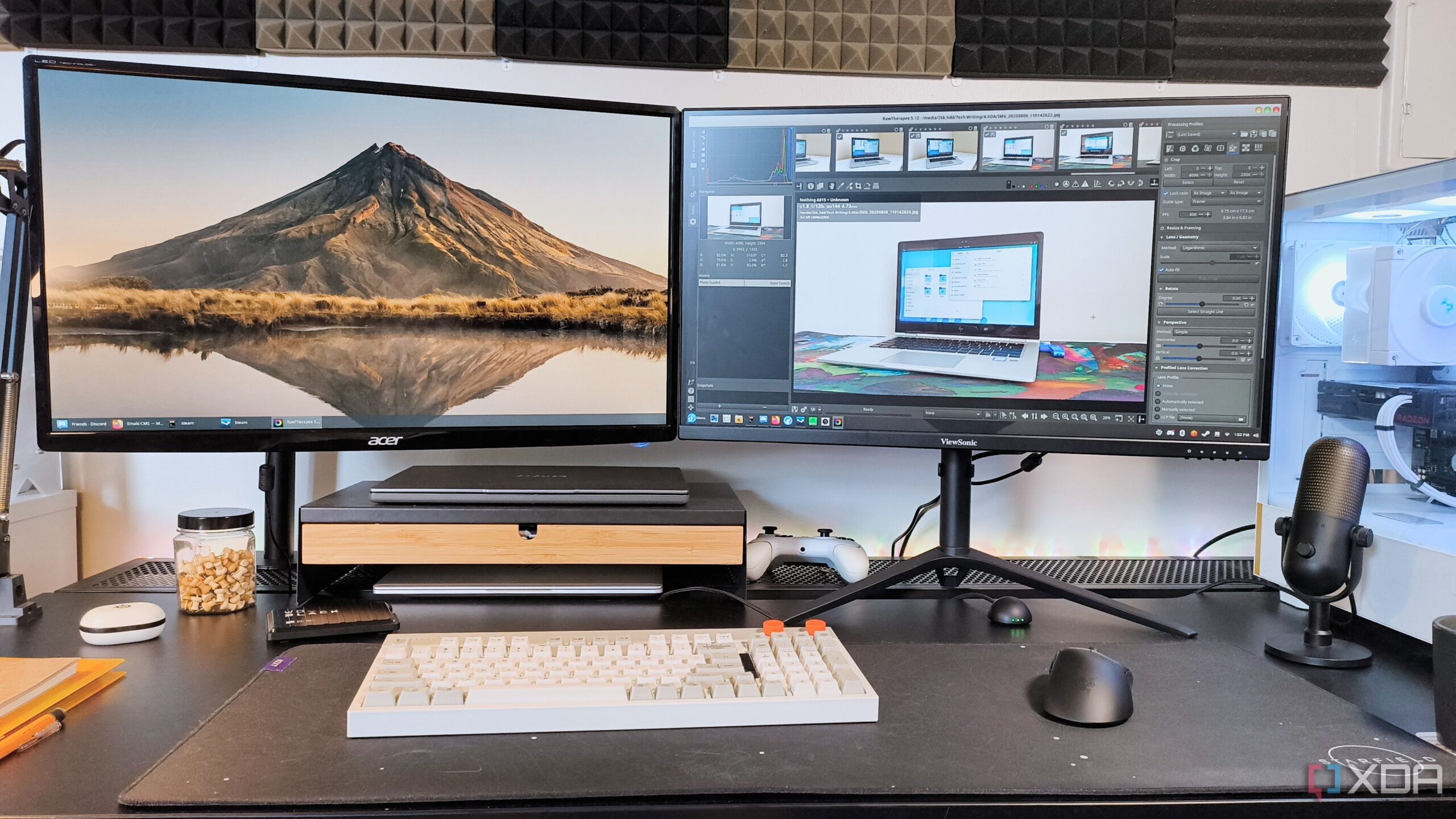
UPDATE: New insights reveal that DisplayPort’s unique ability to daisy-chain monitors is revolutionizing multi-monitor setups for gamers and professionals alike. This feature, supported by DisplayPort 1.4 and newer, is gaining traction as users seek streamlined solutions to combat cable clutter and enhance productivity.
Many users are unaware that while HDMI remains the go-to connector for various devices like gaming consoles and televisions, DisplayPort is rapidly becoming the preferred choice for PCs, especially in gaming and productivity environments. With capabilities that surpass HDMI in specific applications, DisplayPort is emerging as a critical tool for optimizing workspace and gaming experiences.
Why This Matters NOW: As remote work and gaming setups continue to evolve, the demand for efficient, clean cable management is at an all-time high. DisplayPort’s daisy-chaining capability allows users to connect multiple monitors with just one cable running to the PC, drastically reducing the tangle of wires that often accompany multiple displays.
The latest data indicates that a single DisplayPort 1.4 cable can manage up to four 4K monitors at 60Hz, making it ideal for complex setups. Unlike HDMI, which can struggle with refresh rates in multi-monitor scenarios, DisplayPort can push a 1080p display to a stunning 240Hz, catering to high-performance gaming needs.
Immediate Implications: This development is particularly significant for those in the gaming community and professionals who rely on multiple screens for productivity. With the rise of remote work, the ability to streamline setups not only improves aesthetics but enhances functionality.
What You Need to Know: To take advantage of the daisy-chaining capability, users need to ensure their monitors support Multi-Stream Transport (MST) and have a DisplayPort output. This feature is often hidden in the on-screen display settings of the monitors, requiring users to enable it for optimal performance.
For those considering upgrades, investing in a monitor that supports USB-C with DisplayPort alternate mode or Thunderbolt 3 can future-proof setups. The reduction in cable clutter and the increased efficiency of workspace setups will undoubtedly resonate with the growing number of users looking to enhance their environments.
Additionally, professionals can benefit from using a simple DisplayPort MST hub or a powered USB-C docking station to connect older monitors while still enjoying the advantages of a modern DisplayPort setup. This provides a flexible solution without the need for complete replacements.
Looking Ahead: As DisplayPort continues to gain traction, users are encouraged to evaluate their current setups and consider the advantages of switching to DisplayPort for multi-monitor configurations. The technology is not just about reducing cables; it represents a shift towards more efficient and effective workspace solutions.
This news is quickly spreading through tech communities, with users on platforms like r/pcmasterrace advocating for DisplayPort as the cable standard of choice for serious gamers and productivity enthusiasts alike.
Stay tuned for more updates as the technology landscape evolves and users adapt to these innovative solutions in their setups.