
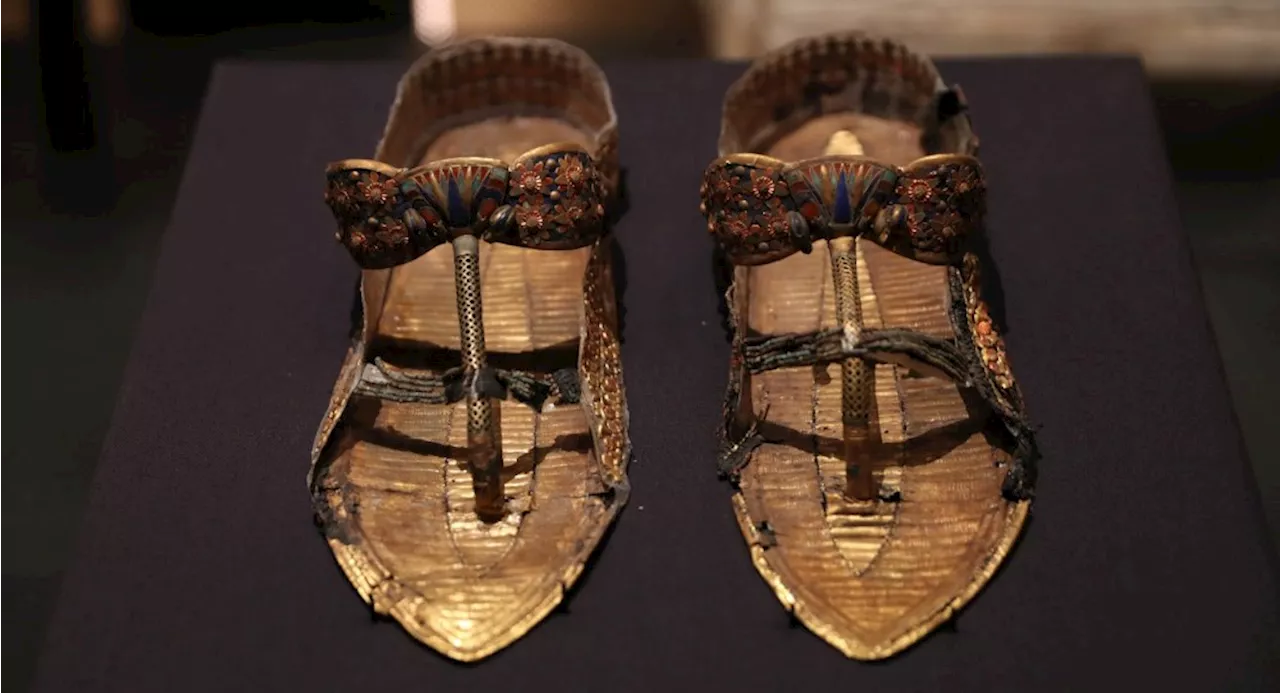
Dr. André J. Veldmeijer has shed light on the intriguing history of the footwear discovered in the tomb of King Tutankhamun, which is currently on display at the newly inaugurated Grand Egyptian Museum in Giza, Egypt. Opened in November 2025, this museum showcases over 5,500 items from the tomb, including at least 82 pairs of shoes that illustrate the young pharaoh’s life and status.
Among the multitude of artifacts, the most notable are the elaborate gold sandals found placed on Tutankhamun’s feet. Crafted from materials such as grass, palm leaves, and papyrus, these sandals represent both functionality and a deeper cultural significance, according to Veldmeijer, an expert in ancient Egyptian footwear.
Understanding the Cultural Context of Footwear
Veldmeijer emphasized that the sewn sandals worn by the royal family served as important status markers. He stated, “Research has shown that specifically these sandals were important status markers: they were worn by the royal family and those officials rewarded by the king himself.” The apparent simplicity of these sandals, made from relatively inexpensive materials, raises questions about their elevated status in ancient Egyptian society.
The golden sandals found on the mummy, as well as two additional pairs of ornate golden open shoes, are detailed remakes of the simpler sandals, featuring intricate stitching patterns embossed in gold. This craftsmanship reflects not only the artistry of the time but also the significance placed on these items in the burial practices of the elite.
Veldmeijer noted that ancient Egyptian footwear carries a wealth of information about the technology and societal values of the period. He explained, “Studying ancient Egyptian footwear allows for a myriad of discoveries… the significance of fashion, availability of resources, and how families displayed their wealth.”
The Symbolism of Shoes in Ancient Egypt
Footwear in ancient Egypt held more than just practical value; it symbolized belonging to a specific social group. Veldmeijer pointed out that luxury padded sandals, often brightly colored and elaborately decorated, were exclusive to elite tombs in places like Luxor. This exclusivity reflects the social stratification of the time.
Interestingly, the scholar mentioned that footwear might have also served spiritual purposes. “It has even been argued,” he stated, “based on the find of a single sandal in an intact burial of a young person, that footwear helped to ward off evil, a belief that persists in some cultures today.”
While fashion in ancient Egypt did not function as it does in the modern world, Veldmeijer highlighted that footwear styles evolved significantly over time, providing clues for dating archaeological finds. The differences in styles from region to region and between various cultures indicate a rich tapestry of influences and adaptations.
Ultimately, Veldmeijer concluded that footwear, like clothing and other elements of material culture, offers vital insights into the ancient world. “Everything provides pieces of the huge jigsaw puzzle,” he stated, underscoring the importance of these artifacts in understanding the complexities of life in ancient Egypt.
As the Grand Egyptian Museum continues to attract visitors from around the globe, the exploration of King Tutankhamun’s tomb and its treasures, including the remarkable footwear, offers a unique window into the past, revealing the intricate connections between fashion, status, and culture in this ancient civilization.