
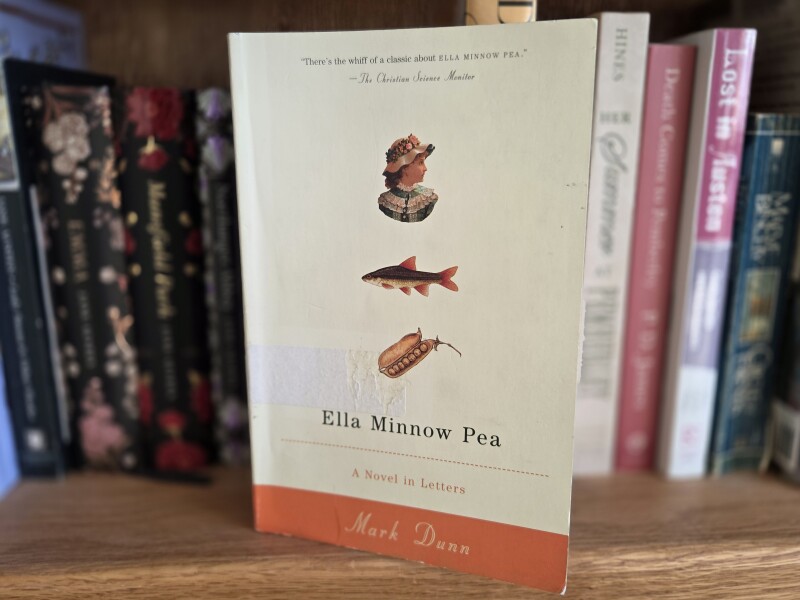
A captivating exploration of language and creativity unfolds in Mark Dunn’s novel, “Ella Minnow Pea.” This epistolary work, released in 2001, transports readers to the fictional island of Nollop, situated off the coast of South Carolina. The story revolves around the inhabitants’ struggle with an increasingly absurd law that restricts their use of language, sparking both humor and reflection.
Language and Law: A Peculiar Premise
Nollop, named after Nevin Nollop, the fictional creator of the pangram, “The quick brown fox jumps over the lazy dog,” serves as a sovereign nation committed to upholding traditional communication methods. The island’s society prides itself on intellectualism and a slower pace of life, eschewing modern technology. However, the community’s tranquility is disrupted when the letter “z” mysteriously falls from the monument dedicated to Nollop’s famous sentence.
The town council interprets this event as a sign from Nollop himself, leading them to outlaw the letter “z.” As a result, any use of this letter—spoken or written—is met with severe consequences, including potential lifetime banishment for offenders. This drastic measure sets the stage for chaos and absurdity, as the residents grapple with the implications of losing a fundamental part of their language.
Ella Minnow Pea: The Last Hope
At the center of this quirky tale is Ella Minnow Pea, an eighteen-year-old islander who remains largely unfazed by the new law. She communicates with her cousin, Tassie, sharing her thoughts and even organizing a farewell party for the letter “z.” Yet, as more letters begin to fall from the monument, the council’s restrictions expand, complicating communication further.
As the story progresses, the consequences of the council’s mandates become increasingly dire. Life on the island deteriorates, with businesses closing, food shortages arising, and relationships fracturing due to the inability to communicate effectively. Despite the chaos surrounding her, Ella remains resilient, determined to find a solution that may save her home.
Ella’s challenge is to create a pangram shorter than the original, a feat that the council believes is impossible. As the letters continue to vanish from the monument—and, cleverly, from the text itself—the narrative evolves, humorously illustrating the struggle of the characters to navigate an ever-shrinking vocabulary.
Dunn’s innovative storytelling not only entertains but also invites readers to reflect on the importance of language and communication. As the story unfolds, attention to detail, such as how dates are written, adds an additional layer of creativity to the reading experience. “Ella Minnow Pea” is a delightful escapade that promises to linger in the minds of readers long after they turn the final page.
For readers seeking a light-hearted yet thought-provoking journey, this novel offers a unique blend of humor and commentary on the nature of language. The story’s whimsical premise, combined with its clever execution, makes it a worthwhile addition to any bookshelf.
Stay connected with Bourke’s Bookshelf for weekly insights into literature and entertainment, along with engaging content that often includes delightful surprises.