
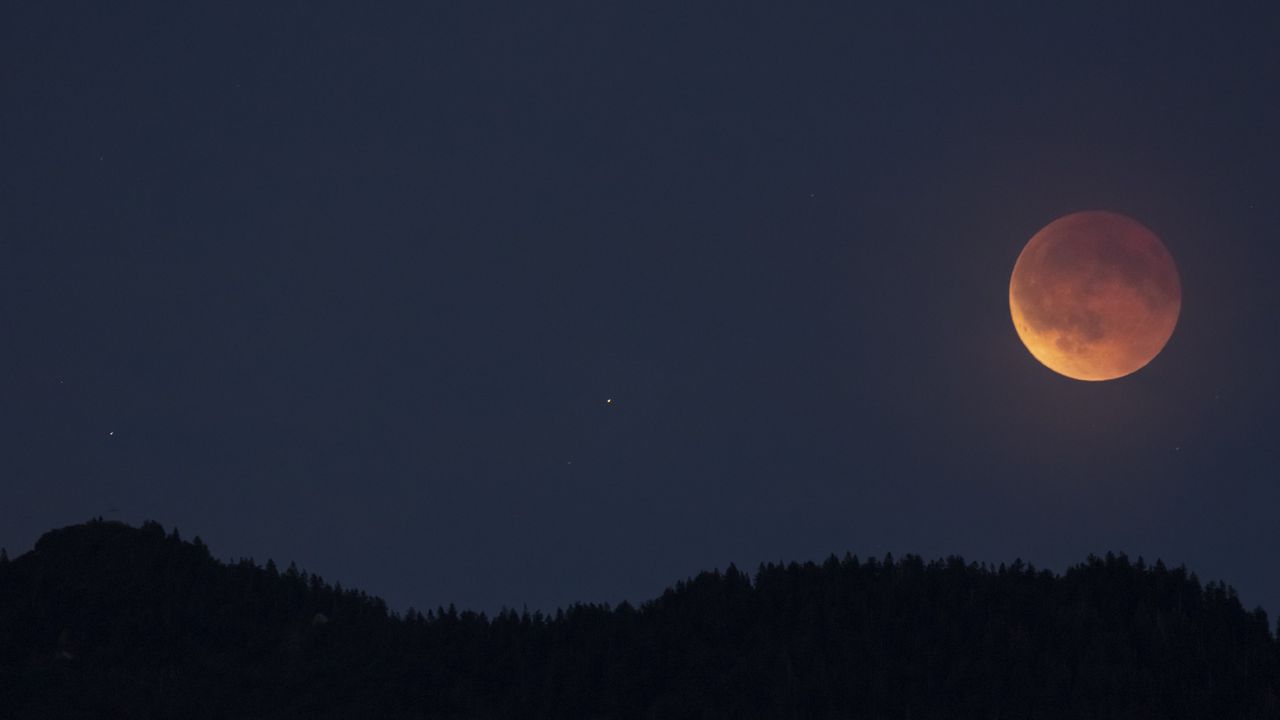
A total lunar eclipse will grace the skies on March 3, 2026, offering a spectacular view of the so-called “blood moon” across various regions. The best vantage points for this celestial event will be in Australia, the Pacific, and the western half of North America. During a total lunar eclipse, the moon passes into Earth’s shadow, with sunlight filtering through the atmosphere, resulting in a striking reddish hue.
This natural phenomenon will occur globally, with the prime viewing time situated over the Pacific around midnight on March 3. In Australia, observers can expect to see the eclipse late that evening, while those in North America can watch it in the early hours of the same day. While dark skies enhance the viewing experience, total lunar eclipses can still be observed from urban areas, although light pollution may obstruct the view of fainter stars.
For enthusiasts eager to catch a glimpse of the blood moon, selecting a location with clear skies is crucial. Historical climate data can provide insight into average cloud cover, assisting in the selection of optimal viewing sites. Below are ten recommended locations for witnessing this remarkable event, based on cloud cover statistics sourced from Eclipsophile.com and historical weather data from Time and Date.
Top Viewing Locations for the Blood Moon Eclipse
1. **Grand Canyon National Park, Arizona, U.S.**
– **Time of totality:** 04:04-05:02 MST on March 3, 2026
– **Chance of clouds:** 63% (historical average)
Renowned for its dark skies, Grand Canyon National Park has been designated as an International Dark Sky Park since 2015. Ideal viewing spots include Mather Point and the Grand Canyon Visitor Center.
2. **Horsetooth Mountain, Colorado, U.S.**
– **Time of totality:** 04:04-05:02 MST on March 3, 2026
– **Chance of clouds:** 60% (historical average)
A public stargazing event hosted by the Northern Colorado Astronomical Society will take place here, promoting community engagement in astronomy.
3. **Arkaroola Wilderness Sanctuary, South Australia**
– **Time of totality:** 21:34-22:32 ACDT on March 3, 2026
– **Chance of clouds:** 24% (historical average)
This remote sanctuary offers a unique experience in the Flinders Ranges, with accommodations that cater to astronomy enthusiasts.
4. **Warrumbungle Dark Sky Park, Australia**
– **Time of totality:** 22:04-23:02 AEDT on March 3, 2026
– **Chance of clouds:** 45% (historical average)
Located in central western New South Wales, this park is Australia’s first dedicated Dark Sky Park, providing excellent conditions for eclipse viewing.
5. **Saguaro National Park, Arizona, U.S.**
– **Time of totality:** 04:04-05:02 MST on March 3, 2026
This park, open 24 hours, offers a chance to view the eclipse amidst the stunning landscape of the Sonoran Desert.
6. **Wairarapa Dark Sky Reserve, New Zealand**
– **Time of totality:** 00:04-01:02 NZDT on March 4, 2026
– **Chance of clouds:** 64% (historical average)
This reserve features regulations on outdoor lighting, enhancing the stargazing experience for visitors.
7. **Anza-Borrego Desert State Park, California, U.S.**
– **Time of totality:** 03:04-04:02 PST on March 3, 2026
– **Chance of clouds:** 40% (historical average)
Known for its expansive desert landscapes, this dark sky park is an excellent location for eclipse enthusiasts.
8. **Big Island, Hawaii, U.S.**
– **Time of totality:** 01:04-02:02 HST on March 3, 2026
– **Chance of clouds:** 37% (historical average)
The Big Island offers a variety of spots for viewing, particularly on Maunakea, renowned for its astronomical observatories.
9. **Joshua Tree National Park, California, U.S.**
– **Time of totality:** 03:04-04:02 PST on March 3, 2026
– **Chance of clouds:** 43% (historical average)
Despite recent wildfires, this iconic location remains a prime site for stargazing with proper planning.
10. **Death Valley National Park, Nevada, U.S.**
– **Time of totality:** 03:04-04:02 PST on March 3, 2026
– **Chance of clouds:** 47% (historical average)
With its exceptionally dark skies, Death Valley offers numerous spots for astrophotography and eclipse viewing.
This total lunar eclipse will be a rare event, not to be repeated until New Year’s Eve 2028-2029. Stargazers and astronomy enthusiasts are encouraged to prepare in advance to make the most of this celestial spectacle.