
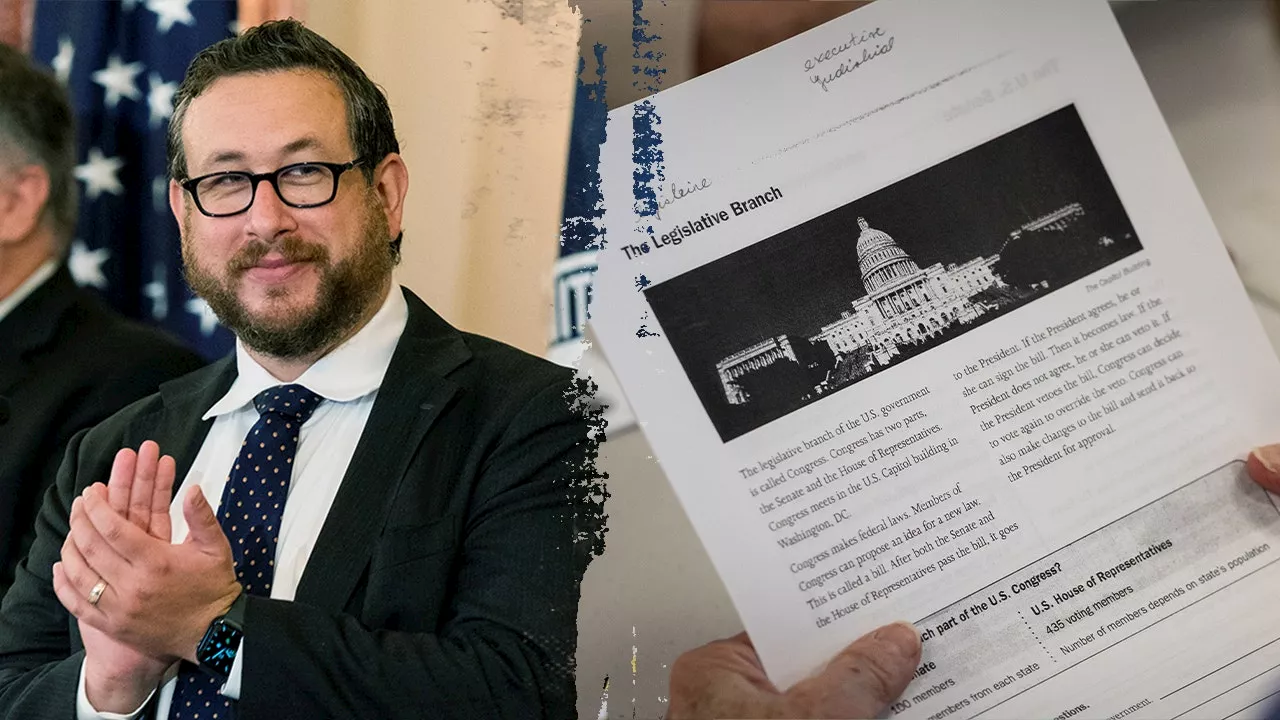
In the wake of two recent terrorist attacks in the United States, Joseph Edlow, Director of the Department of Homeland Security’s Citizenship and Immigration Services (USCIS), is advocating for a significant overhaul of the U.S. citizenship test. Edlow’s comments come as scrutiny intensifies on immigration vetting procedures and national security measures.
On Thursday, a gunman targeted Temple Israel, a synagogue in West Bloomfield Township, Michigan, injuring a security guard in what authorities described as a deliberate act against the Jewish community. The same day, a separate incident at Old Dominion University in Norfolk, Virginia, resulted in the death of two individuals and left two others injured when a military veteran and alleged ISIS supporter opened fire in an ROTC classroom.
Proposed Changes to the Citizenship Test
Since taking office in August 2025, Edlow has expressed concerns regarding the current naturalization test, labeling it as “too soft” and misaligned with Congressional intent. In an interview with Fox News Digital, he emphasized the need for the civics and English exam to better reflect the knowledge and assimilation expected of new citizens. “The test needs to reflect the letter and the spirit of what Congress intended,” Edlow stated. “It’s important for people to understand English, our history, our government… and the way the test is written and executed right now doesn’t meet that bar.”
Currently, applicants must correctly answer six out of ten civics questions selected from a pool of 100, covering key topics such as the Constitution, U.S. history, and civic responsibilities. They are also required to demonstrate basic reading and writing skills. Edlow is advocating for a more rigorous evaluation that assesses English proficiency throughout the entire interview process, rather than in isolated exercises.
“I want adjudicators to really be listening and talking throughout the interview,” he said. “Switch up some of the wording… and see if the individuals are still able to comprehend the questions. That’s a better gauge of readiness.”
Addressing Visa Program Concerns
In addition to the citizenship test, Edlow highlighted issues within the H-1B visa program, which allows U.S. companies to employ skilled foreign workers. He criticized the trend of companies hiring high-skilled workers while offering them lower wages, which he asserts undermines American graduates, particularly in STEM fields. Edlow cited instances where third-party contracting firms have reportedly contributed to job losses for American workers, requiring them to train foreign replacements.
Echoing similar sentiments, Vice President JD Vance condemned Microsoft for laying off approximately 9,000 American workers while simultaneously applying for 4,700 H-1B visas. “I don’t want companies to fire 9,000 American workers and then to go and say, ‘We can’t find workers here in America.’ That’s a disingenuous narrative,” Vance remarked.
To enhance oversight of the H-1B visa program, Edlow announced plans for USCIS to collaborate with the Department of Labor to ensure compliance with wage and job function requirements. “We want to make sure those brought over are truly commensurate with the roles they’re filling — and not part of a cost-cutting scheme,” he added.
Revisiting Welfare-Related Immigration Policies
Addressing welfare-related immigration policies, Edlow mentioned that USCIS is preparing to review the public charge rule, which restricts green cards for applicants likely to rely on public assistance. This rule has been interpreted in varying ways across different administrations, with the Trump administration taking a stricter approach that included non-cash benefits. The Biden administration relaxed this guidance, but Edlow indicated that changes are forthcoming, emphasizing the need for a thorough examination of means-tested benefits.
“It’s something we’ve got to study and get right,” Edlow noted. “We need to look at the means-tested benefits being offered and ensure our adjudicators know what to look for to determine if someone would be a burden on U.S. taxpayers.”
Operational Challenges Facing USCIS
Beyond policy reforms, Edlow identified the growing backlog of cases at USCIS as a pressing operational challenge. He expressed concern that this backlog poses a national security threat, attributing the issue to a shift in agency resources away from legal immigration priorities in response to increased illegal border crossings. “Backlogs that continue to grow are nothing short of a national security threat to this country,” he stated.
While Edlow pledged to work on reducing adjudication times, he cautioned that shortcuts would not compromise the integrity of the immigration system. “There may be short-term pain,” he warned. “But we will decrease the backlog at a steady clip while protecting the integrity and security of the system.”
The ongoing discussions surrounding immigration policy and national security highlight the complexities of balancing the need for robust vetting processes with the principles of a fair and efficient immigration system. With Edlow at the helm, USCIS is poised to undertake significant changes aimed at enhancing the citizenship process and addressing long-standing concerns within the immigration framework.