
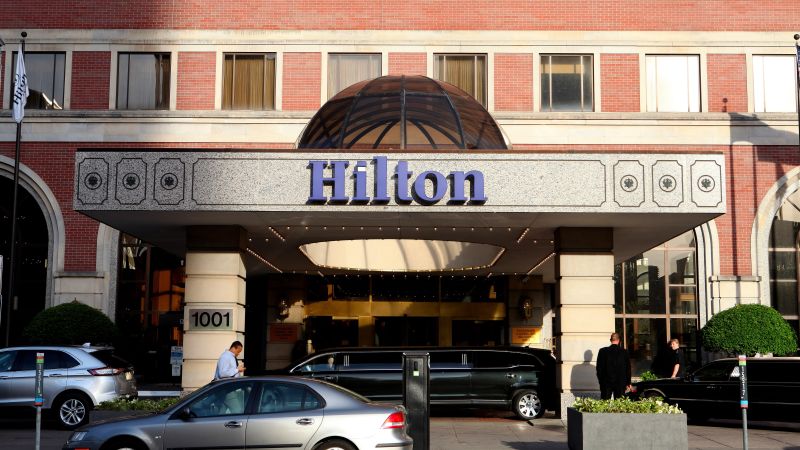
UPDATE: The Department of Homeland Security (DHS) has launched a serious allegation against global hotel chain Hilton, accusing the company of a “coordinated campaign” to cancel hotel reservations for immigration agents in Minneapolis. This urgent situation arises as DHS prepares for an intensified immigration enforcement operation in the area.
Screenshots shared by DHS on X (formerly Twitter) reveal alarming emails from a Hilton address indicating that immigration agents are barred from staying at the Hampton Inn Lakeville, a hotel located in a suburb south of Minneapolis. One email states, “After further investigation online, we have found information about immigration work connected with your name and we will be cancelling your upcoming reservation.”
The emails, which DHS has redacted for privacy, suggest a troubling pattern. Another message warns, “If you are with DHS or immigration, let us know as we will have to cancel your reservation.” This action has raised significant concerns about discrimination against federal agents conducting lawful duties.
In response to the allegations, Everpeak Hospitality, the independent operator of the Lakeville location, stated that the incident “was inconsistent with our policy of being a welcoming place for all.” They claimed to be in contact with affected guests to ensure they are accommodated. However, DHS Assistant Secretary Tricia McLaughlin refuted Everpeak’s statement, asserting on X that DHS and ICE have not received any communication from the hotel regarding these cancellations.
Hilton has echoed this sentiment, declaring, “They have taken immediate action to resolve this matter and are contacting impacted guests to ensure they are accommodated.” The hotel chain emphasized that its properties are open to everyone and that discrimination of any form is intolerable.
This incident highlights the escalating tensions surrounding immigration enforcement in the United States, particularly in Minnesota. As DHS gears up for operations that could affect numerous communities, the implications of such hotel policies are profound.
What happens next remains uncertain, but officials are closely monitoring the situation. The response from Hilton and Everpeak Hospitality may set important precedents for how businesses interact with federal law enforcement agencies in the future.
As this situation develops, stakeholders across the nation are urged to consider the impact of corporate policies on law enforcement operations. The urgency of this matter cannot be overstated as it unfolds. Share this story to keep your community informed about these critical developments.