
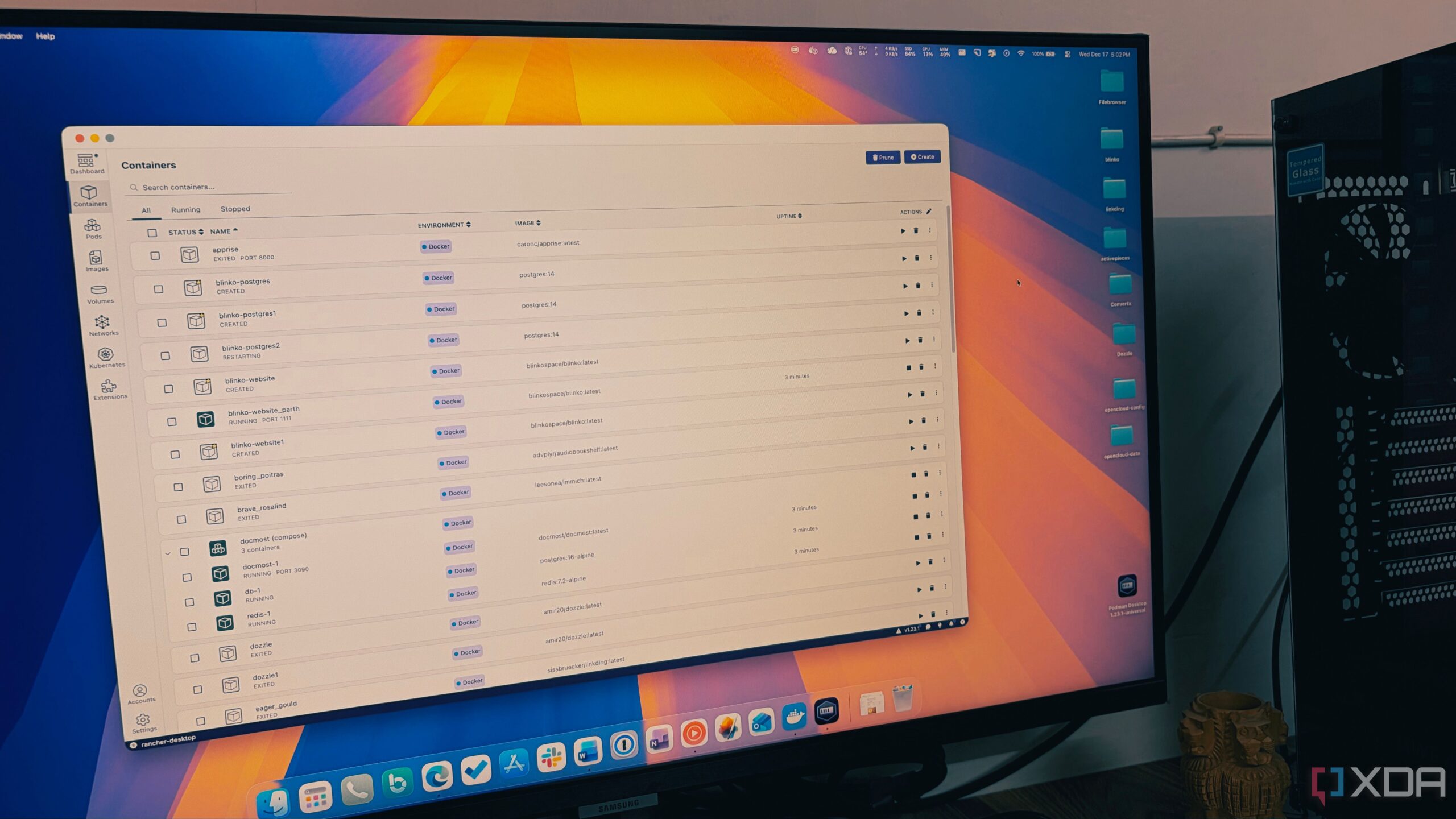
UPDATE: Developers are making an immediate shift from Docker Desktop and Portainer to Podman, as reports highlight significant improvements in resource efficiency and security. This transition is gaining momentum as Podman proves to be a game changer for container management.
Many users have reported that the resource-heavy nature of Docker Desktop has prompted them to seek alternatives. While Portainer was a popular choice for fleet management, it still relied on the underlying Docker Daemon, leading to persistent performance issues. Now, with Podman’s daemonless architecture, developers are realizing a smoother, more efficient workflow.
Podman’s unique structure eliminates the need for a constant background process, which has traditionally been a major drawback of Docker. Developers are reporting a remarkable reduction in system resource usage, with many experiencing quieter machines and improved stability. “Switching to Podman felt like a breath of fresh air,” stated a recent user, highlighting the immediate benefits of this transition.
Podman operates under the same Open Container Initiative (OCI) standards as Docker, allowing users to seamlessly run their existing Docker containers without the need for extensive modifications. This compatibility means that developers can continue utilizing their established projects while benefiting from a more modern, efficient platform.
In addition to performance improvements, Podman offers enhanced security features. Unlike Docker, which requires root privileges and can expose systems to vulnerabilities, Podman enables users to run containers under their own user accounts. This crucial change limits the potential damage from security breaches, providing peace of mind for developers concerned about safety.
As the tech community shifts towards more efficient and secure methods of container management, Podman is being recognized as a vital tool for the future. Developers tired of resource drain and security risks are encouraged to make the switch now. The choice is clear: embracing Podman not only streamlines workflows but also aligns with the modern practices of containerization used by leading tech companies.
With Podman now establishing itself as a superior alternative, developers are encouraged to explore this tool to enhance their container management strategies. The transition from Docker Desktop to Podman is not just a change in tools; it’s a significant upgrade for those looking to future-proof their development environments.
Stay tuned for more updates on this developing story as the shift continues to reverberate throughout the tech community.