
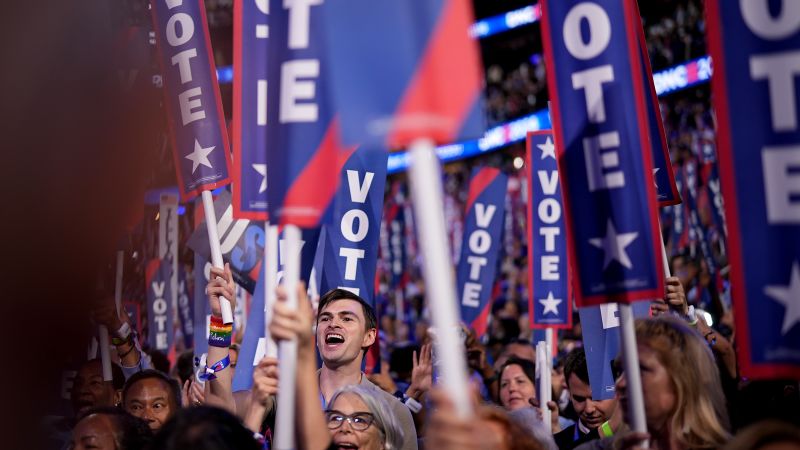
According to a recent CNN poll conducted by SSRS, the Democratic Party appears to have a motivated base ahead of the 2026 midterm elections, despite widespread dissatisfaction with its current leadership. The poll reveals that while the Democratic Party holds a slight advantage of 5 points on the generic congressional ballot, this lead expands to an impressive 16 points among those voters who express a deep motivation to participate in the upcoming elections.
This heightened enthusiasm among Democratic voters comes as a response to ongoing public discontent regarding President Donald Trump and the Republican-controlled government in Washington. A majority of Americans view the first year of Trump’s second term as unsuccessful, with only 29% of independents approving of his performance.
The generic congressional ballot serves as an early indicator of voter preferences, gauging which party individuals would support in an upcoming election. In 2018, Democrats similarly held a 5-point edge as they regained control of the House during Trump’s first term. Conversely, in 2022, when Republicans narrowly took the majority during President Joe Biden‘s administration, voter support was nearly evenly split.
Discontent with Democratic Leadership
Despite the strong motivation among Democratic voters, approval ratings for congressional Democratic leaders stand at just 28%, notably lower than the 35% approval for their Republican counterparts. This sentiment has remained largely unchanged since April 2022. Many Democrats and Democratic-leaning independents believe that their party has failed to adequately oppose Trump and resist Republican policies. Remarkably, 71% of respondents express that congressional Democrats have been ineffective in this regard, a significant increase from 51%% who felt similarly at the beginning of the current Congress in January 2023.
The dissatisfaction among highly motivated Democratic voters is palpable, with many feeling unrepresented by the current government. This sentiment could influence primary challenges against sitting members of Congress as the party navigates the upcoming election cycle.
The overall public mood as the midterms approach remains somber, with many Americans rating the economy as poor. Among those dissatisfied with economic conditions, the call for a “change in political leadership” is nearly as popular as addressing inflation. While approximately 75% of Republicans express approval of their congressional leaders, only 48% of Democrats feel similarly about their party’s leadership.
Public Perception of Republican Leadership
The CNN poll also sheds light on public perceptions of Republican leadership, revealing that 61% of Americans believe congressional Republicans have been at least somewhat effective in enacting new legislation. This figure reflects a notable decline from the 76% who expected effectiveness when the GOP regained full control of the federal government a year ago.
Public sentiment is divided over the impact of Trump on the Republican Party. Approximately half of respondents believe that congressional Republicans are too supportive of Trump, with a similar number suggesting that Trump’s influence has been detrimental to the party. Nevertheless, among Republican-aligned individuals, 56% assert that the GOP is appropriately supportive of Trump, while only 11% feel the party is overly supportive.
Despite recent high-profile disagreements within the Republican Party, the proportion of party members who consider the caucus insufficiently supportive of Trump has risen by 9 points since February 2023. Two-thirds of GOP supporters view Trump as having a positive impact on the party, with only 15% believing he has had a negative effect.
The CNN poll was conducted online and by phone from January 9-12, 2023, among a random national sample of 1,209 adults, including 968 registered voters. The margin of sampling error for the full sample is plus or minus 3.1 percentage points, and 3.5 points among registered voters.
As the midterms approach, both parties face significant challenges and opportunities, with public sentiment likely to influence voter turnout and preferences in the upcoming elections.