
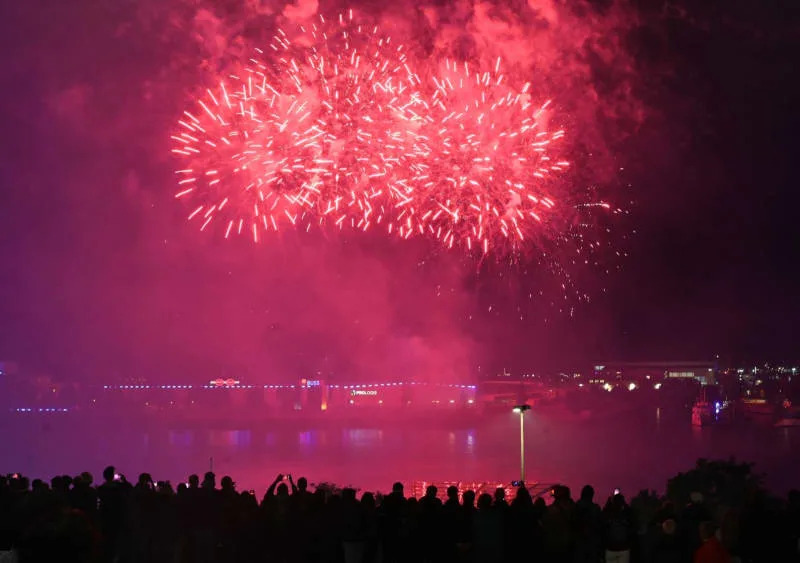
As the end of the year approaches, demand for fireworks in Germany is on the rise, despite increasing criticism from various groups advocating for stricter regulations. Germany’s largest fireworks manufacturer, WECO, reported that the availability of rockets, firecrackers, and other pyrotechnics this year is approximately 10% higher than in 2022. Meanwhile, rival manufacturer COMET noted a moderate increase in its supply, contributing to an overall growth in the sector.
Rising Availability and Sales
The German Association of the Pyrotechnics Industry anticipates even greater availability of fireworks, reflecting a trend that has been evident in recent years. Fireworks are permitted for sale in Germany from December 29 to 31, and while unsold items are typically returned to manufacturers, WECO indicated that the return rate last year was lower than anticipated. With a workforce of around 260 in Eitorf and Kiel, WECO remains the largest producer still manufacturing fireworks domestically, yet it only produces 15% of its offerings, relying heavily on imports from China. For the fiscal year 2023-24, the company’s turnover exceeded €136 million (approximately $160 million).
Klaus Gotzen, head of the pyrotechnics sector association, highlighted a shift towards combined fireworks, which involve a single fuse igniting a box that produces a multi-minute display. This innovation reflects changing consumer preferences and an ongoing enthusiasm for fireworks as part of New Year’s celebrations.
Public Concerns and Regulatory Challenges
Despite the robust demand, many in Germany express concerns regarding the use of fireworks. Animal welfare and environmental groups argue that the noise and chaos associated with fireworks can distress wildlife, especially during winter months. In urban areas such as Berlin, New Year’s festivities often resemble scenes of a war zone, prompting calls for bans. Environmental advocates further criticize the litter and waste generated by fireworks, echoing sentiments shared by the GdP police union, which reports increasing incidents of violence involving fireworks against police officers.
Disagreement among the interior ministers of Germany’s 16 states has stalled any consensus on implementing a nationwide ban. Recently, a court overturned a prohibition on private fireworks displays on the North Sea island of Föhr, underscoring the complexities of regulating fireworks in the country. In response to the growing scrutiny, Oliver Gerstmeier, WECO’s head of sales, contended that the rising demand indicates a strong public desire to continue the tradition of celebrating the New Year with fireworks. He stated, “Ringing in the New Year with a colorful firework is a beautiful thing for many people. One should respect that instead of discrediting it with repeated debates on a ban.”
The fireworks industry maintains that the vast majority of the population still cherishes the annual spectacle of fireworks lighting up the sky. They argue that issues often arise from only a minority of individuals engaging in reckless behavior during celebrations, rather than widespread discontent with the tradition itself.