
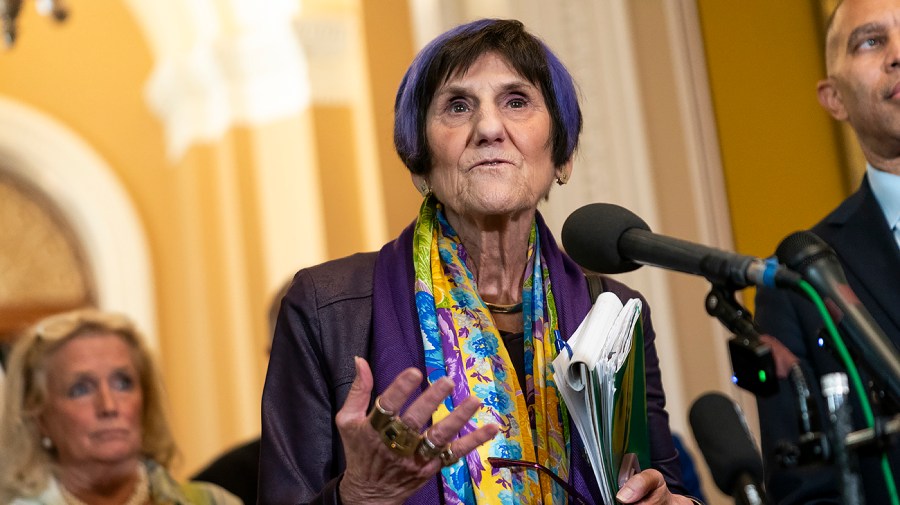
Rosa DeLauro, the ranking member of the House Appropriations Committee, introduced a bill on March 6, 2024, aimed at funding various agencies within the Department of Homeland Security (DHS). Notably, the legislation excludes funding for Immigration and Customs Enforcement (ICE), U.S. Customs and Border Protection (CBP), and the Office of the Secretary. This initiative emerges as a critical measure to maintain the current funding levels for DHS amidst ongoing discussions about immigration policy and border security.
The proposed bill seeks to allocate resources to essential DHS components like the Federal Emergency Management Agency (FEMA), the Cybersecurity and Infrastructure Security Agency (CISA), and the Transportation Security Administration (TSA), among others. By focusing on these agencies, DeLauro aims to address pressing national security and disaster response needs while deliberately sidelining controversial enforcement agencies.
As the debate over immigration continues to intensify in Congress, DeLauro’s proposal reflects a growing divide among lawmakers. Many Democrats have criticized the enforcement strategies employed by ICE and CBP, arguing that these agencies contribute to the suffering of immigrant communities. DeLauro’s bill is positioned as part of a broader push to reshape the DHS’s focus toward humanitarian and security support rather than enforcement.
The funding measure is expected to be debated in the House in the coming weeks. According to DeLauro, the bill not only aligns with Democratic priorities but also emphasizes a commitment to protecting vulnerable populations while ensuring national security. “This legislation represents our values as a nation,” she stated during the introduction of the bill. “We can secure our borders while also treating people with dignity.”
The bill’s future remains uncertain as it faces scrutiny from both sides of the aisle. Some Republicans have argued against the exclusion of ICE and CBP funding, viewing it as a potential threat to border security. The ongoing discussions and potential amendments to the bill could significantly influence its final form and the likelihood of its passage.
In light of these developments, the political landscape surrounding immigration funding is poised for further evolution. Stakeholders from various sectors, including advocacy groups and law enforcement agencies, will likely weigh in as the legislative process unfolds.
As the House Appropriations Committee reviews the proposal, the broader implications of DeLauro’s legislation could set the tone for future funding decisions related to immigration and border security in the United States. The outcome will not only impact federal agencies but may also influence the lives of countless individuals affected by immigration policies.