
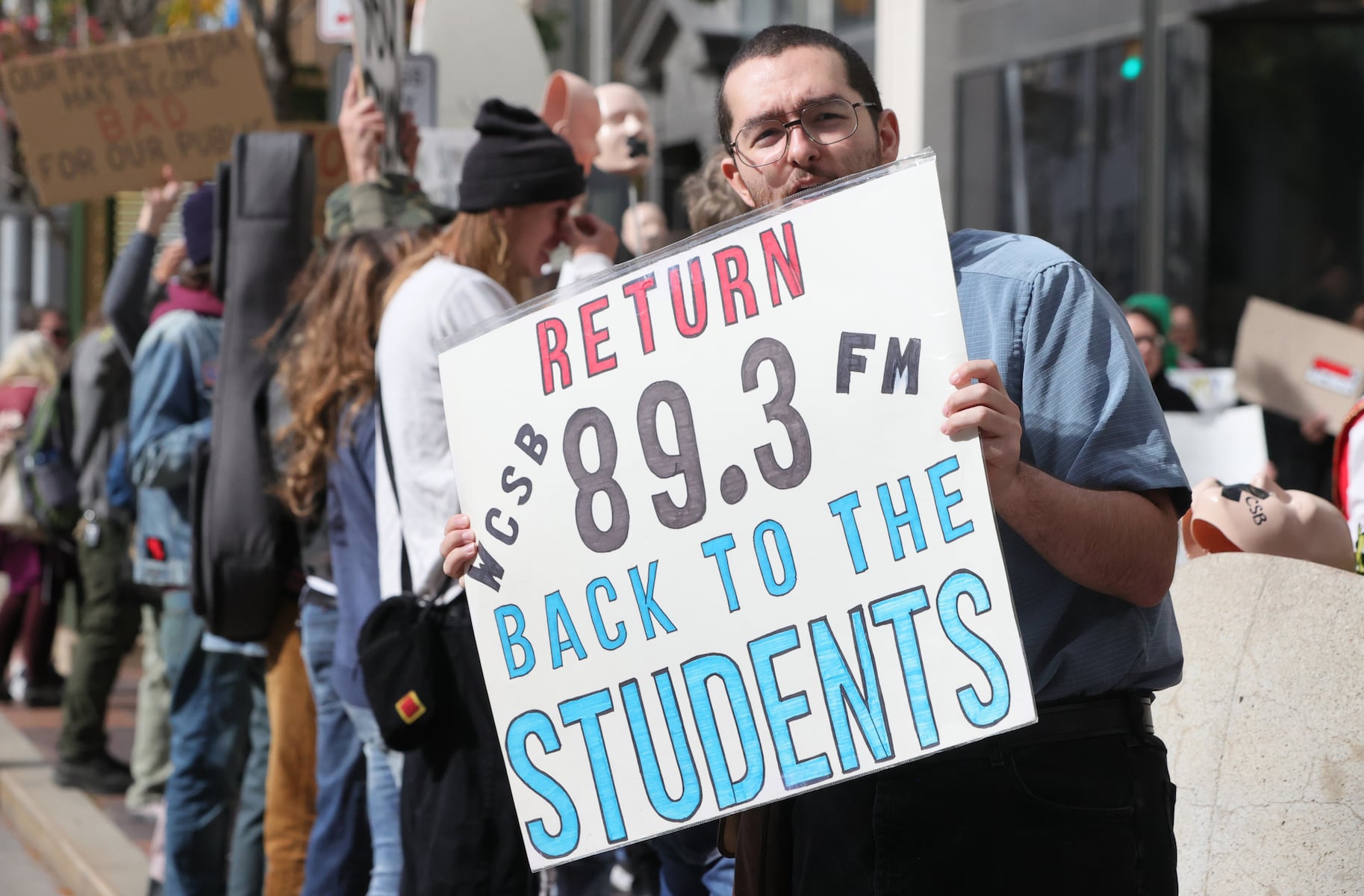
Cleveland State University (CSU) has become embroiled in a legal dispute following the abrupt transfer of its student radio station, WCSB, to Ideastream. This transition, which took place on October 3, 2025, shocked students and listeners alike when the station unexpectedly shifted its programming to smooth jazz, prompting protests from the university community.
The controversy centers on a lawsuit filed in Cuyahoga County, which alleges that CSU’s actions violate principles of free speech and open government. The nonprofit organization behind the suit, comprised of supporters and former staff of WCSB, argues that the university engaged in closed-door meetings with Ideastream without proper public disclosure. Public records obtained through requests suggest that these meetings may have contravened state sunshine laws.
The lawsuit emphasizes the role of CSU President Laura Bloomberg, who was appointed to the Ideastream board as part of the deal. Allegations have emerged that Bloomberg became frustrated with the independent voices at WCSB, citing their nonconformist attitudes and protests against university policies. The suit claims that she called the police on students who were advocating for the station, despite no crimes being committed.
Three months after the transfer, students and community members continue to rally for the reinstatement of WCSB. Their efforts highlight a broader concern regarding the university’s commitment to free expression and transparency in decision-making processes.
In the wake of the station’s programming shift, CSU has not provided a comprehensive explanation for the transfer, leaving many in the community feeling disillusioned and marginalized. The legal challenge against CSU seeks not only the return of the station but also accountability for what the plaintiffs describe as a significant infringement on their rights.
As the situation unfolds, the outcome of the lawsuit could have lasting implications for the governance of university-affiliated media and the protection of student voices in higher education institutions.