
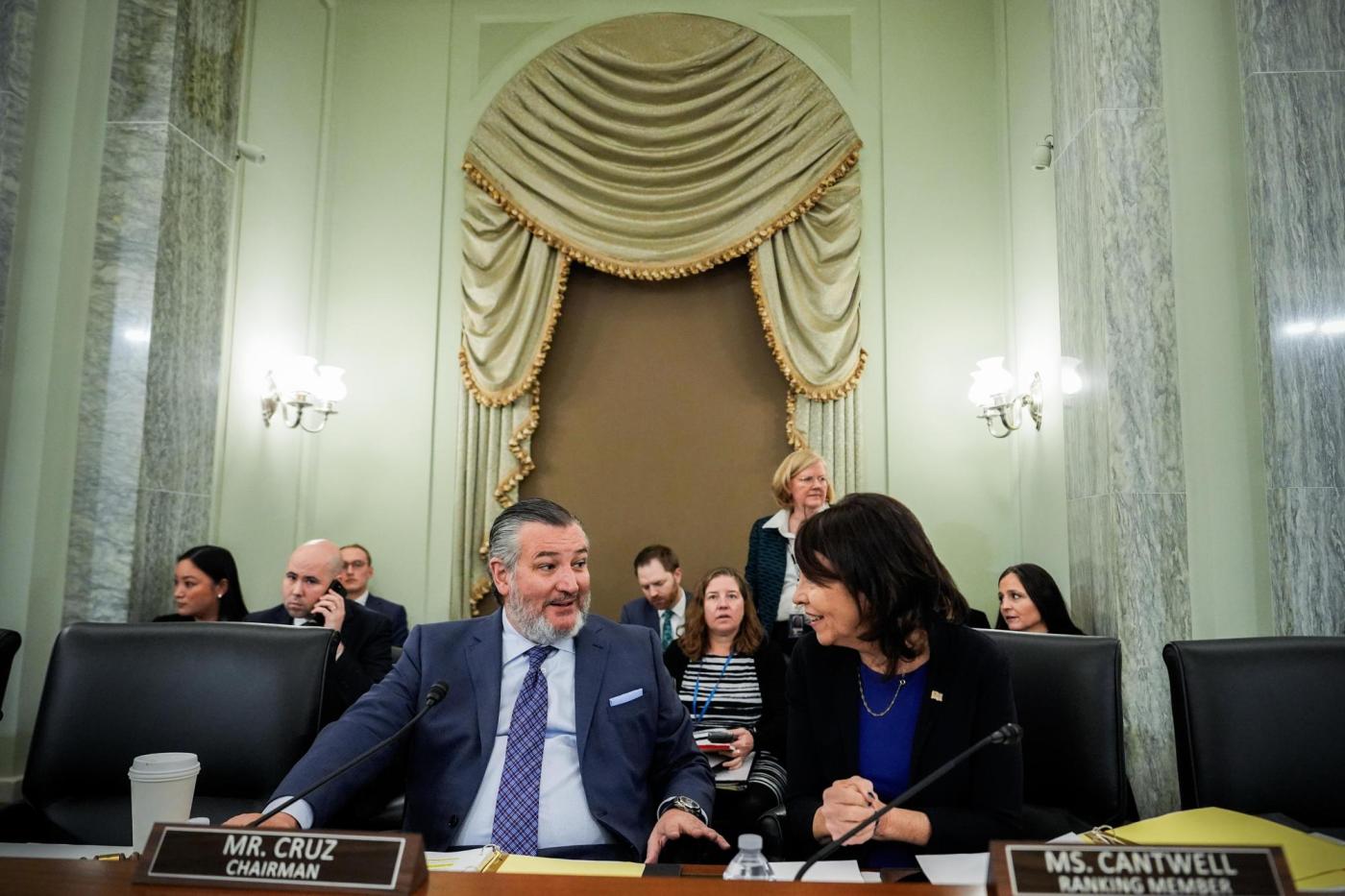
UPDATE: Republican Senator Ted Cruz has issued an urgent warning today, threatening to block federal government funding unless critical reforms on military flight safety are enacted by the end of January. This comes in the wake of the tragic January 29, 2023, collision between an airliner and an Army helicopter over Washington D.C., which resulted in the deaths of 67 individuals.
During a press conference earlier today, Cruz, alongside Democratic Senator Maria Cantwell and families of the crash victims, called on Congress to eliminate provisions from a sweeping defense bill that would permit military aircraft to bypass mandatory location broadcasting. This important safety measure was put in place after the devastating crash. The senators are demanding that Congress act swiftly to ensure military aircraft do not return to operating without broadcasting their precise locations, a practice that previously created dangerous conditions in the capital’s airspace.
Cruz emphasized the urgency of the situation, stating, “The special carve-out was exactly what caused the January 29th crash that claimed 67 lives.” He asserted that the proposed defense bill would roll back safety measures instituted during the Trump administration and under Transportation Secretary Sean Duffy. The Federal Aviation Administration (FAA) had mandated that all aircraft must use the Automatic Dependent Surveillance-Broadcast (ADS-B) system to enhance airspace safety.
The political landscape surrounding the defense bill is tense. It remains uncertain whether Republican leadership will permit amendments to the bill, as this could delay critical pay raises for military personnel and other essential provisions. Cruz has made it clear that if the current bill passes without the necessary amendments, he will take action to halt government funding until his proposed legislation—requiring all aircraft to broadcast their locations—is passed.
Families of the crash victims have voiced their concerns, stating, “Our families know the consequences of systemic failures, and we cannot accept a policy change that makes our skies less safe.” Their emotional pleas underscore the human impact of this legislative battle, as they fear a regression in aviation safety standards.
National Transportation Safety Board (NTSB) Chairwoman Jennifer Homendy and various senators, along with key transportation unions, have criticized the proposed provisions, highlighting the dangerous precedent they could set. Investigators have already pointed out a history of near misses at Ronald Reagan National Airport, raising alarms over the need for stricter regulation.
As the clock ticks towards the end of January, all eyes will be on Congress as they navigate this urgent issue. The NTSB’s final report on the crash’s causes is expected to be released next year, but the consequences of this legislative impasse could directly impact aviation safety and government operations.
For those following this critical story, stay tuned for further developments as Cruz and Cantwell push for the necessary reforms to protect air traffic and prevent future tragedies.