
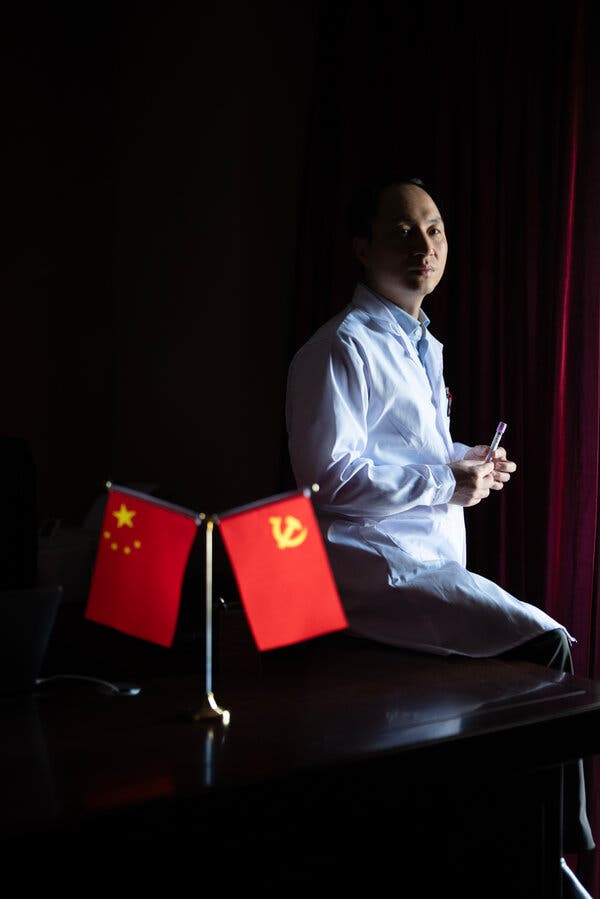
He Jiankui, known for creating the world’s first genetically edited babies, has re-emerged as a controversial figure in China’s biotechnology sector. After serving a three-year prison sentence for deceiving medical authorities, the 41-year-old scientist is openly discussing his work from a government-supported research hub located north of Beijing. Despite his past, He claims there is a growing demand for researchers willing to push genetic boundaries.
In November 2018, He shocked the scientific community by announcing the birth of twin girls whose DNA had been altered to provide resistance to HIV. This action drew widespread condemnation, leading to his arrest and conviction in 2022. Following his release, He has not faded into anonymity; instead, he remains vocal about his ambitions and the future of biotechnology in China.
Benjamin Hurlbut, an associate professor in the life sciences department at the University of Arizona, notes the peculiar nature of He’s situation. “For a country that is adept at censorship and control, they are leaving him curiously unfettered,” he observed. Hurlbut emphasized that He is perceived not as a liability but potentially as an asset in a time when China is striving to enhance its technological capabilities.
He’s Current Status and Future Aspirations
He resides in a spacious apartment, which he attributes to a financial sponsor whose identity he has chosen to keep private. He has been vocal in interviews, asserting that the demand for innovative research is increasing. This perspective aligns with China’s ambition to establish itself as a leading force in biotechnology, where ethical boundaries in research are frequently called into question.
He’s inability to travel abroad due to a confiscated passport limits his international engagement, yet he remains a notable figure within China’s biotech community. His presence highlights the complexities of scientific ethics and the regulatory environment in China, especially as the nation seeks to advance in various high-tech fields.
In a landscape where scientific innovation often clashes with ethical considerations, He Jiankui stands at the center of a pivotal moment. His journey underscores the ongoing debate about the balance between scientific progress and moral responsibility, particularly in a country increasingly focused on biotechnology as a means of global competitiveness.
As China continues to invest in this sector, the implications of He’s work and his controversial past will likely resonate beyond its borders, prompting discussions around the ethical dimensions of genetic engineering worldwide.