
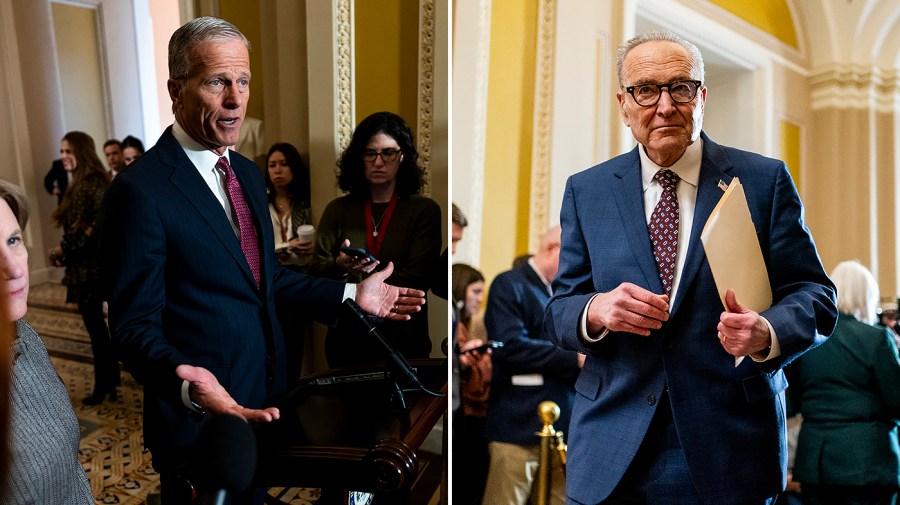
As the deadline for government funding approaches, Congress is inching closer to a potential partial shutdown. On September 27, 2023, Senate Democratic Leader Chuck Schumer outlined a series of significant reforms targeting the Department of Homeland Security. These proposals are likely to face strong opposition from President Donald Trump and his supporters, complicating efforts to reach a funding agreement.
Democrats are prepared to block a proposed six-bill government funding package unless their demands are met. Schumer emphasized the need for reforms in areas such as immigration policy and border security, arguing that these changes are essential for the effective operation of the Department of Homeland Security. He stated, “We cannot allow the status quo to remain. Our security depends on it.”
While the Senate aims to advance its funding proposal, the House of Representatives is also grappling with internal divisions. Some Republican lawmakers are advocating for deeper spending cuts, which could exacerbate tensions within the party. This discord complicates the already challenging negotiations as the clock ticks down to the funding deadline.
The backdrop of this standoff is a looming September 30 deadline, when current funding levels are set to expire. If Congress fails to pass the necessary legislation by then, many government operations could be disrupted, impacting services and employees nationwide.
On the other side of the aisle, Republicans argue that the proposed reforms would undermine national security. They are pushing for a more stringent approach to immigration and border control, insisting that any funding agreement must prioritize these issues. The divide between the two parties is stark, and without compromise, the likelihood of a government shutdown increases.
As both chambers work to reconcile their differences, the implications of a shutdown could reverberate across various sectors. Federal employees would face furloughs, and government services, including national parks and federal agencies, would be affected.
The ongoing negotiations exemplify the broader political climate in the United States, where partisan divisions have made governance increasingly complex. With less than a week remaining before the funding deadline, the pressure is mounting on Congressional leaders to find a solution that satisfies both parties while securing essential government services for the public.
In summary, as Congress navigates these turbulent waters, the future of government operations hangs in the balance. The outcome of this political impasse will not only affect federal employees and services but will also reflect the ongoing challenges in achieving bipartisan agreement in a divided Congress.