
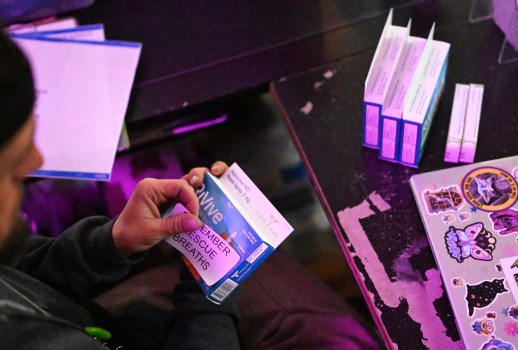
Efforts to combat the opioid overdose crisis in Colorado are gaining momentum as residents increasingly purchase naloxone, an overdose-reversal drug, now available over the counter. Since September 2023, when the U.S. Food and Drug Administration approved its non-prescription sale, the state has seen a significant uptick in naloxone distribution. Colorado residents acquired 743.7 doses of naloxone for every one million residents in the first year, surpassing the national average of 396 units per million and ranking second only to Oregon.
Naloxone, sold under the brand name Narcan, effectively counteracts the effects of opioids, preventing respiratory failure during an overdose. Colorado’s existing framework, which allows the purchase of naloxone without a prescription, has been in place for over a decade. This initiative has fostered a culture of awareness and accessibility surrounding the lifesaving medication.
Despite the initial surge in over-the-counter sales, data from the Rand Corporation indicates that naloxone purchases peaked shortly after legalization and then declined rapidly. In a broader context, pharmacies across the United States dispensed nearly 18 units of naloxone for every one unit sold over the counter, with state-funded programs distributing an even higher ratio of 30 units for each retail purchase.
The price for naloxone remains a factor in its distribution. A two-pack of the nasal spray typically costs around $40. Although Medicaid covers the cost in Colorado, commercial insurance plans may still require co-pays. In many cases, prescribed naloxone can be less expensive than over-the-counter purchases, making it more accessible for patients receiving opioids for pain relief after surgeries or injuries.
Rachael Duncan, a pharmacist and associate director of the Naloxone Project, notes the importance of various distribution methods. “While over-the-counter naloxone is an avenue to get naloxone into communities, it pales in comparison to naloxone filled in pharmacies or distributed by nonprofits,” she stated.
Contributions from over-the-counter sales may be small compared to other distribution channels, yet they play a vital role in enabling lower-risk individuals to participate in overdose prevention. Lisa Raville, executive director of the Harm Reduction Action Center in Denver, emphasizes that those who use drugs are often present during an overdose and may hesitate to call emergency services.
The demand for naloxone has been evident, with families and community organizations actively seeking the drug. “We had a whole bunch of moms coming to us wanting naloxone, and we didn’t have it to give them,” Raville explained, highlighting the challenges faced by harm-reduction organizations. Studies suggest that between 80% and 90% of overdose reversals involve individuals who themselves use drugs, rather than first responders.
As Colorado’s naloxone distribution efforts progress, concerns arise regarding sustainable funding for these initiatives. The state legislature allocated $20 million for the Opioid Antagonist Bulk Purchase Fund in 2022, primarily sourced from federal pandemic recovery funds set to expire at the end of 2026. This fund is essential for purchasing naloxone at discounted rates and supplying organizations that serve high-risk populations.
Paul Bishop, spokesman for the Colorado Department of Public Health and Environment, shared that projections indicate the bulk fund will remain sufficient to support naloxone distribution through December 2026, focusing on organizations with transparent distribution plans. In the previous fiscal year, the fund provided approximately 411,000 doses to 390 organizations.
The balance between broadening access to naloxone and ensuring it reaches those most in need remains a critical focus. Duncan remarked on the tension between these goals, emphasizing that naloxone’s long shelf-life helps mitigate waste among those who may not need the drug immediately.
Hospitals in Colorado are also stepping up to provide naloxone to patients. Many facilities offer the drug to anyone treated for an opioid overdose, as well as to new mothers considered high-risk. Duncan noted that overdose deaths among new mothers have decreased significantly, from 20 in 2022 to just 8 in 2023, marking a 60% reduction. Overdoses among women of childbearing age generally dropped by 15% during the same period.
Innovative approaches are being explored, such as Montrose Regional Health’s pilot program to provide naloxone to all pregnant patients during their first prenatal visit. Jennifer Ackerman, director of women’s services, explained that many expectant mothers choose to accept the medication after understanding its potential future utility.
Children’s Hospital Colorado is also implementing a broader distribution plan, giving naloxone to families with newborns in the neonatal intensive care unit. Dr. Stephanie Bourque, a neonatologist at the hospital, advocates for offering naloxone to all new parents, regardless of perceived risk, to prevent tragedies related to overdose.
As awareness of naloxone’s life-saving capabilities grows, communities are becoming more proactive. Raville encourages individuals to seek out training on using naloxone effectively. “It’s a miracle drug. You can’t mess it up,” she stated, while also noting the importance of having trained responders ready to assist in overdose situations.
The legislative support for naloxone access has been strong, with unanimous backing in 2015 allowing doctors to issue standing orders for the drug. This has led to a cultural shift where families now consider carrying naloxone as standard practice, akin to preparing for other emergencies.
As Colorado continues to expand access to naloxone, the collective effort aims to reduce opioid overdose deaths and promote public health. “People don’t have to die of overdoses,” Raville concluded, highlighting the ongoing commitment to saving lives through increased naloxone access and education.