
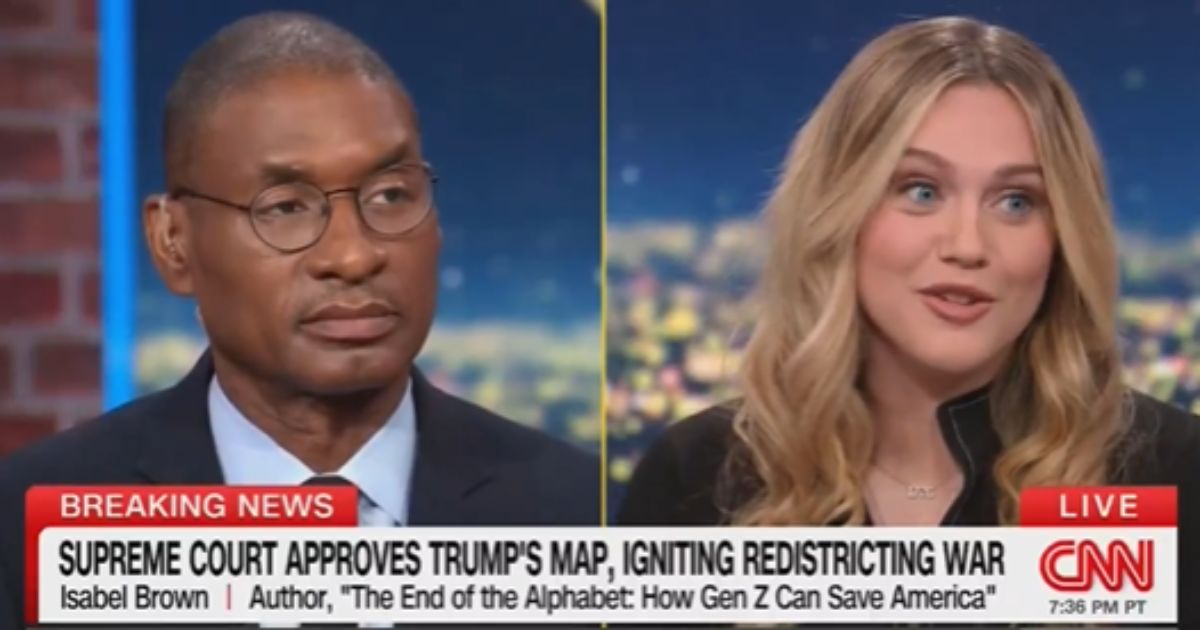
During a heated discussion on redistricting, former New York Times columnist Charles Blow confronted conservative podcaster Isabel Brown, accusing her of promoting racist ideas. This exchange occurred on the program “CNN NewsNight” after the Supreme Court permitted Texas to implement new congressional maps. This decision followed a significant maneuver by Texas Democrats, who left the state to block a special session aimed at discussing redistricting.
The debate intensified when Brown dismissed Blow’s claims of racism, calling them “pathetic.” She pointed out that states like California are also attempting to reshape congressional representation. “Breaking news, a Republican state tried to create more Republican congressional seats under a Republican governor and conservative legislature,” Brown stated, highlighting California’s own efforts to gain more Democratic seats in Congress.
As the discussion progressed, Blow insisted that the creation of Republican-leaning districts in Texas was inherently linked to disenfranchising minority voters. “How did they do it? By disenfranchising black and brown people,” Blow asserted. Brown countered, emphasizing that the actions of Texas should be viewed in the context of its political landscape. “It is not denying the existence of racism. This is a Republican state trying to create more Republican seats,” she replied.
Joe Borelli, a former Republican City Councilman from New York City, joined the dialogue, pointing out broader trends in voter representation. He noted that while 40 percent of Californians voted for former President Donald Trump, only nine out of fifty-one congressional districts are Republican-leaning. Borelli underscored the disparity between voter preferences and congressional representation, stating, “There’s no Republicans in any district in New England.”
Redistricting, a process mandated to occur every ten years after the Census, aims to reflect population changes within states. Following the 2022 midterm elections, New York also redrew its congressional districts, a move that put several Republican representatives at risk. Borelli illustrated this point using Connecticut as an example, where district lines have been drawn in ways that dilute Republican representation.
“Remember, New York was the first person to try midterm redistricting last year,” Borelli continued. “So this is the second state that’s trying to do this. I’m not surprised that we’re having the domino effect, but let the chips fall where they may.”
The debate highlights the complexities and controversies surrounding redistricting efforts in the United States, as states navigate the balance between political representation and demographic changes. As the Supreme Court prepares to examine related issues, the implications of such discussions are likely to resonate far beyond the immediate context of Texas and California.