
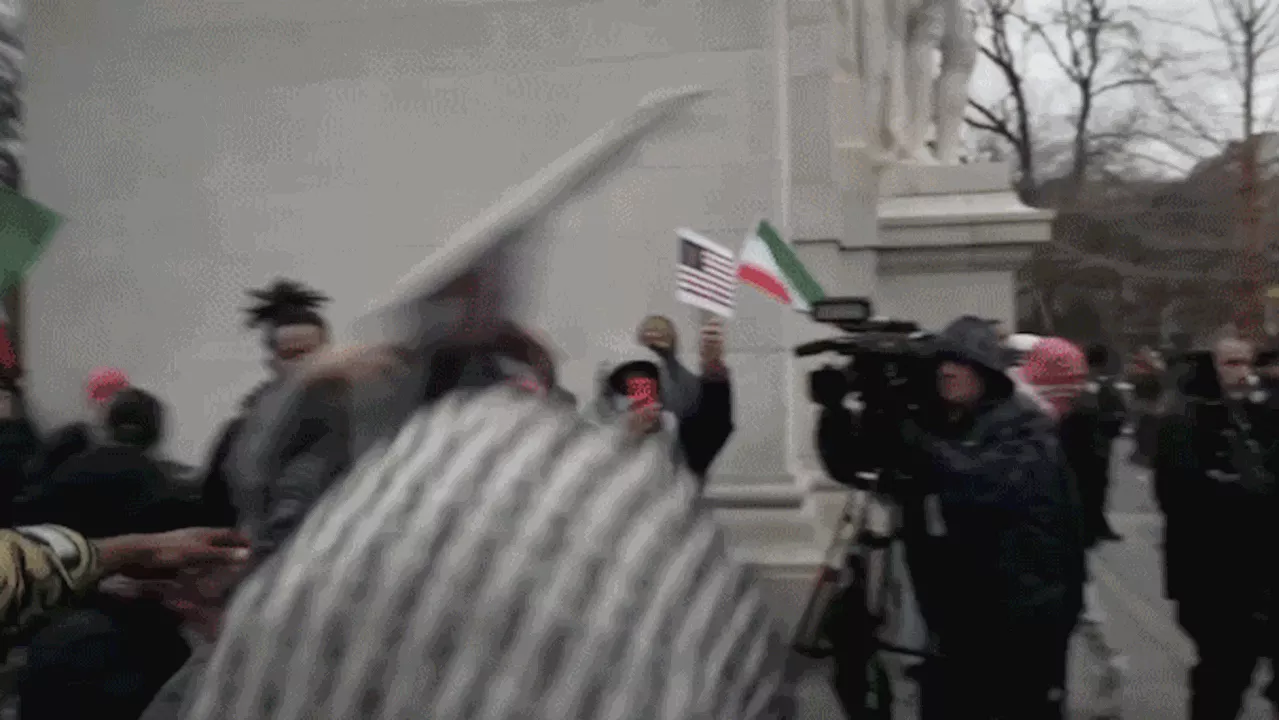
Violence erupted during a vigil in Washington Square Park, New York, on March 15, 2024, commemorating the death of Iranian Supreme Leader Ayatollah Ali Khamenei. The event, intended to honor Khamenei, quickly transformed into chaos, as supporters of the Iranian regime clashed with counter-protesters. The New York City Police Department (NYPD) was called to restore order amid escalating tensions.
Footage from the scene showed a man being physically assaulted while attempting to remove a poster of Khamenei. This sparked further confrontations, leading to shouts and physical altercations among participants. The vigil featured a makeshift memorial with candles, photographs of Khamenei, and Palestinian keffiyeh scarves, reflecting the emotional weight of the occasion.
Political Divisions on Display
Attendees expressed a range of sentiments, highlighting the complex political landscape surrounding Khamenei’s legacy. Organizers had distributed flyers claiming that Khamenei’s death resulted from an “assassination by U.S. government forces,” attributing it to an Israeli military strike in Tehran. U.S. officials have firmly denied any involvement in Khamenei’s death. The flyer defended Khamenei’s reputation, asserting that he “defended the dignity of the Iranian people” and opposed both Zionism and the American government.
Counter-protesters made their presence felt, waving Iranian, American, and Israeli flags, while chanting “U.S.A.” to assert their stance against the Iranian regime. One counter-protester told Fox News contributor Nicole Parker, “We’re here to show everyone that Iranians don’t like the regime.” Another woman shared that her family in Iran is actively opposing the government, expressing hope for change and stating, “This war is not about the Iranian people; this war is against the Islamic Republic.”
Global Implications of Khamenei’s Death
The incident in Washington Square Park underscores the profound divisions and emotions surrounding Khamenei’s death and the Iranian regime. The vigil’s conflicting expressions of grief and celebration reveal broader geopolitical tensions and grievances related to Iran’s role in the region.
As the events unfolded, the atmosphere in the park was described by an observer as reminiscent of a “People’s Republic of New York,” highlighting the fervent political expression among attendees. The duality of mourning and opposing views at the vigil reflects a complex global reaction to Khamenei’s passing and the ongoing impact of Iran’s policies on international relations.
The episode serves as a stark reminder of the charged political climate surrounding Iran and its leadership, revealing how deeply rooted these issues are within the Iranian diaspora. The New York vigil was not just an event of remembrance; it was a manifestation of the ongoing struggle between supporters of the Iranian regime and those advocating for change.