
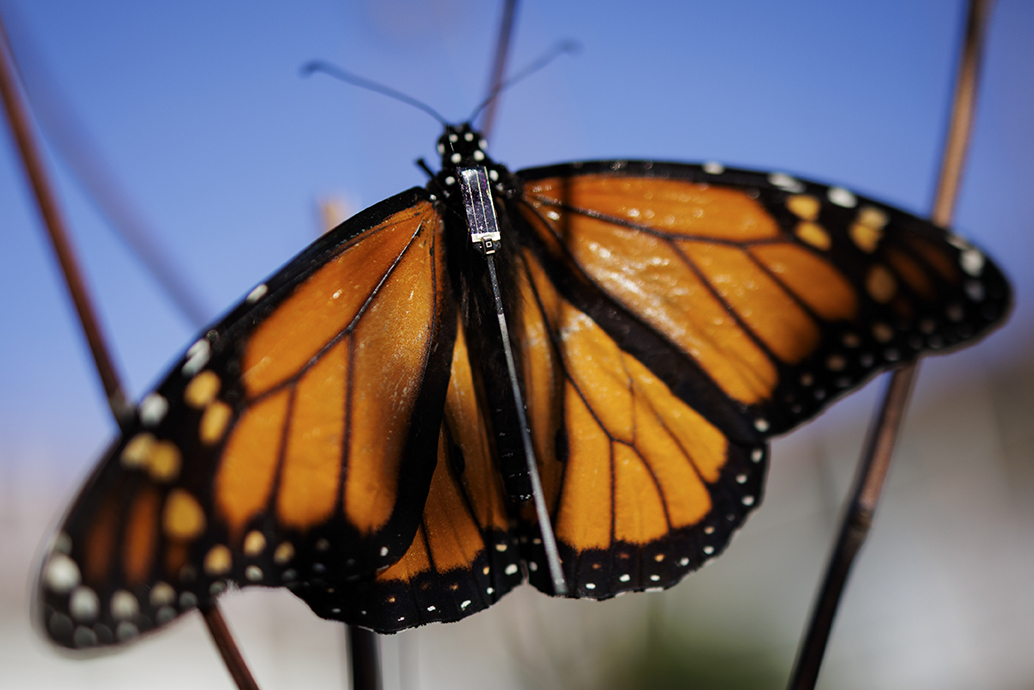
UPDATE: Local citizen scientists are taking action to track the migratory path of monarch butterflies as new Bluetooth technology is set to revolutionize monitoring efforts. Just announced, the Project Monarch app is now available for smartphones, allowing users to assist researchers in understanding crucial migration patterns starting this winter.
Amid the eucalyptus groves of Natural Bridges State Beach in Santa Cruz, California, local enthusiast Sasha Hernandez is among the first to utilize this innovative technology. For the first time, citizen scientists can help track these iconic butterflies as they embark on their journey from the western Rocky Mountains to coastal California.
The new Blu+ tags, which weigh only two-thousandths of an ounce and are attached with a gentle eyelash glue, communicate via Bluetooth. When a tagged butterfly comes within a 100-yard range of a smartphone running the Project Monarch app, the data is automatically uploaded to a central database. This groundbreaking method is expected to enhance our understanding of monarchs’ overwintering paths and their behaviors in various habitats.
“This year, we aim to identify what a monarch’s overwintering path looks like,” said Ashley Fisher of the Xerces Society, a leading organization in insect conservation. With the western monarch population having plummeted by approximately 95 percent in recent decades due to habitat loss and pesticide use, these tracking efforts are critical.
Previously, tracking monarchs relied on outdated methods like wing tagging, but advancements in technology have introduced a new era of data collection. The Blu+ system, developed by Cellular Tracking Technologies, is powered by miniature solar panels and emits signals every three seconds, providing real-time data on location and status.
The urgency of this project is underscored by the fact that monarchs in western regions follow a fragmented migration route. Unlike their eastern counterparts that travel thousands of miles to Mexico, these butterflies journey from inland valleys to coastal groves, making them especially vulnerable to environmental changes.
As citizen scientists like Hernandez engage with this technology, they gain a deeper connection to nature. “The hardest thing about science is that it’s not always accessible,” Hernandez expressed. “It’s great to have science that I can easily access on my phone.” This hands-on approach is crucial for conservation efforts, especially as the winter migration season approaches.
By mid-December 2025, the Blu+ tags will be activated along the West Coast, following a successful implementation in eastern migrations where nearly 360,000 detections have already been recorded. The involvement of volunteers is vital, as they can gather invaluable data across California’s vast migration areas from October to January.
Fisher emphasizes the importance of community participation, stating, “Even small contributions from citizen scientists matter.” This winter, volunteers will be encouraged not only to count butterflies during the annual survey but also to run the Project Monarch app in the background, further enriching the data collection process.
As the migration season kicks off, the hope is that this new technology will shed light on which habitats are most critical for the survival of monarchs. Understanding the nuances of their overwintering preferences can guide future conservation efforts, making every contribution count.
The emotional connection to these creatures is profound. “When I see a monarch fly away, the first thing I think is: Where did it go?” Hernandez reflected. This sense of wonder and curiosity is what drives citizen scientists to participate actively in conservation efforts, ensuring a future for these fragile yet magnificent butterflies.
Stay tuned for more updates as this innovative project unfolds and community involvement grows in the quest to protect monarch butterflies.