
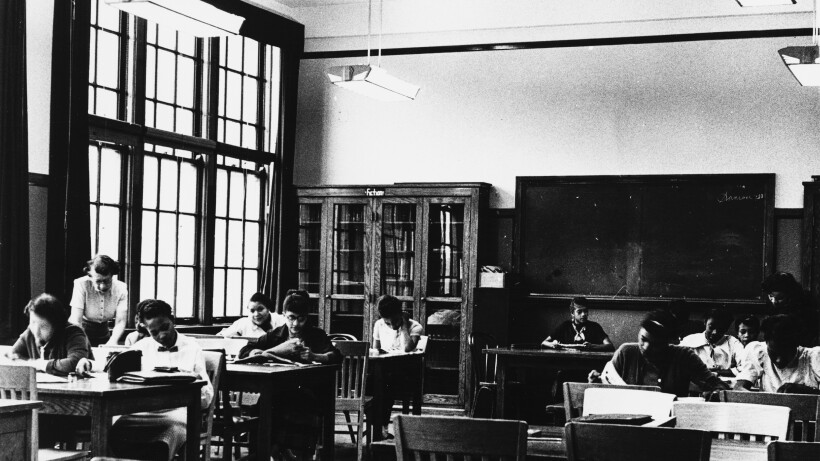
In 1936, Chicago established its first public high school named in honor of a Black individual, marking a significant milestone in the city’s educational history. DuSable High School, named after Jean Baptiste Point du Sable, the city’s first nonindigenous settler, was built to serve an exclusively Black student body. This development came at a time when many of the city’s educational institutions bore the names of white figures, reflecting a broader societal context of racial segregation and inequality.
A Legacy of Naming Schools
Today, Chicago boasts a variety of public schools named after notable Black figures, including Harold Washington Elementary School, named after the city’s first Black mayor, and Walter H. Dyett High School for the Arts, named after a renowned music educator. The history of naming schools in Chicago, however, has not always included such representation. Many older schools, such as George Washington High School and Theodore Roosevelt High School, are named after white men, highlighting a stark contrast to the present.
The inception of DuSable High School was fueled by two concurrent movements—growing recognition of Du Sable as a pivotal historical figure and the urgent need for educational facilities for Black students during the early 20th century. Elizabeth Todd-Breland, an associate professor of history at the University of Illinois at Chicago, emphasized the importance of these movements, stating, “One is about the increasing knowledge of DuSable as an important figure of African descent during the 20th century.”
The Construction and Naming of DuSable High School
In response to demographic shifts from the Great Migration, Black residents of Chicago advocated for a new school to accommodate the growing population. The original Wendell Phillips High School, founded in the early 1900s, initially served a predominantly white student body. However, by 1919, the demographics had shifted significantly, with an influx of Black students leading to overcrowding. The construction of a new building, supported by funds from the New Deal Public Works Administration, resulted in the establishment of New Wendell Phillips High School, which later transitioned to DuSable High School.
Despite pushback from some white residents and even some within the Black community who valued the Wendell Phillips name, the move to honor Du Sable gained traction, particularly through the efforts of groups like the National De Saible Memorial Society. Their advocacy highlighted the need for increased recognition of Du Sable’s contributions to the city as well as representation of Black history in Chicago.
Articles from the time, including one from the Chicago Defender, documented the controversy surrounding the name change. Some critics argued that Du Sable, being of French descent, did not fit the narrative of a Black Chicagoan. Yet, the decision to honor him as the city’s first settler was a pivotal moment in recognizing the contributions of Black individuals to Chicago’s history.
As the 1930s progressed, the importance of DuSable High School became evident. It became a source of pride for the Black community, symbolizing progress towards educational equality. The school’s facilities included modern amenities such as laboratories, a library, and spaces for music and arts—features that were often lacking in schools serving predominantly white populations. “Having a facility that felt equal to or maybe even superior to some of the white high schools in Chicago at the time was an extra point of pride for Black Chicagoans who fought for it,” Todd-Breland explained.
Throughout its history, DuSable High School became renowned for its arts program and attracted a large student body, peaking at around 4,000 students. However, changes in the local community, including the closure of nearby public housing, led to significant declines in enrollment in the early 2000s. The school was subsequently reorganized into multiple smaller institutions, but the legacy of DuSable remains influential.
The DuSable Alumni Coalition for Action continues to honor the school’s legacy by hosting events and programs aimed at preserving its historical significance. Recently, the coalition organized a Black history event, featuring Chief Justice P. Scott Neville Jr. of the Illinois Supreme Court, a graduate of DuSable’s class of 1966. These efforts serve to maintain the connection to the school’s rich history and the notable figures who emerged from its halls.
Among its distinguished alumni are influential figures such as Harold Washington, John H. Johnson, and Don Cornelius, as well as educators like Captain Walter Dyett, who established the school’s prominent music program. The legacy of DuSable High School is a testament to the importance of recognizing and celebrating the contributions of Black individuals in Chicago’s history.
As Todd-Breland aptly summarized, “This was such an important institution within Black Chicago. And a place that folks really took pride in.” The story of DuSable High School is not just about education; it reflects a broader narrative of resilience, advocacy, and the ongoing struggle for equality in Chicago.