
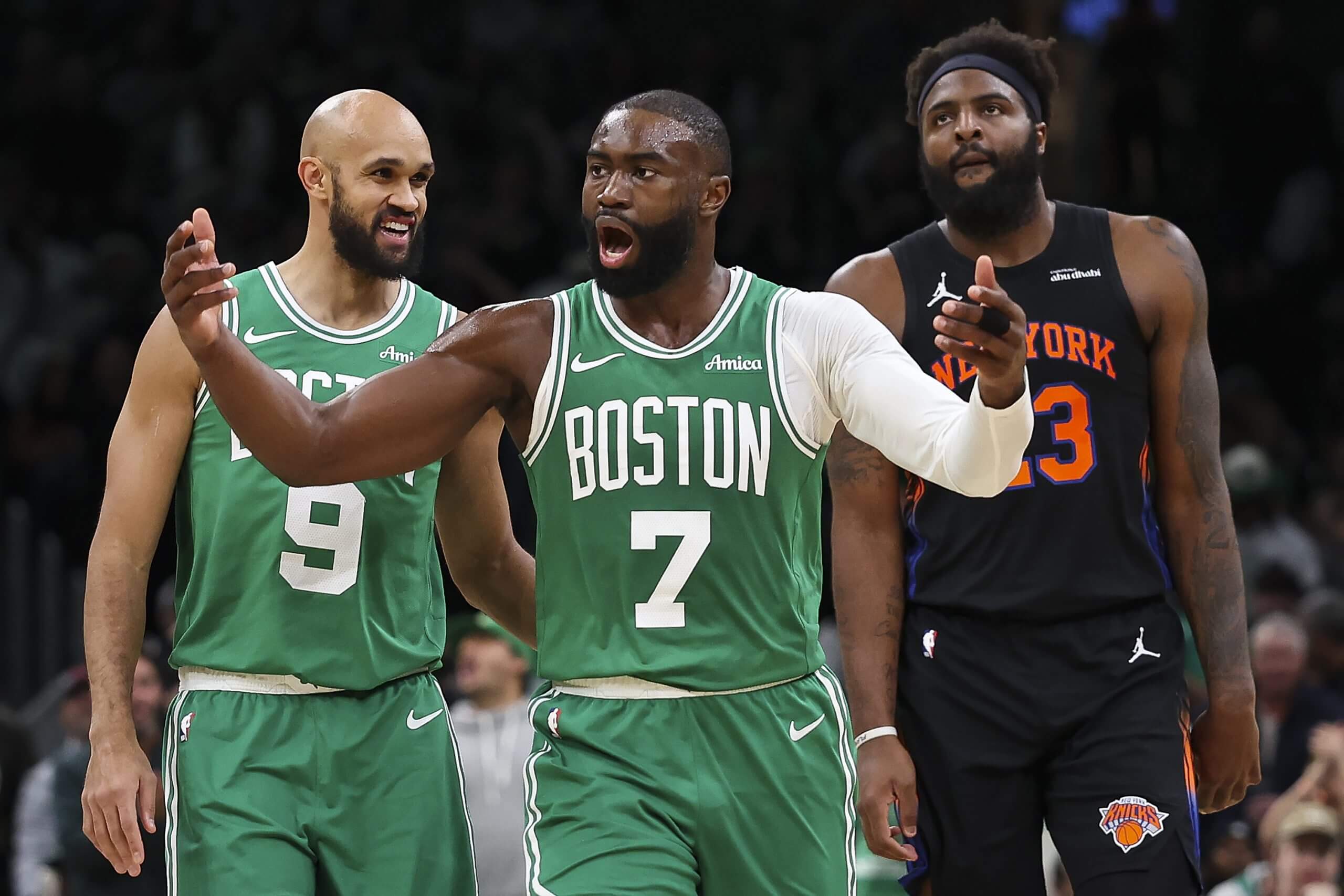
The Boston Celtics have rallied from a rocky start to the season, climbing to third place in the Eastern Conference with a record of 15-10. After suffering their first three-game losing streak in two years, star player Jaylen Brown expressed confidence in his young team’s potential during a press conference. Despite a recent setback against the Milwaukee Bucks, where the Celtics missed 16 consecutive three-point attempts, their overall performance has positioned them as one of the league’s top teams.
In late October, after a disappointing loss to the Detroit Pistons, Brown stated, “It takes time to figure it out. And this is a part of it.” His outlook proved prescient as the Celtics rebounded with an impressive 10 wins in their last 13 games, showcasing their ability to adapt and improve rapidly. Currently, they rank third in the NBA for offensive efficiency and fifth in net rating, underscoring their offensive prowess.
Shifting Strategies to Gain an Edge
Historically, the Celtics relied on a specific formula to win the possession game, balancing turnovers and fouls effectively. Under the guidance of head coach Joe Mazzulla, the team’s approach has evolved. While their defensive rebounding has slipped from seventh to 29th in the league, they have compensated by significantly improving their offensive rebounding, rising from 18th to seventh.
This strategy has allowed the Celtics to harness the athleticism of their younger players, with Mazzulla emphasizing the importance of “the margins” that dictate game outcomes. The team currently ranks ninth in forcing opponent turnovers, a shift from last season’s performance. Although their fouling rate has increased, which has led to a drop to 27th in opposing free-throw attempts, the Celtics believe this risk is necessary for their overall strategy.
Furthermore, the Celtics have maintained a leading turnover rate for the second time in three seasons, allowing them to keep their offensive production high. This has been crucial, particularly during stretches when players like Derrick White and Payton Pritchard struggled with their shooting. The Celtics have averaged an impressive 126.8 points per 100 possessions over their recent successful run.
Small Ball Strategy Yields Results
The Celtics’ recent success has been partly attributed to their effective use of small ball lineups. After an ankle injury sidelined center Neemias Queta, Mazzulla embraced smaller lineups, resulting in a dynamic offensive output. Since this change, the Celtics have recorded an astonishing 133.2 points per 100 possessions with Josh Minott playing center.
While small lineups have exposed vulnerabilities, particularly in rebounding and defense, the offensive benefits have outweighed these concerns. The team has managed to maintain a strong rim protection game, yielding only 39.3 points in the paint per 100 possessions with Queta on the court, compared to 47.7 points when he is off.
The development of young players has been another highlight. Jordan Walsh, who initially struggled to find minutes, has become a key contributor, particularly on defense. Over the last five games, he has shot an impressive 81.1 percent from the field, including 75 percent from beyond the arc. His emergence, along with contributions from other young players, has added depth to the Celtics’ roster.
As the season progresses, the Celtics continue to adapt and refine their strategies. The combination of experienced veterans and emerging young talent has positioned them well for the challenges ahead. With Jayson Tatum expected to return from injury soon, Mazzulla will have a wealth of options at his disposal.
Overall, the Celtics have demonstrated resilience and adaptability, traits that will be essential as they navigate the remainder of the season. Their ability to overcome early setbacks and establish a strong identity reflects a promising outlook for the team as they strive for success in the competitive landscape of the NBA.