
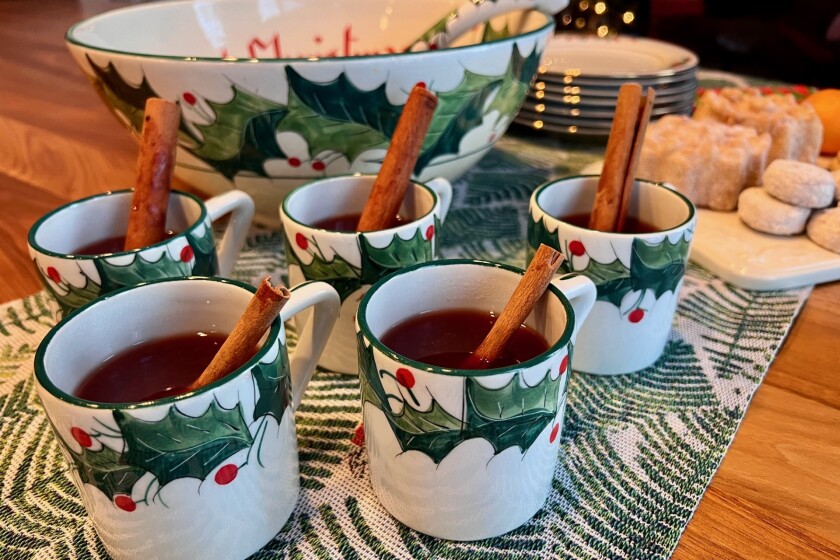
As the holiday season approaches, many are searching for comforting beverages to share with friends and family. A popular choice this year is the traditional spiced punch known as wassail, a recipe made famous by Mabel Olson in her cookbook, “The Joy of Sharing,” compiled by the Oak Valley American Lutheran Women of Velva, North Dakota, in 1985. This warm, cider-based drink not only warms the hands but also the heart, making it ideal for festive gatherings.
To prepare this delightful wassail, start by simmering apple cider, sugar, and spices such as cinnamon sticks, whole allspice, and cloves in a large pan for about 15 minutes. After removing the spices, mix in additional fruit juices, including cranberry, orange, and freshly squeezed lemon juice. While the original recipe calls for cranberry juice, substituting it with pomegranate juice enhances the flavor and adds a vibrant color to the drink. After simmering for another 10 minutes, the wassail is ready to serve, garnished with cinnamon sticks for an extra touch.
Though preparing the wassail on the stove is effective, Olson’s recipe also suggests using an electric percolator. This method not only simplifies the process but allows for easy serving during larger gatherings, keeping the drink warm throughout the event. For those hosting a party, transitioning the beverage to a pre-warmed crockpot ensures guests can enjoy refills without fuss.
The enthusiasm for this recipe is evident, as many families, including my own, have embraced it as a holiday staple. A second batch was prepared just days later, this time kept warm in a slow cooker while holiday decorations adorned the home. The word “wassail” itself evokes images of festive cheer and caroling, inviting curiosity about its origins.
The term “wassail” has a rich history, dating back to Old English and Old Norse, meaning “be in good health.” By the twelfth century, it evolved into a drinking toast, with guests exchanging greetings over a spiced drink. Traditionally, wassail was served during Christmas, New Year’s Eve, and other festive occasions, symbolizing goodwill among neighbors and friends.
According to The Christmas Encyclopedia, 18th-century carolers often carried decorative wassail bowls, toasting the health of those they visited. Variations of the drink may include eggs, milk, and apples, with one alternative name being “lamb’s wool,” derived from the appearance of floating toast or fruit in the punch.
As cocktail historian David Wondrich notes in “Punch: The Delights and Dangers of the Flowing Bowl,” punch is a quintessential English creation, blending citrus, spices, sugar, and spirits. This drink is synonymous with camaraderie and festive gatherings. While Olson’s recipe does not specify the addition of alcohol, some home cooks may choose to enhance their wassail with spirits such as brandy or whiskey.
Notably, many other recipes for wassail incorporate liquor. For instance, the “Joy of Cooking” suggests hard cider and brandy, while Rosie Schaap offers a version in “The New York Times Essential Book of Cocktails” that includes Madeira and ale. Schaap emphasizes the communal aspect of wassail, highlighting its nature as a drink meant for sharing with a crowd.
This deep burgundy punch not only stands out in a holiday punch bowl but also offers a warm, inviting flavor profile that complements any festive occasion. As the temperature of the wassail drops quickly, utilizing an electric percolator or slow cooker becomes an effective strategy for maintaining its warmth and ensuring guests can enjoy a cozy drink throughout the celebration.
In essence, Mabel Olson’s wassail serves as a reminder of the joy of sharing, making it an ideal addition to holiday festivities.